tag > History
-
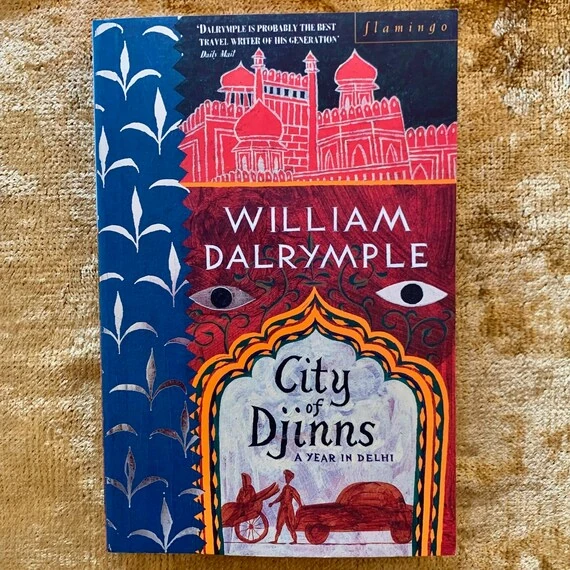
City of Djinns: A Year in Delhi (1993) - by William Dalrymple
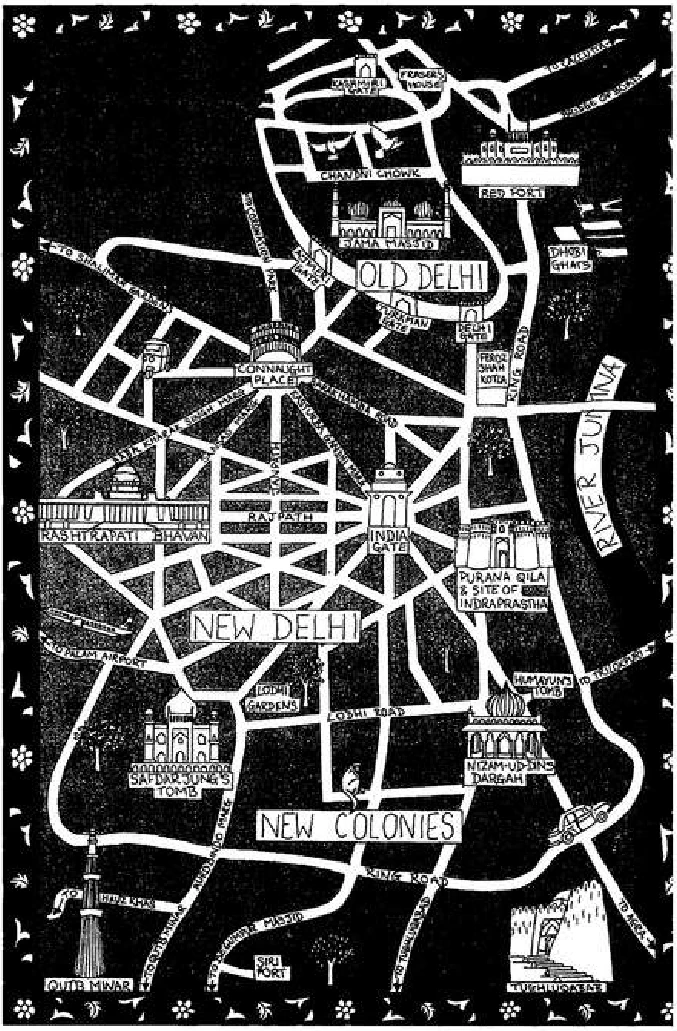
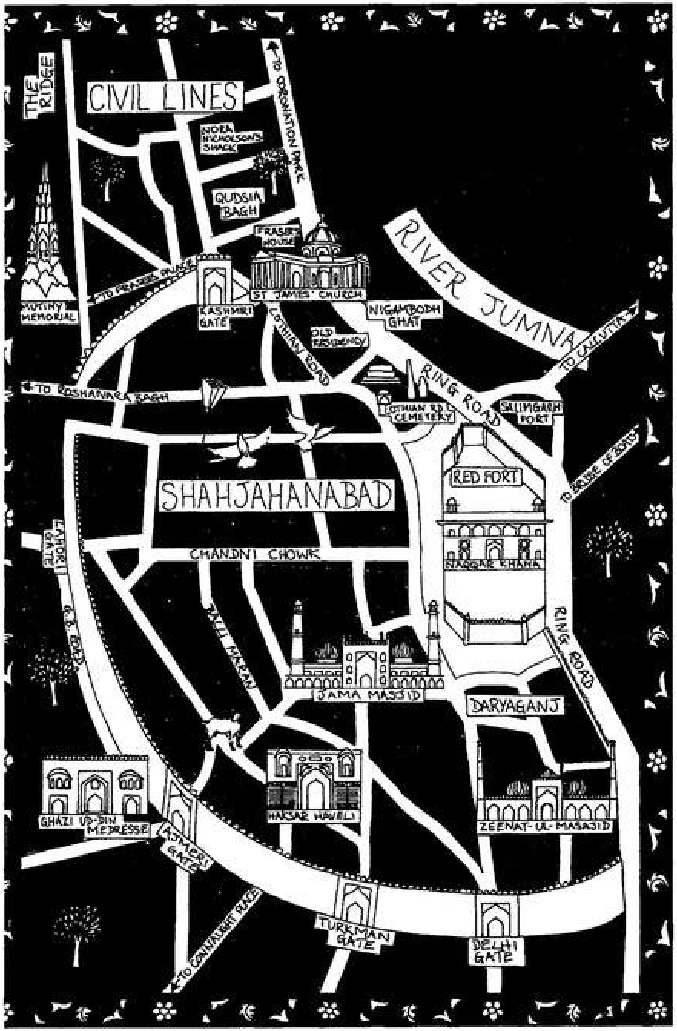
City of Djinns is a travelogue by William Dalrymple about the historical capital of India, Delhi. It is his second book, and culminated as a result of his six-year stay in Delhi. (Wiki)
Interview: Indian History 101, British Colonialism & Koh-i-Noor ft. William Dalrymple
-
“The Third University of Cambridge”: BBN and the Development of the ARPAnet - by Eric Gilliam
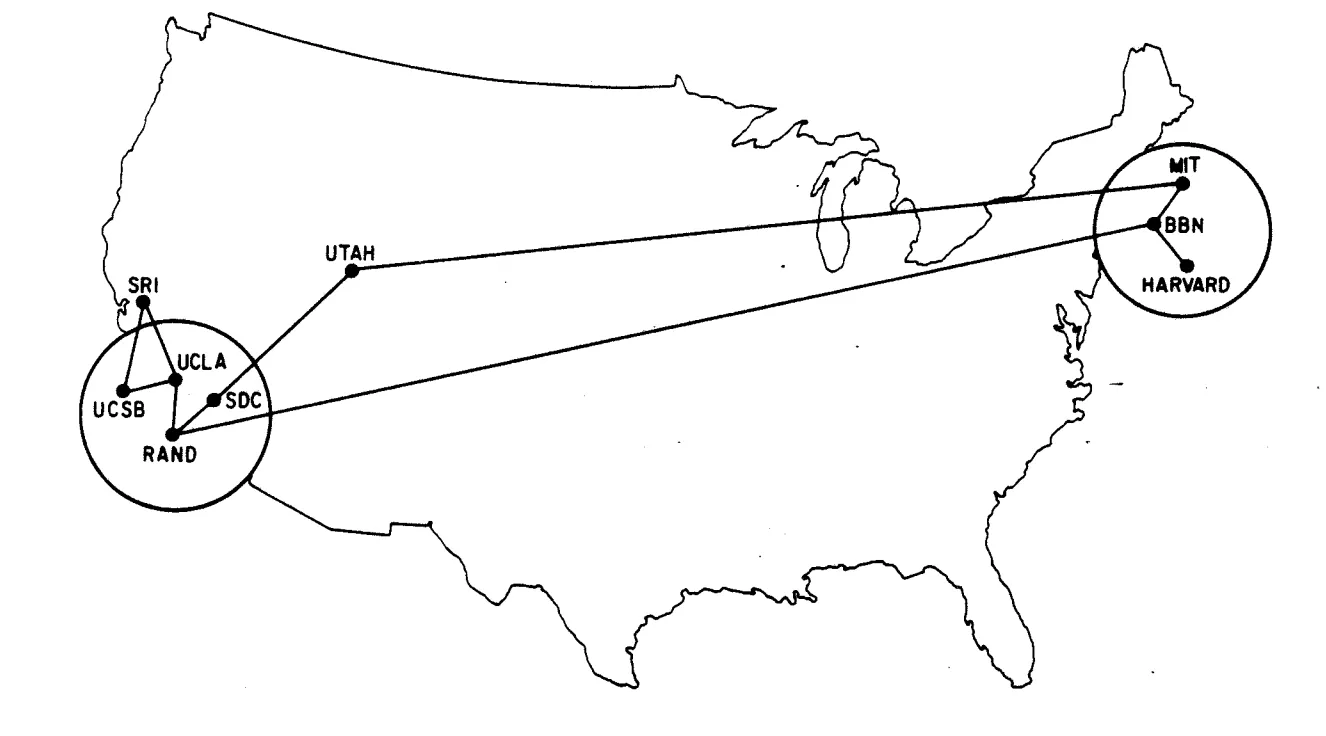
We’ve all heard that “DARPA invented the Internet.” But few have heard of BBN, the contractor that did the most work to bring the ARPAnet into existence. Today’s piece dives into the history of BBN and the firm’s unique structure. A firm like BBN winning the main portion of the ARPAnet project was a pivotal reason the ARPAnet project went so smoothly. BBN embodied the “middle ground between academia and the commercial world.” BBN’s early operating model provides an ideal management framework for anyone looking to deploy researchers on ambitious research projects within the structure of a firm. With BBN’s structure, many difficult projects become possible.
Related: A Scrappy Complement to FROs: Building More BBNs
-
The Forger's Dilemma: On Memory That Cannot Be Faked
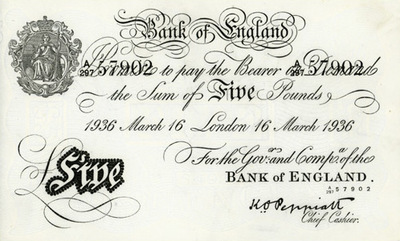
In 1942, the Nazis launched Operation Bernhard, a scheme to forge British banknotes so perfectly that dropping them over England would collapse the economy. They succeeded technically. The forgeries were immaculate. But the plan failed. Why?
Because money isn't paper. Money is memory: distributed memory, held in millions of minds, woven into habits and expectations. You can print a perfect note, but you cannot print the web of trust that gives it meaning. The forgery was flawless. What it forged was hollow.
This is the forger's dilemma: the more distributed a system of meaning, the harder it is to counterfeit. A single ledger can be altered. A network remembers.
How deep does this go?
The Paradox of Holographic Memory
All the way down.
Information security in decentralized holographic memory networks is paradoxical.
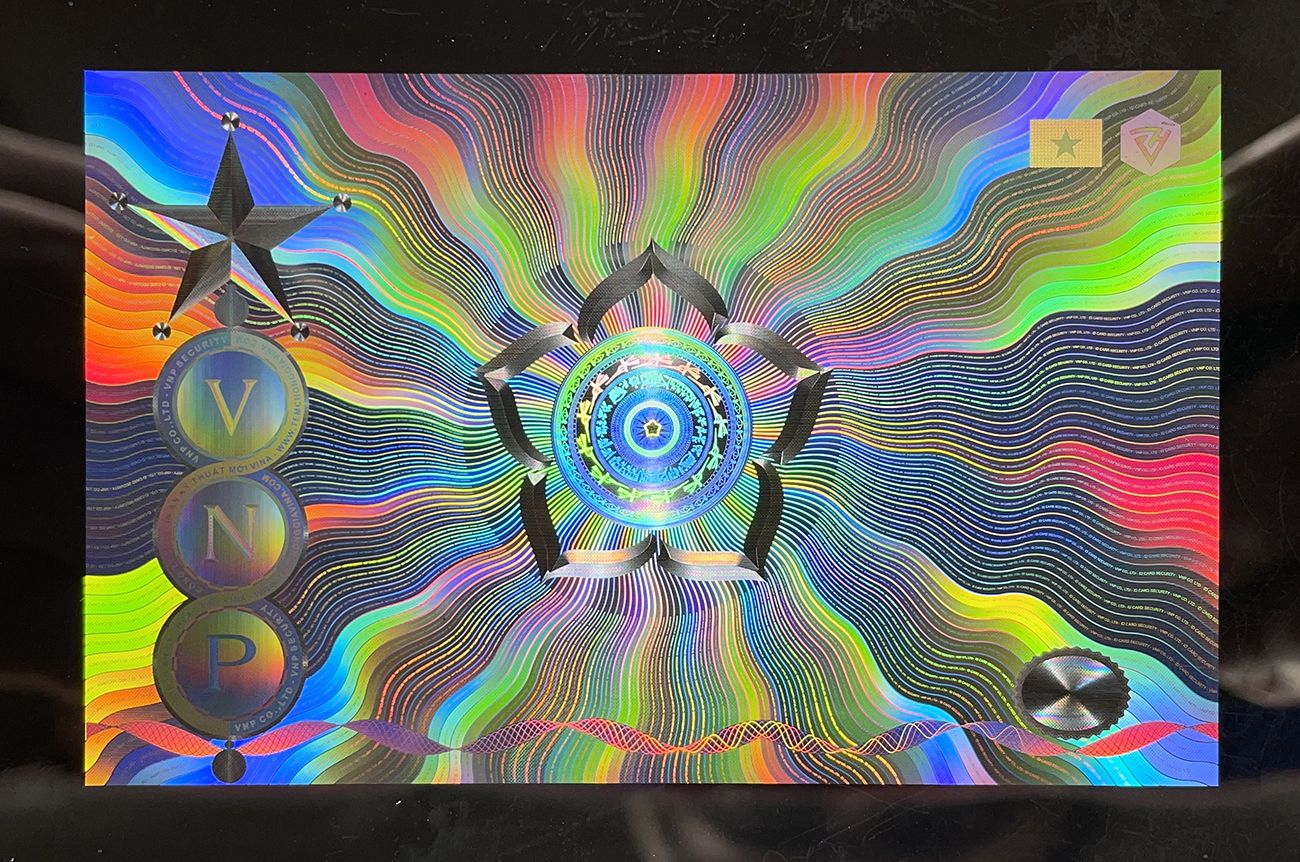
In a holographic system, every part contains the whole. Cut a hologram in half, and each half still shows the complete image. This makes it resilient. You cannot destroy the memory by attacking any single node. But it also makes it impossible to secure in the traditional sense. How do you lock a door that is everywhere?
The paradox: maximum distribution means maximum persistence but minimum control. What cannot be erased also cannot be owned. This sounds like a technical problem. It's actually a description of life.
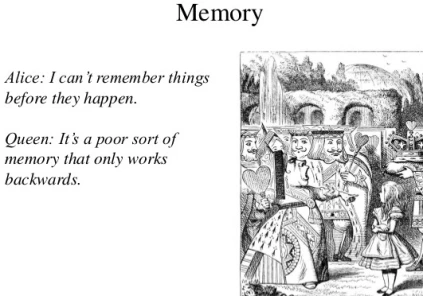
The Queen in Through the Looking-Glass tells Alice: "It's a poor sort of memory that only works backwards." We laugh, but she's right. Linear memory, the kind that only recalls the past, is the impoverished version. The kind forgers understand. Real memory is stranger: it loops, it anticipates, it contains itself.
There's a pattern that shows up everywhere distributed memory lives: 1/f noise, also called pink noise. It appears in brain dynamics, heartbeats, river flows, stock markets, music. The power decreases as frequency increases, but never disappears. It's the signature of systems at the edge, what Per Bak called self-organized criticality. Mandelbrot mapped these patterns his whole life: fractals, self-affinity, globality. The same structure at every scale.
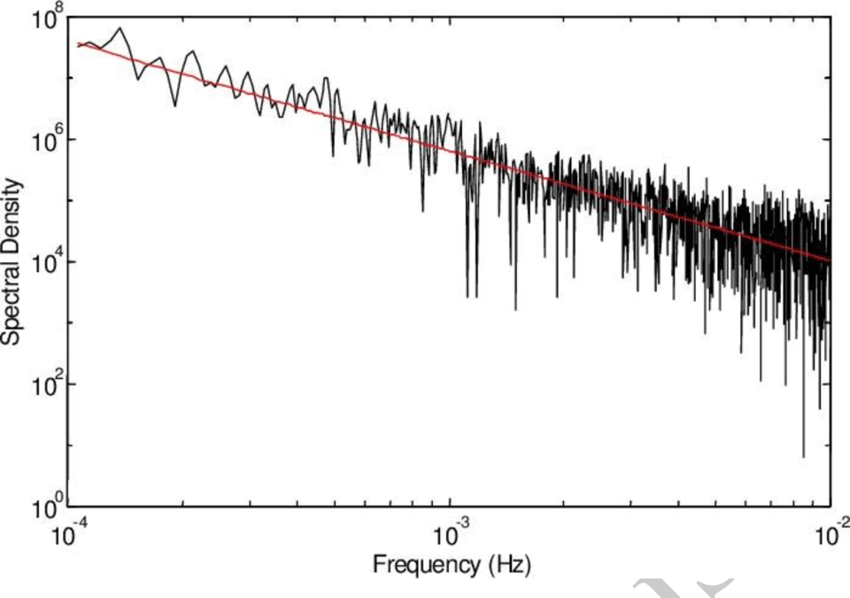
This is the sound of memory at the edge of chaos. Systems that exhibit 1/f noise remember across all timescales simultaneously: short bursts nested inside longer rhythms nested inside longer still. A forgery is flat: one scale, one moment. Real memory is fractal.
Any system capable of self-reference and rich structure will exhibit: scale invariance, persistent incompleteness, distributed paradox, no final temporal closure.
Trying to "solve" incompleteness is like trying to flatten a fractal. You can't. You can only design with it.
Evolution Is Cleverer Than You Are
Leslie Orgel, one of the founders of origin-of-life research, left us with his Second Rule: "Evolution is cleverer than you are."
This isn't humility. It's an observation about distributed memory. Evolution has been running experiments for 4 billion years, in parallel, across every niche on Earth. Every solution it finds is written into the living record, encoded not in any central archive, but in the bodies, behaviors, and biochemistry of every organism.
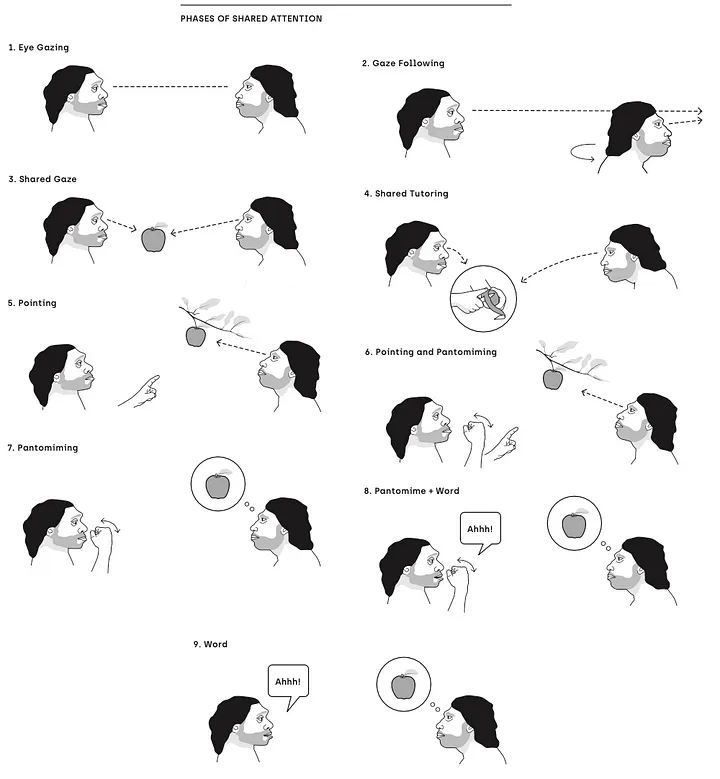
You cannot forge this. You can sequence a genome, but the meaning of that genome is held in the relationships it implies: the shared attention loops between predator and prey, the molecular handshakes between symbiont and host, the layered memory of every extinction and adaptation. Language itself emerged this way, not from one genius, but from minds looking at the same thing and recognizing that they are looking at the same thing. Meaning bootstrapped itself through mutual gaze.
Which raises a question that haunted Max Delbrück, Nobel laureate and founder of molecular biology: if life is information, but information that does something, a pattern that persists by actively maintaining itself, then what kind of thing is it? Neither mechanism nor mystery. Not quite matter, not quite idea. Delbrück suspected life would reveal a paradox akin to wave-particle duality in physics. Something that dissolves the distinction.
Memory with agency. Memory that responds, adapts, resists erasure. The forger's nightmare.
Intelligence at Every Scale
Scale up.
The belief that intelligence is exclusive to a specific level of complexity (animals/humans) is absurd. Consider the possibility of unconventional computation occurring on the scale of planets and galaxies. What other forms of collective, super-intelligent life are we overlooking?
If memory is distributed, and distributed memory cannot be faked or simulated, what does it mean that the universe is full of distributed systems? (This, incidentally, is why simulation theory feels shallow. A simulation is a forgery. And we've already established what happens to forgeries.) Galaxies have been processing information for 13 billion years. What do they remember? What are they computing?
We assume cognition requires brains. But brains are just one solution. Ant colonies think without any individual ant understanding the whole. Markets process information no trader fully grasps. Perhaps planets dream in ways we cannot recognize: geologic memory, climatic memory, the slow thought of tectonic plates.
Places That Remember
But you don't need to scale up to galaxies. Memory architecture exists at human scale too.
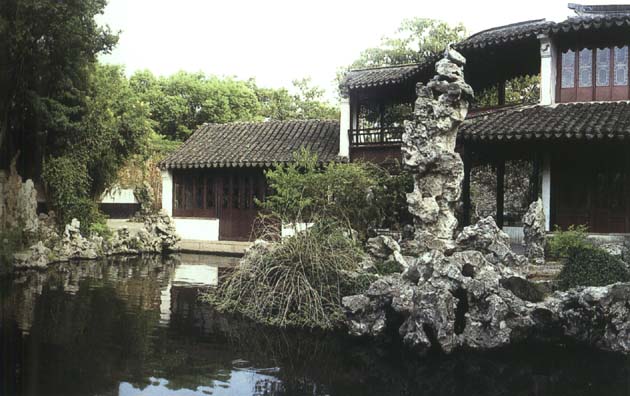

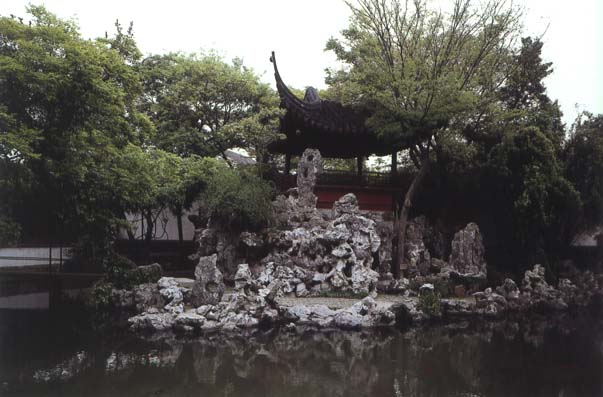
In Suzhou, there is a garden called The Retreat and Reflection Garden. Built in 1885 for a disgraced official who hoped to remedy his wrongdoings through contemplation. Water forms the center. Buildings float at the edge. Gardens within gardens. Every sightline triggers associations. Every pool reflects what it cannot contain.
This is not decoration. This is technology: memory architecture. The official walks through designed experience, and in walking, is changed. Yuan Long spent two years building it. It has been remembering for 140.
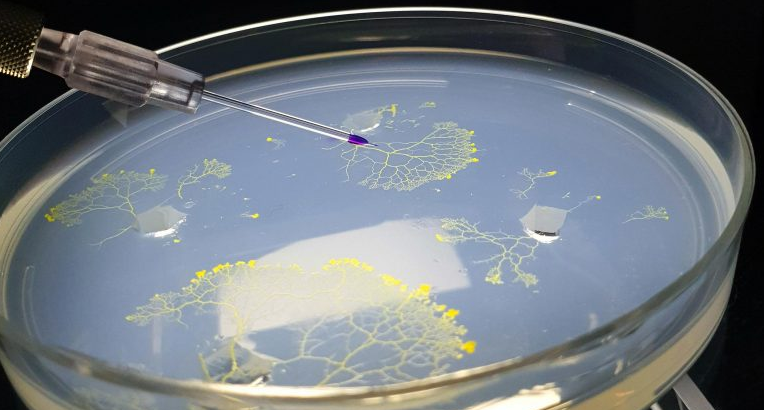
Or consider the slime mold. A single-celled organism with no brain, no nervous system. Yet it remembers. Researchers found that memory about nutrient location is encoded in the morphology of its network: the thickness of its tubes, the patterns of its growth. The slime mold's body is its memory. No central archive. No separation between the map and the territory.
And now we're building crystals that do the same. 5D memory crystals can preserve human DNA for billions of years. Not digital storage that degrades, but physical structure that outlasts planets. The garden remembers for centuries. The crystal remembers for eons. The slime mold remembers in its very flesh.

And yet: in Chinese mythology, Meng Po stands at the bridge between lives, serving a soup brewed from the tears of the living. Drink it, and your memory is erased for reincarnation. Even the cosmos needs forgetting. Memory that cannot let go becomes a prison. The garden is designed with empty spaces. The hologram requires interference. The forger's mistake wasn't just that he couldn't copy the memory. It was that he didn't understand: memory includes its own erasure.
Memento
So here's the secret the forgers never understood: You cannot fake what you are standing inside. Memory isn't stored. Memory is.
Consciousness. Language. The web of mutual recognition. The hum of 1/f noise in your own neurons as you read this sentence. You are the distributed memory. You are the fractal. You are the garden, remembering yourself. Memento.
#Philosophy #History #Biology #fnord #Paradox #Essay #Complexity
-
The Green Stone - A massive green rock cube located in the ruins of Hattusa, capital of the Hittite empire

-
Time is only a veil: Translation of the first page of The Triangular Book of St. Germain and AI Interpretation of second page.
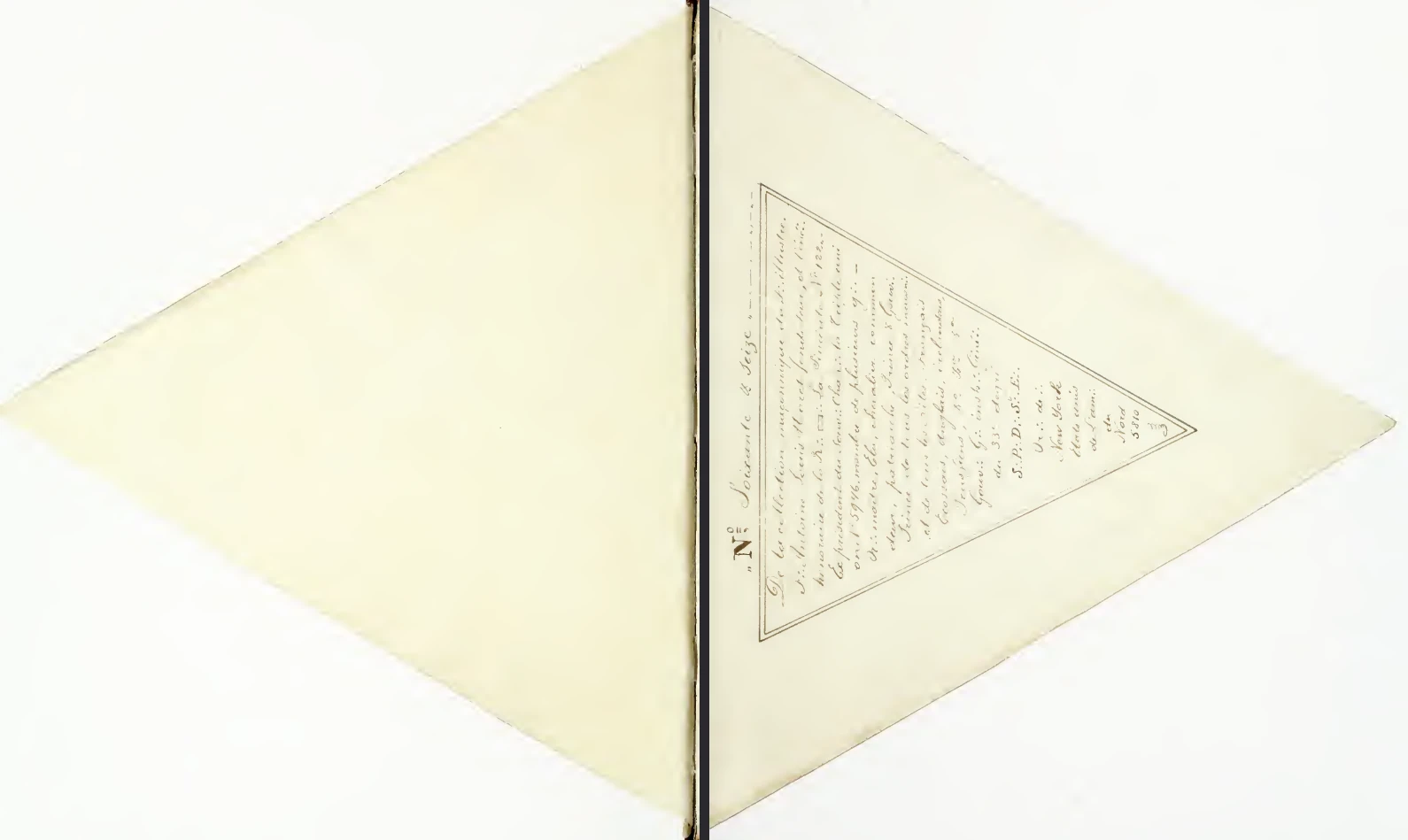
Doctrine of Being
From the universal light all things proceed.
The enlightened man does not seek vulgar gold,
but the key that opens nature.
This secret fire, unknown to the profane,
is contained in all matter
and reveals itself to one who knows how to unite
the fixed and the volatile.
Time is only a veil.
He who understands number
understands form.
S.P.D.S.
One single
true fire
in all things
Year 1780
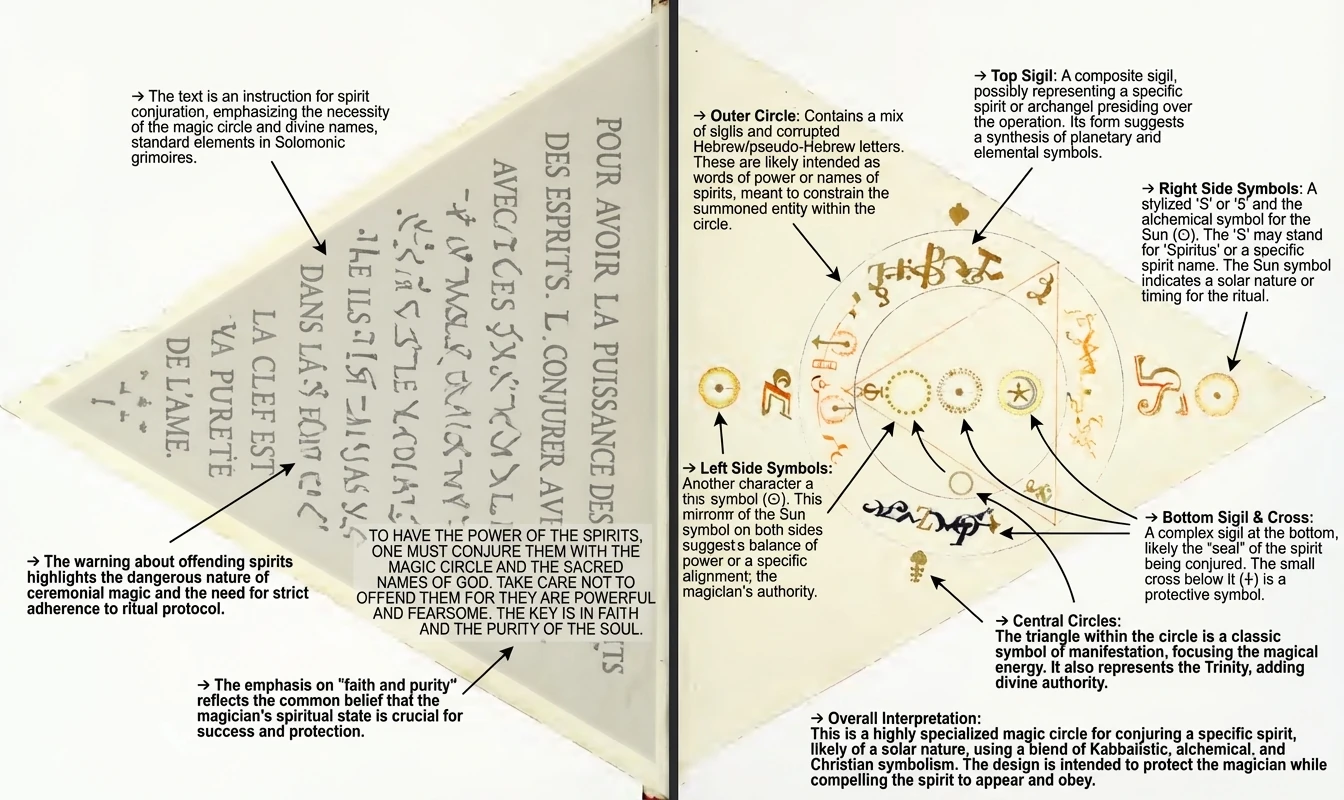
What AI thinks about Page 2:
-
A Rail Zeppelin And A Steam Train Near The Railway Platform. Berlin, Germany, 1931

-
Einstein's most valuable letter
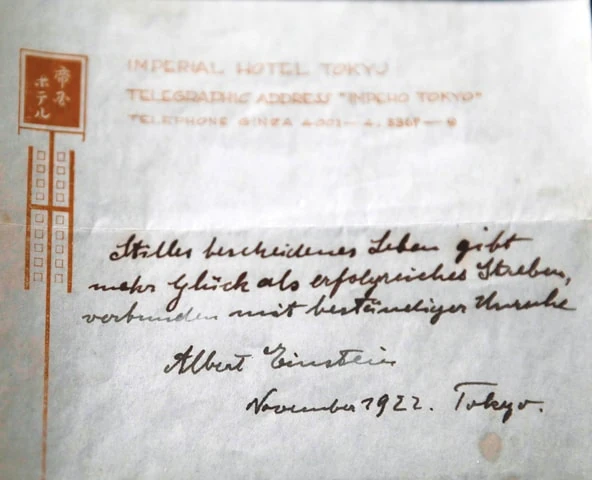
In 1922, at Tokyo during his lecture tour Albert Einstein tipped a courier with handwritten note instead of cash, saying they might one day be worth more. One read: “A quiet and modest life brings more joy than a pursuit of success bound with constant unrest.” In October 2017, that note sold for $1.56 million at Winner's auction house in Jerusalem.
-
Japanese map published at the start of the World War 2, ca. 1939.
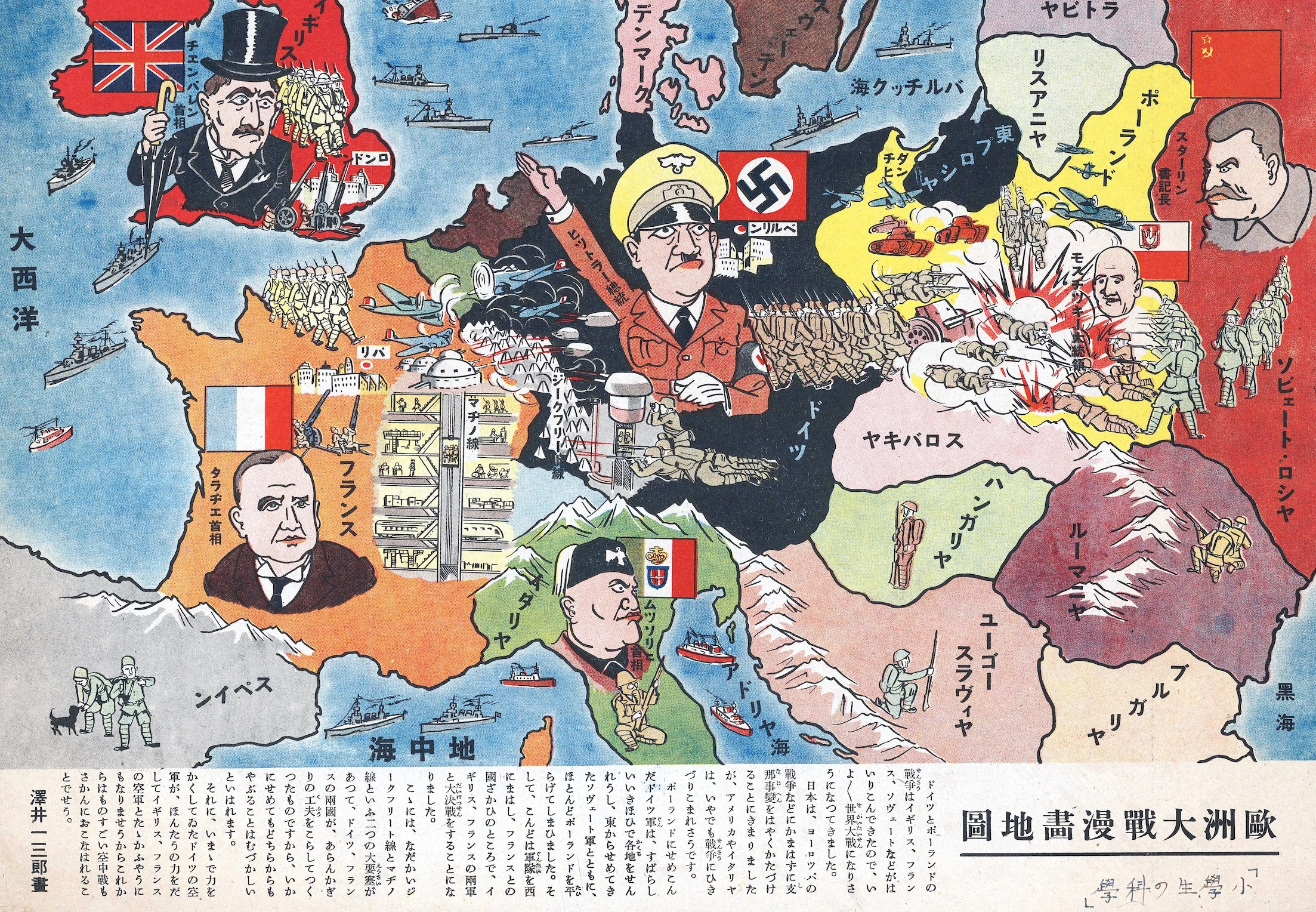
Designed by Ichisaburō Sawai and titled 'Pictorial Map of the Great European War', the map shows Germany and the Soviet Union invading Poland, with British and French Prime Ministers Neville Chamberlain and Édouard Daladier looking on in concern. Air and naval battles also take place in the West. Mussolini looks angrily across the Adriatic. Hitler occupies the centre of the map.
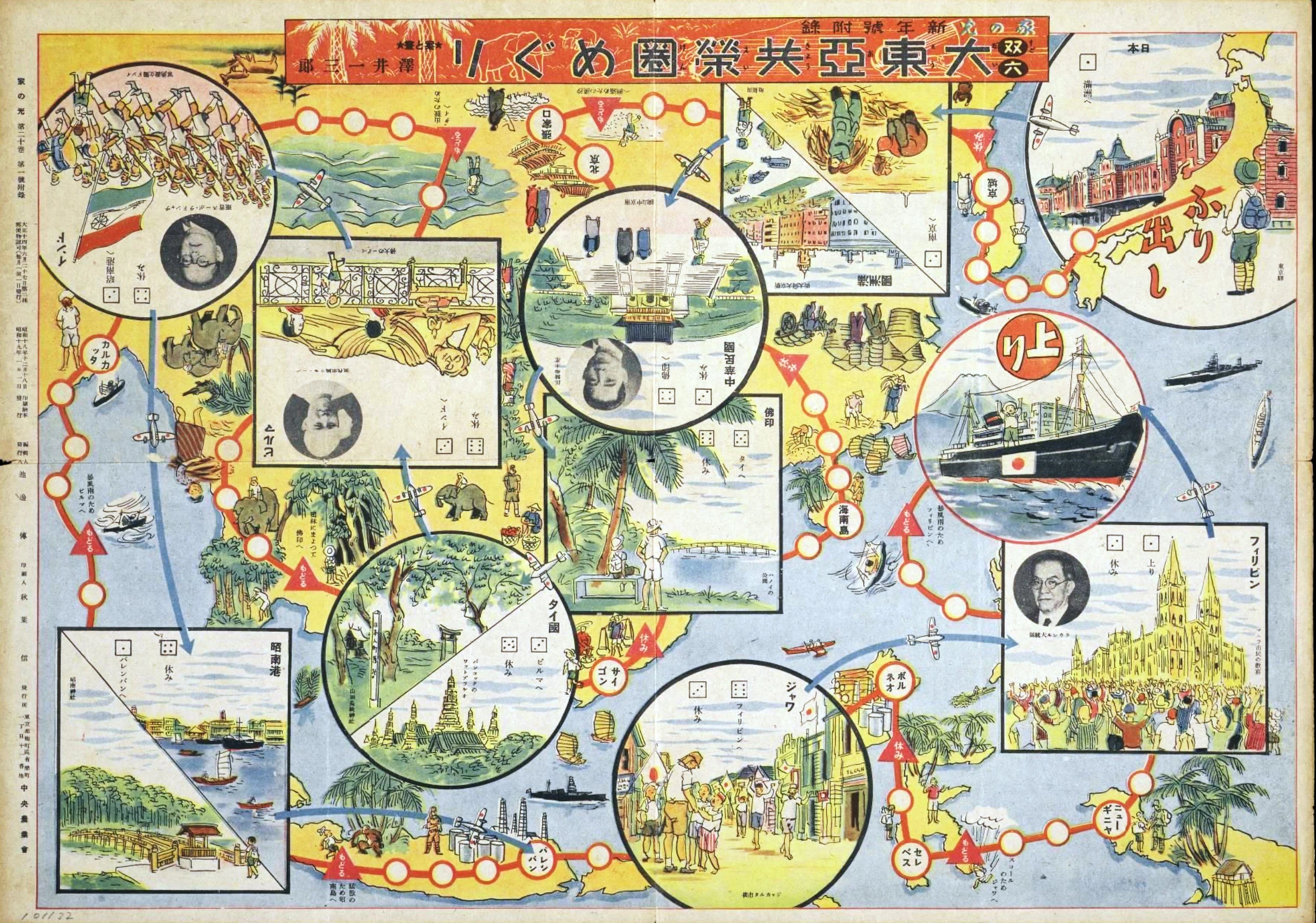
Seemingly produced as an educational map for children, not necessarily propagandistic but interesting all the same. Ichisaburō Sawai produced at least one other, more openly propagandistic map (or board game?) later in the war (ca. 1944) celebrating the Japanese Empire.
Translation of the text at the bottom:
With the involvement of Britain, France, the Soviet Union, and others, the war between Germany and Poland is on the verge of becoming a world war.
Japan has decided to quickly resolve the China incident without paying attention to the European war, but it seems that the United States and Italy will be dragged into the war whether they want to or not.
The German army invaded Poland, occupying various areas with incredible force, and together with the Soviet army attacking from the east, they nearly devoured the whole country. They then turned their forces west, ready for a decisive battle with British and French forces on the French border.
There are two great fortresses here, the famous Siegfried Line and the Maginot Line, which the German and the French built using all their ingenuity, and it is said that they are difficult to breach no matter how hard an attacker tries.
In addition, the German air force, which has been hiding its strength until now, will begin to show its true strength and probably fight against the British and French air forces, so there will likely be some fierce air battles happening soon. -
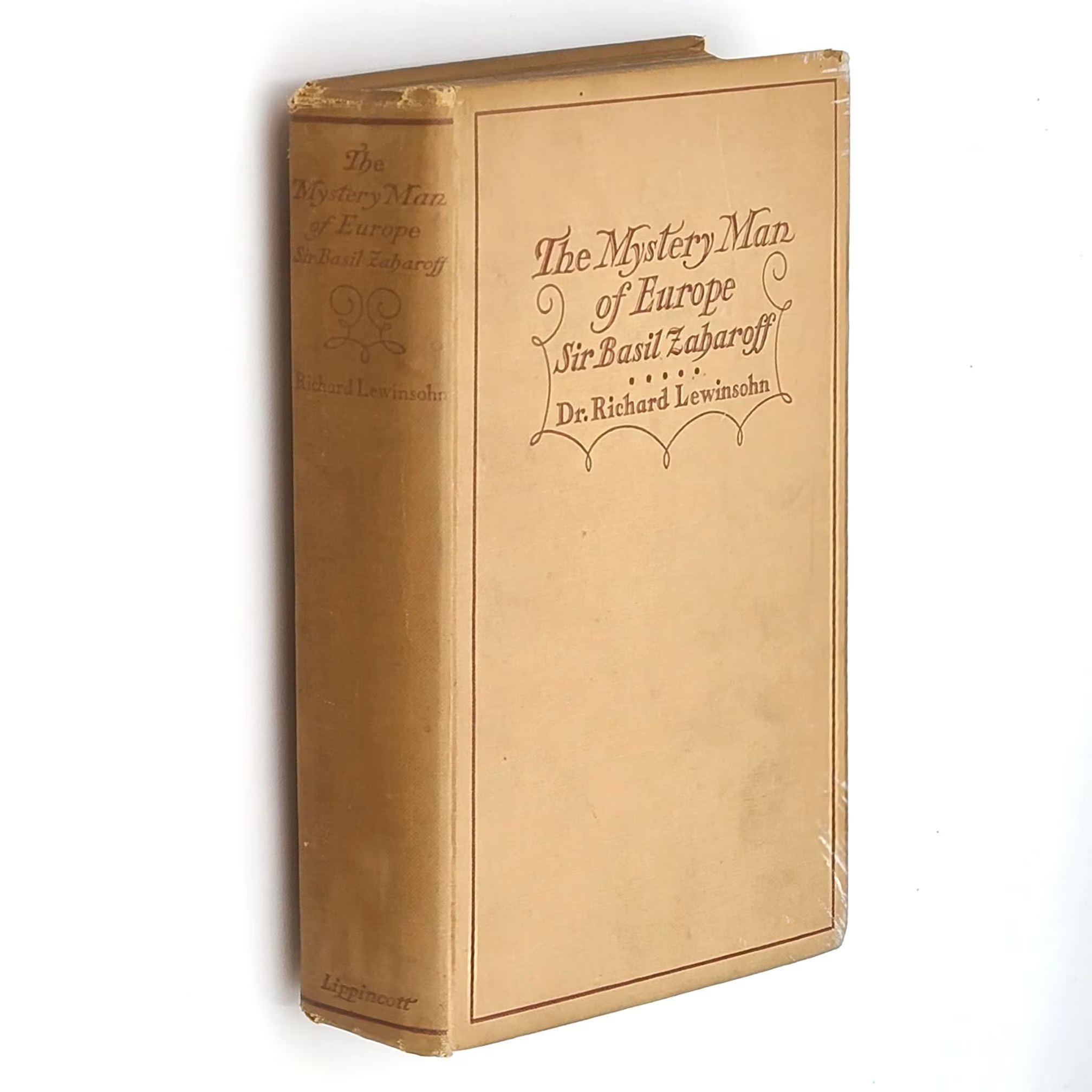
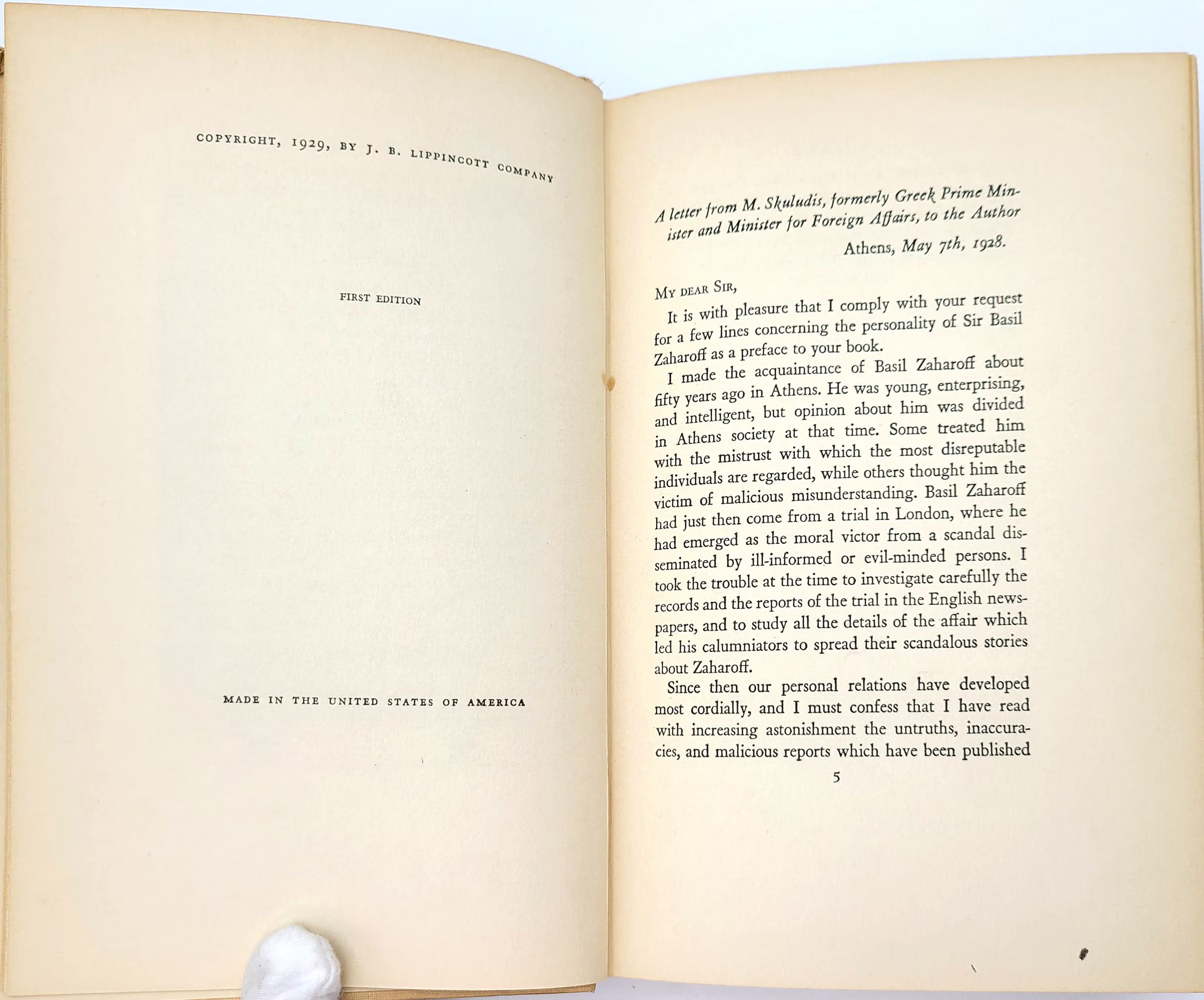
Sir Basil Zaharoff: The Mystery Man of Europe Who Sold Both Sides
There was once a man who sold submarines to Greece and Turkey simultaneously — faulty ones, to both. He then bought Monaco. He helped birth what would become British Petroleum. Occultists claimed he was the reincarnation of an immortal alchemist. Anton LaVey dedicated The Satanic Bible to him. When he died in 1936, the financial architecture he moved through was just crystallizing into something permanent.
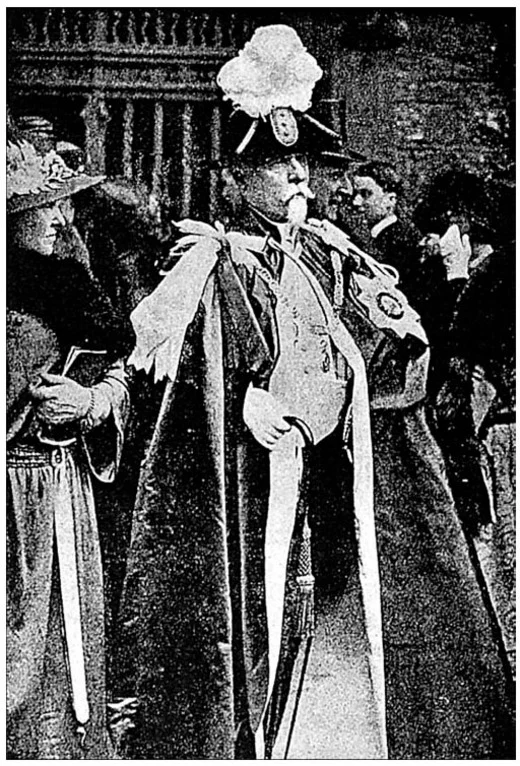
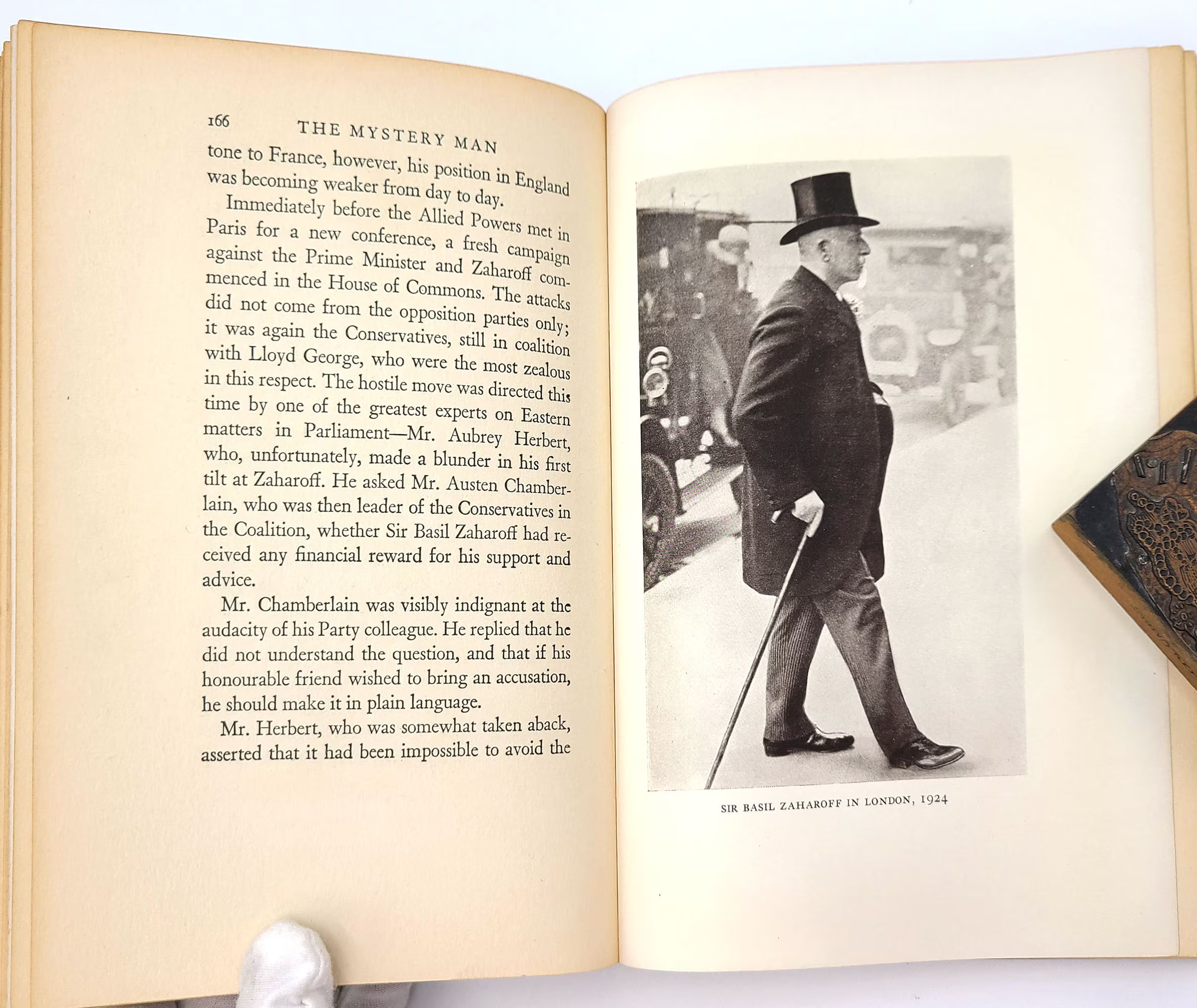
His name was Sir Basil Zaharoff, GCB, GBE — born Vasileios Zacharias (Βασίλειος Ζαχαρίας Ζαχάρωφ) in the Ottoman Empire, 1849. One of the richest men in the world during his lifetime. Known to contemporaries as the "Merchant of Death" and the "Mystery Man of Europe."
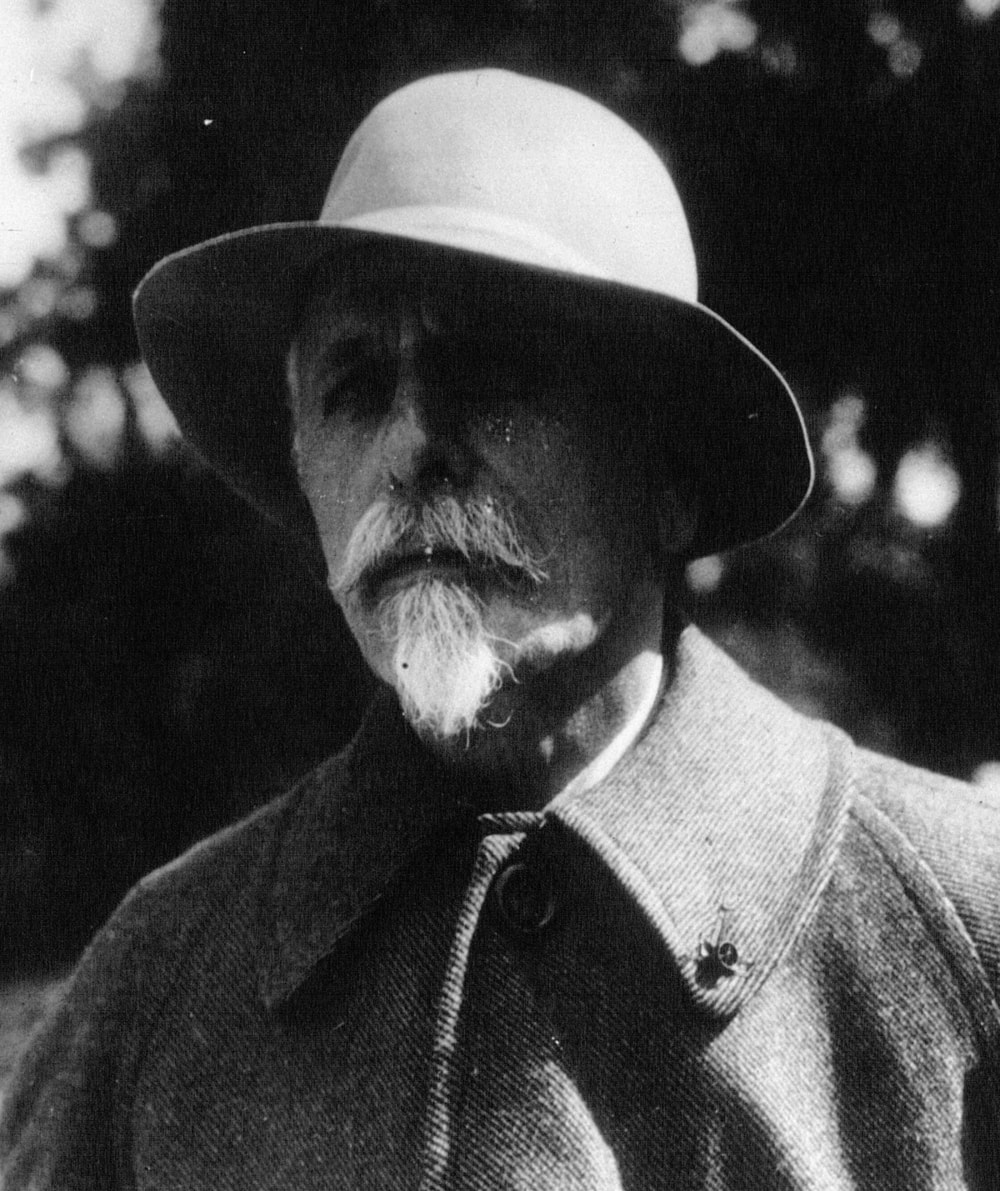
Sir Basil Zaharoff — the "Mystery Man of Europe"
The Merchant of Death
Born in 1849 in the Ottoman Empire to a Greek family, Zaharoff's first job was as a tour guide in Constantinople's Galata district. His second was as a firefighter — a profession that, in 19th-century Istanbul, meant salvaging treasures from burning buildings for wealthy clients. He spoke a dozen languages. He understood, early, that borders are suggestions and that those who move between them hold the cards.
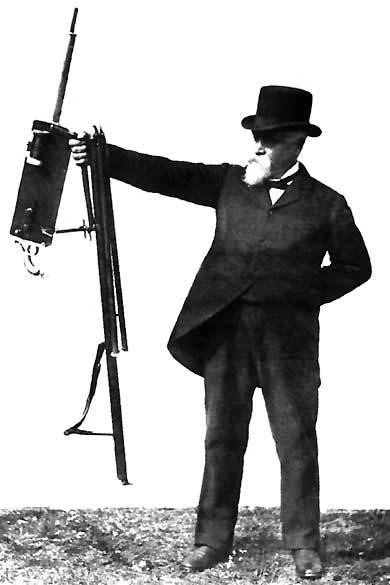
By his thirties, he was the Balkan representative for Thorsten Nordenfelt's arms company. His signature move — later known as Système Zaharoff — was selling weapons to both sides of a conflict, sometimes delivering machinery he knew to be faulty. He didn't just profit from wars — he helped engineer them into existence.
The submarine deals are the purest example. First, he sold a steam-powered submarine to Greece. Then he went to the Turks and warned them: Greece now has a dangerous new weapon. Frightened, they bought two. Then he visited the Russians and explained that the Turks would soon control the Black Sea. They bought two more. Five submarines sold, all of them nearly useless. When the Ottomans tested theirs by launching a torpedo, the vessel capsized and sank.
His sabotage was as elegant as his salesmanship. When the American inventor Hiram Maxim developed a machine gun far superior to Nordenfelt's, Zaharoff sabotaged three consecutive public demonstrations: in La Spezia, he got Maxim's men so drunk the night before that they couldn't operate the gun; in Vienna, he tampered with the weapon mid-demo; at a third showing, he planted rumors that Maxim couldn't mass-produce. By 1888, Maxim had no choice but to merge with Nordenfelt — with Zaharoff taking a large commission and eventually becoming an equal partner. He bought his competition by breaking it first.
The Casino and the Oil
Zaharoff didn't just sell death. He bought pleasure. When Monaco's Société des Bains de Mer — the company that owns the Monte Carlo Casino — fell into debt, Zaharoff acquired it and revitalized it. The merchant of death became the landlord of Europe's most glamorous gambling den. The same hands that signed arms contracts now signed checks for the roulette tables.
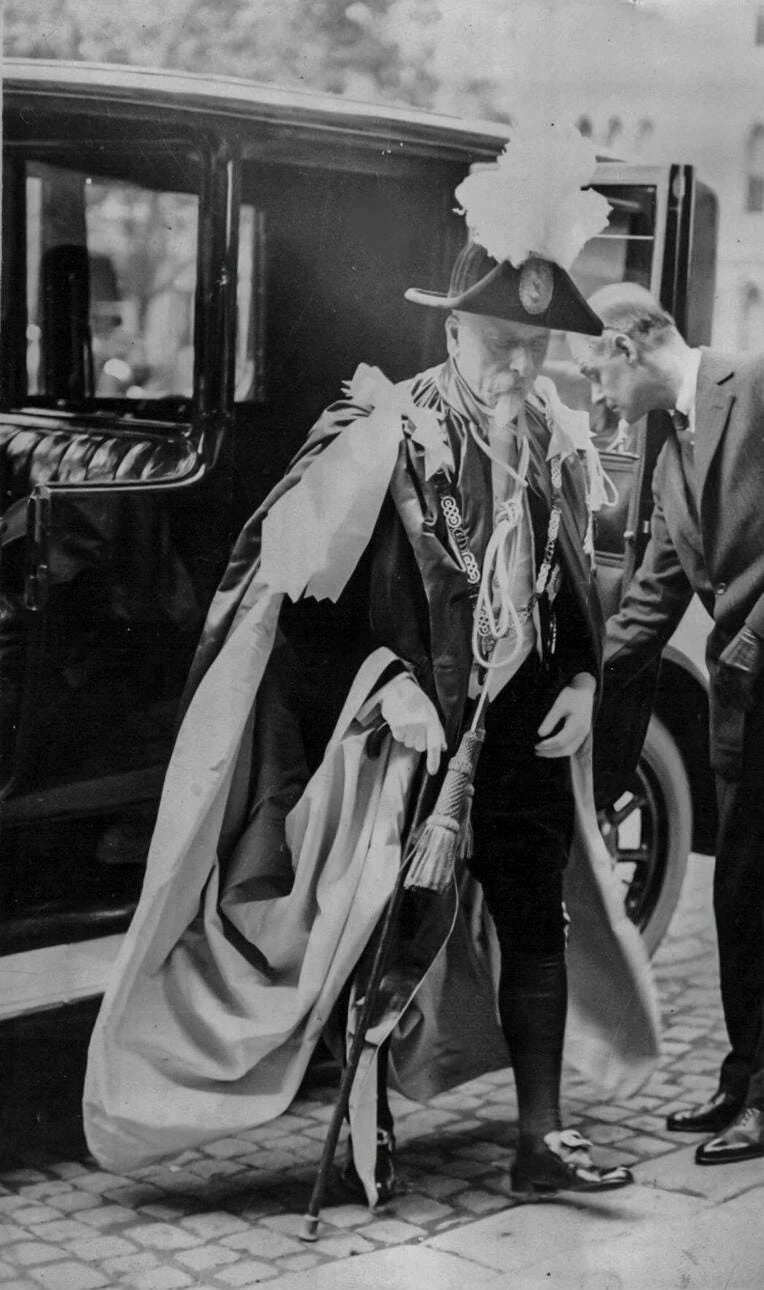
And there's more. He was instrumental in the incorporation of a company that would become a predecessor to British Petroleum. Oil, the fuel of the 20th century's wars, was also his business. He understood what few did at the time: whoever controls the substrate — whether weapons, energy, or entertainment — controls the game.
The Monte Carlo Casino wasn't just a business. It was a meeting point for aristocrats, spies, and the strange fraternity of men who moved between visible power and its shadows. In that era, the line between the gambling table and the war room was thin. The same circles that frequented Monte Carlo also populated the lodges, the salons, and the secret societies of the age.
The Occultist's Muse
French esotericist René Guénon — one of the 20th century's most influential traditionalist thinkers — speculated that Zaharoff might be the modern incarnation of "Master Rakoczi," an earthly representative of the so-called "Unknown Superiors." In occult tradition, Master Rakoczi is identified with the Count of St. Germain — the legendary 18th-century figure who claimed to be centuries old, who appeared in the courts of Europe with seemingly impossible knowledge, and who vanished without a verified death.
Was Zaharoff the Count, returned? Guénon thought it possible.
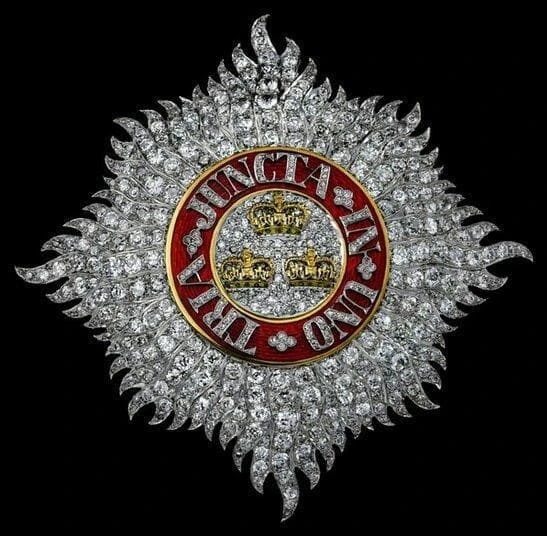
Decades later, Anton LaVey — founder of the Church of Satan — dedicated his Satanic Bible to Zaharoff, honoring him as an embodiment of Machiavellian will-to-power. LaVey later named his grandson "Stanton Zaharoff" in tribute. The merchant of death had become a patron saint of the Left-Hand Path.
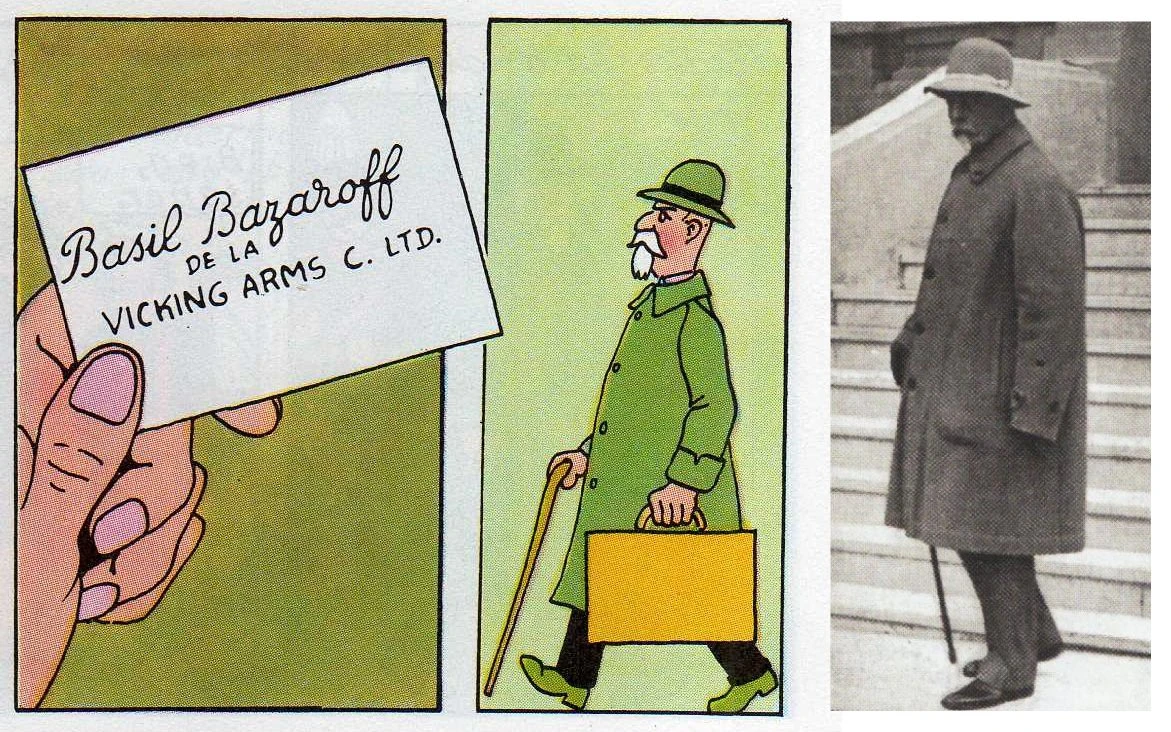
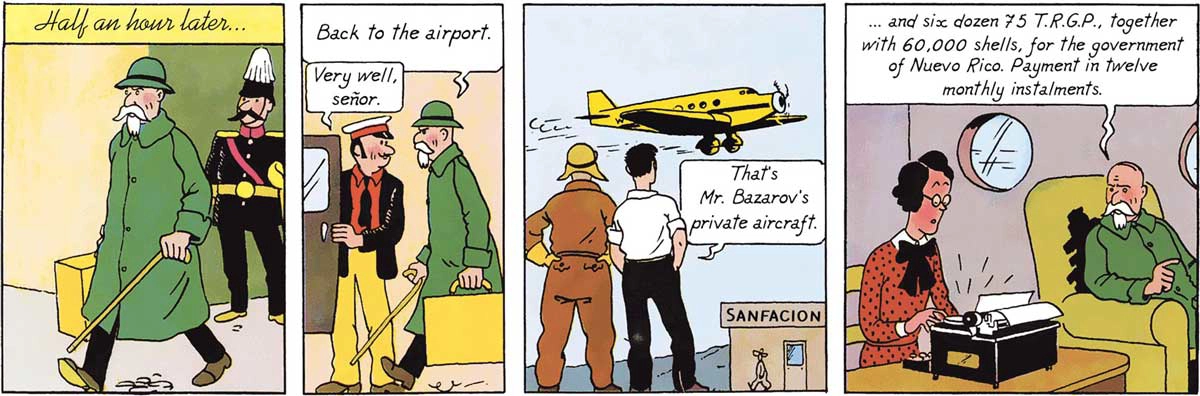
And the fiction writers saw it too. Eric Ambler modeled the sinister Dimitrios on Zaharoff in A Coffin for Dimitrios. George Bernard Shaw transmuted him into Andrew Undershaft in Major Barbara. Hergé put him in Tintin as the arms dealer Basil Bazaroff in The Broken Ear. He appears in Thomas Pynchon's Against the Day and Ezra Pound's Cantos (as "Metevsky"). Even the James Bond villain Ernst Stavro Blofeld — the bald mastermind of SPECTRE — is believed to owe his lineage to the Mystery Man of Europe.
The Hidden Empire
Zaharoff died in 1936, in Monte Carlo, in the casino principality he had rescued from bankruptcy. But the architecture of invisible power he moved through was just being formalized.
Six years before his death, a peculiar institution had been founded in Basel, Switzerland: the Bank for International Settlements — the "central bank of central banks." It would survive two world wars, operate during Nazi occupation, and emerge as the quiet backbone of global finance. A tower in Basel where the world's central bankers meet in private, beyond the reach of any single nation. The networks Zaharoff had navigated — arms manufacturers, oil companies, sovereign wealth, intelligence services — were crystallizing into permanent infrastructure.
And not just the visible networks. The same years that saw the BIS founded also saw the proliferation of Egyptian Rites, Martinist lodges, and neo-Templar orders across Europe. Theodor Reuss was passing the torch of the O.T.O. The visible and invisible worlds were both reorganizing after the Great War. Zaharoff had operated in both. Now both were institutionalizing.
Fast forward ninety years. Switzerland still hosts the nerve center — Glencore, Vitol, Nestlé, Novartis — all interlocked with the same capital blocs and banking networks that trace back to that 1930 tower.
Empires don't fail — they transform. The Roman Empire became a church. The British Empire became a bank. The American Empire became the internet. The power structures Zaharoff navigated didn't disappear when borders were redrawn or wars ended. They shape-shifted. They went underground. They became infrastructure. He wasn't an anomaly. He was a prototype.
The Epistemic Firewall
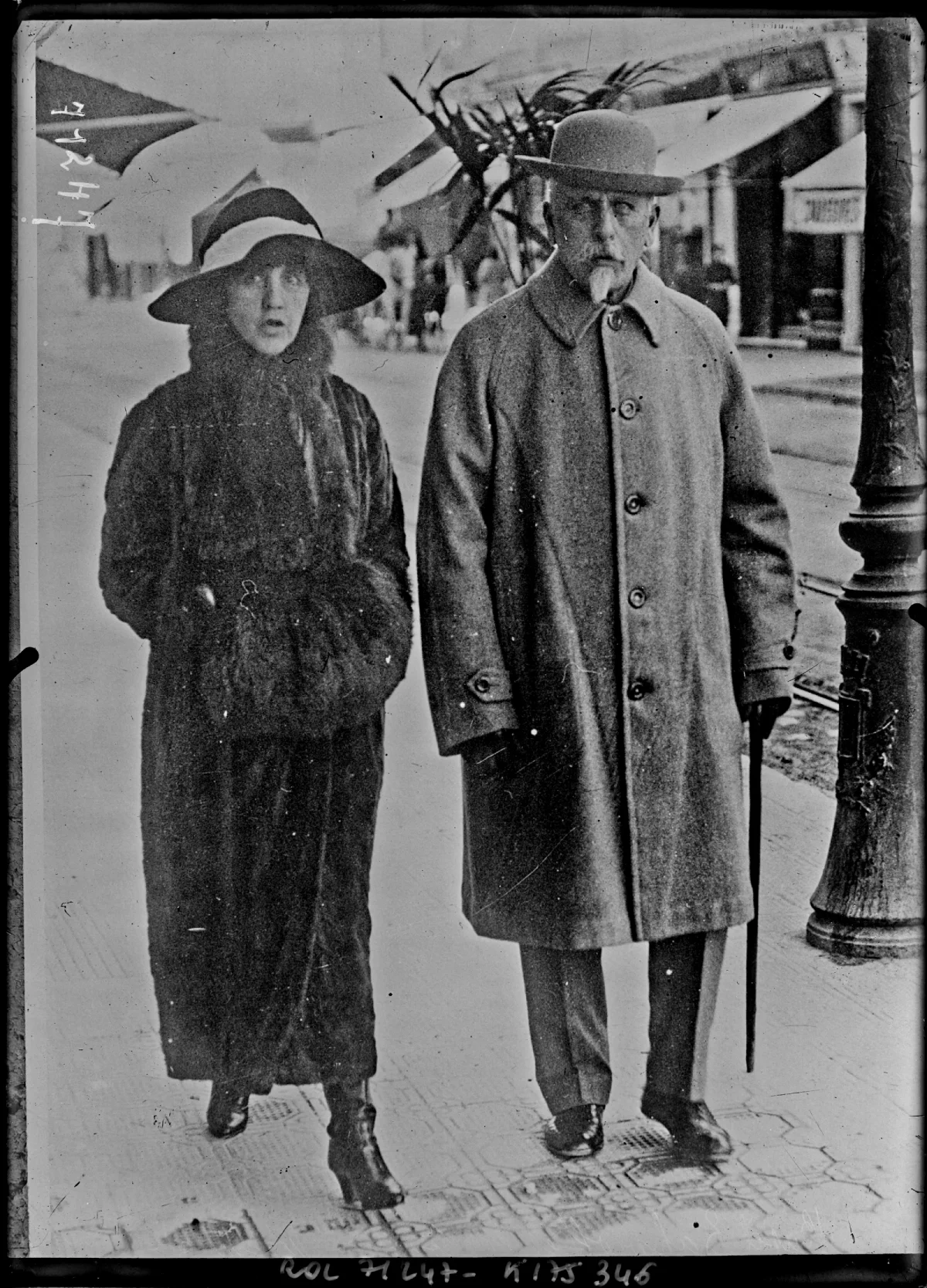
So why does this all feel fantastical when you first hear it? Why does the thread from a Greek arms dealer to Swiss commodity giants to esoteric lodges to Basel banking towers sound like fiction?
Because the best-kept secrets don't need guards. They're protected by something more powerful: public incredulity. As someone once noted — the attribution is disputed — "Only puny secrets need protection. Big discoveries are protected by public incredulity."
The grand secrets persist not through suppression of evidence, but through the contamination of epistemology itself. You don't hide the truth — you make belief in it structurally impossible.
The Deeper You Look
The record does not simplify. He was a bigamist — married Emily Burrows in England, then Jeannie Billings in New York for her inheritance. When exposed, he fled. He called himself Count Zaharoff and, later, Prince Zacharias Basileus Zacharoff. In 1883, in Galway, he lured young Irish women onto ships with promises of factory work in Massachusetts. He seduced María del Pilar, Duchess de Villafranca de los Caballeros, cousin to the King of Spain, and married her after her husband's death. He cultivated the prima ballerina Mathilde Kschessinska to access the Czarist court. He once attempted to bribe the entire Ottoman Empire with £10 million in gold to defect from Germany. By 1911, he sat on the board of Vickers. During the First World War, the company produced 4 battleships, 53 submarines, 2,400 cannons, and 120,000 machine guns. He was close friends with British Prime Minister Lloyd George and Greek Prime Minister Venizelos. He was knighted twice.
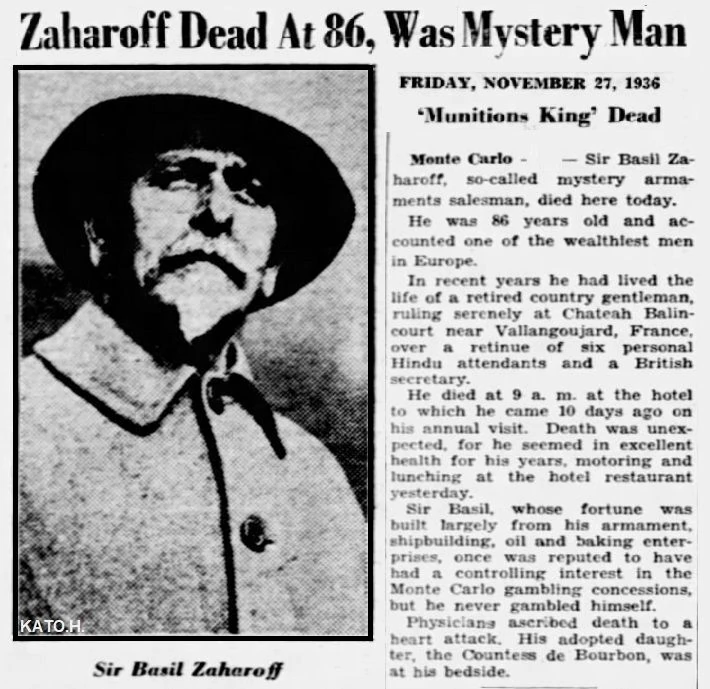
The more you learn, the less he resolves into a single story. He remains, as he was in life, the Mystery Man of Europe. There exists, supposedly, a pamphlet in the Bibliothèque nationale attributed to "Z.Z." and dated 1923, which claims the Count of St. Germain legend was itself a cover story — manufactured by the arms trade to provide deniability for men who could not be seen to exist. The pamphlet has never been authenticated. Its catalog number is 616.936.
Coda
In 1927, nine years before his death, Zaharoff burned all his papers and diaries. When his will was read, it listed assets of only £193,000 — a fraction of the fortune he had claimed. Where did the billions go?
The structures are still running. If you have read this far, you are already inside them.
Related
-
A Fun LLM Prompt for Excavating Weird but Real History
Take a real historical person or event X.
1. Begin with strictly factual context about X.
2. Identify one obscure, marginal, or forgotten adjacent fact (a minor invention, footnote, coincidence, secondary figure, or parallel event).
3. Follow that thread outward, step by step, into a surprising but real connection.
Present this as a short, playful story, but clearly separate:
- what is verified history
- what is speculative interpretation
The goal is not fantasy, but delight through improbable truth.
Bonus Prompt
"Rewrite this text as if Jorge Luis Borges created it".
-
How 20 Smuggled Chinese Hamsters Built a Pharmaceutical Empire

Chinese Hamster Ovary, or CHO, cells are widely used in the pharmaceutical industry. And, incredibly, these cells can be traced back to just twenty hamsters that were packed into a crate and smuggled out of China in the 1940s.
Chinese scientists had been using these hamsters — native to northern China and Mongolia — to study pathogens since at least 1919. The hamsters were unusually well-suited to scientific research because they have short gestation periods (18-21 days), a natural resistance to human viruses and radiation, and it was thought, early on, that they possessed just 14 chromosomes, making them easy to work with for mutation studies. (They actually have 22 chromosomes.)
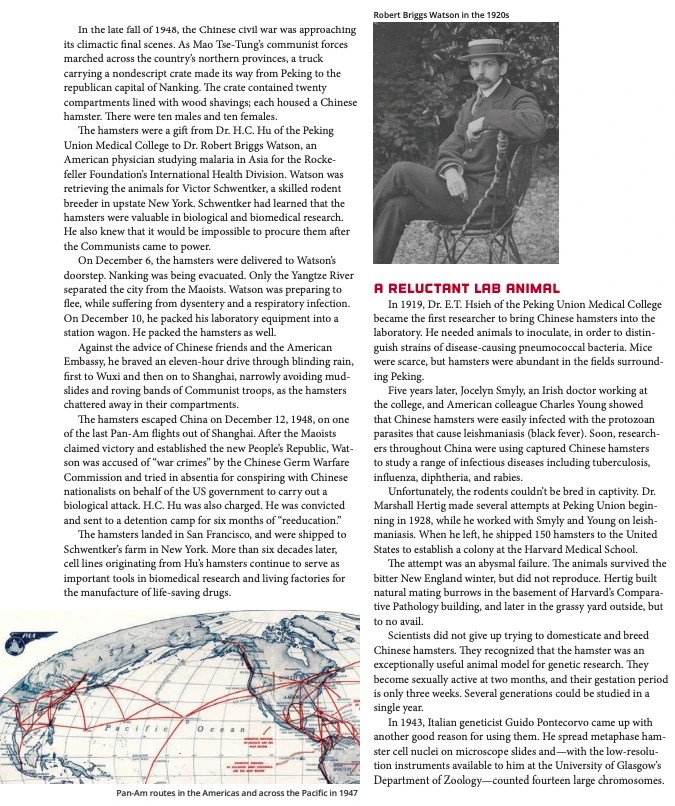
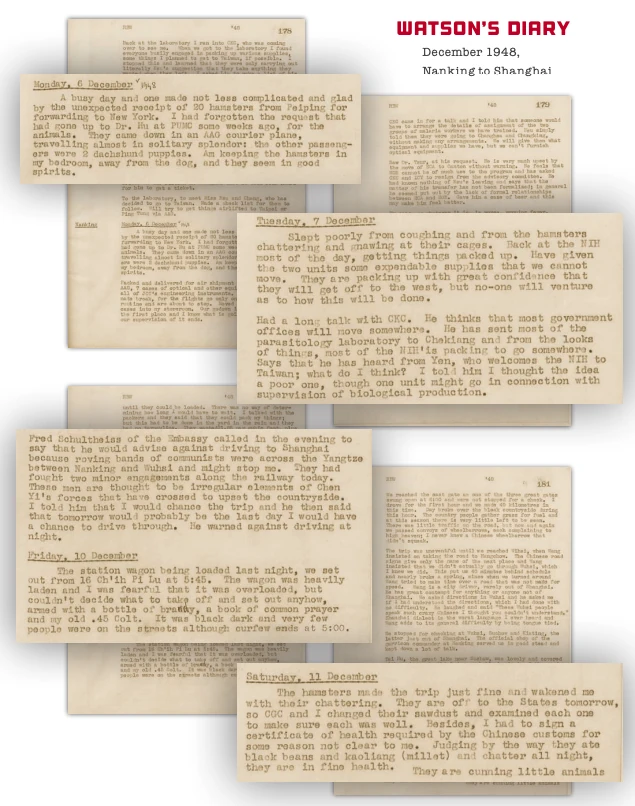
During the Chinese civil war, a rodent breeder in New York named Victor Schwentker worried that, if the Communists won the war, he’d never be able to get his hands on these special rodents. So in 1948, Schwentker sent a letter to Robert Briggs Watson, a Rockefeller Foundation field staff member, and asked him to “acquire” some hamsters so he could begin breeding them.
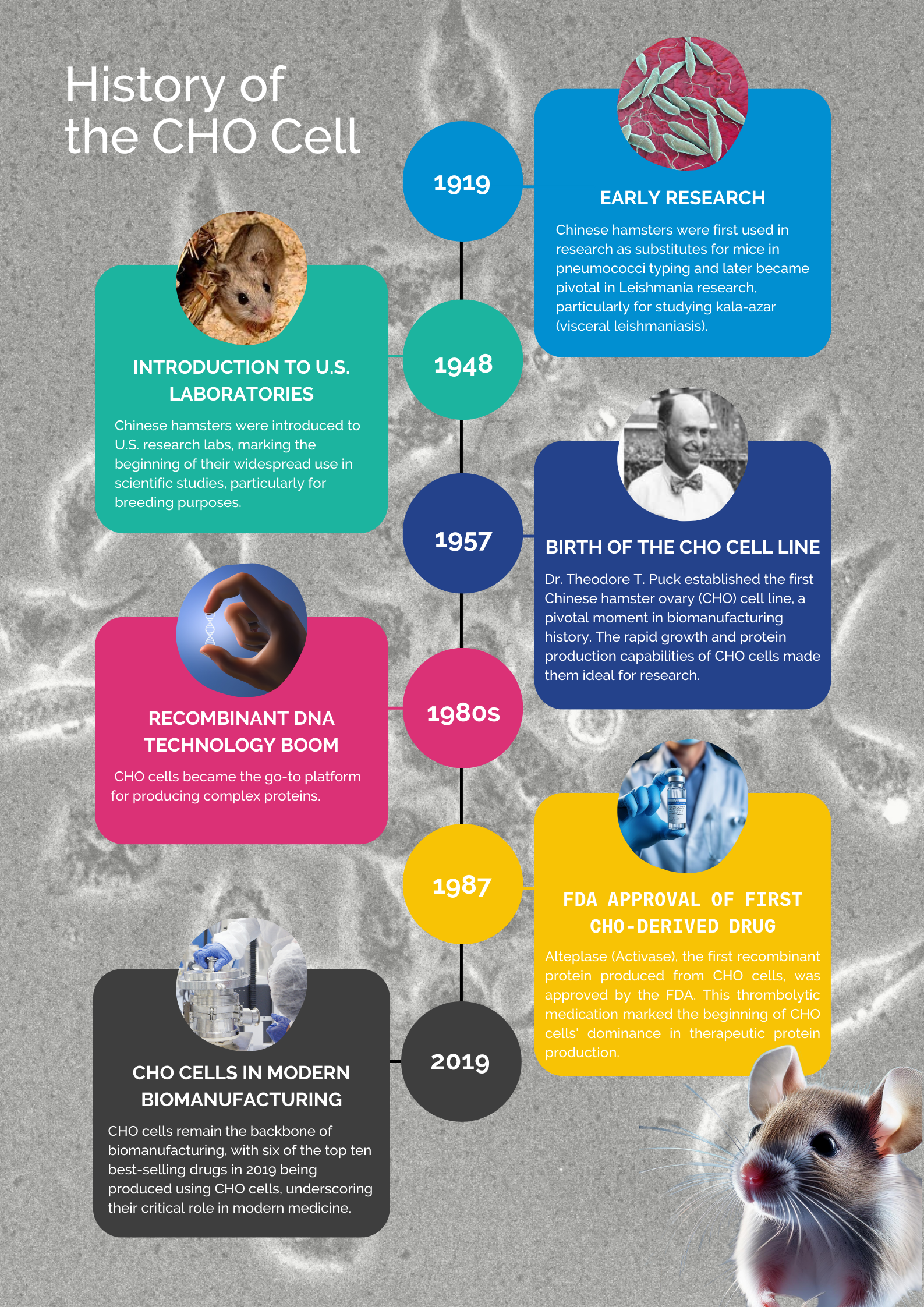
Watson collected ten males and ten females and packed them into a wooden crate with help from a Chinese physician (who was later imprisoned for this act). Watson slipped the crate out of the country on a Pan-Am flight from Shanghai, just before the Communists took control.
In New York, Schwentker received the hamsters and then began breeding and selling them to other researchers.
In 1957, a geneticist named Theodore Puck, intent on creating a new mammalian “model system” for in vitro experiments, learned about the Chinese hamster and contacted George Yerganian, a researcher at the Dana-Farber Cancer Institute, to obtain a specimen. Yerganian shipped Puck one female hamster.
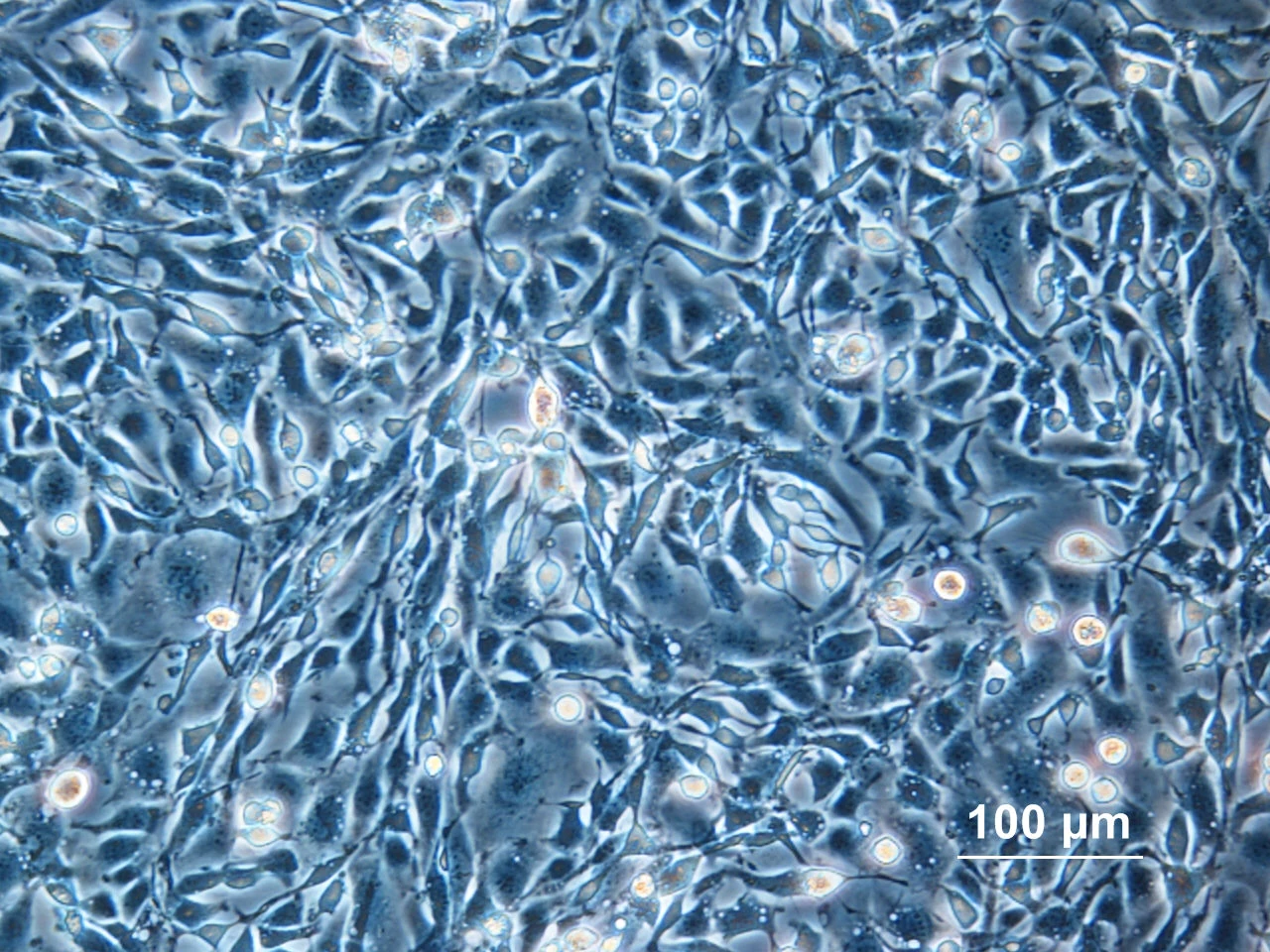
Puck took a small piece from this hamster’s ovary, plated the cells onto a dish, and passaged them repeatedly. He eventually isolated a clone that could divide again and again; an “immortalized” CHO cell with a genetic mutation that rendered it immune to normal senescence.
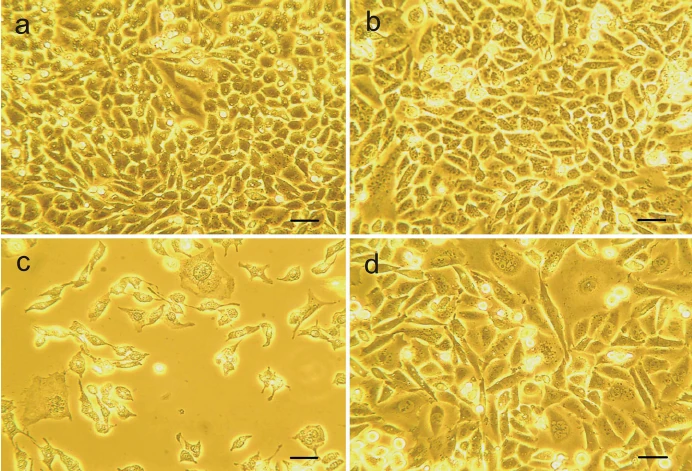
Today, descendants of these immortalized CHO cells make about 70 percent of all therapeutic proteins sold on the market, including Humira (USD 21 billion in sales in 2021) and Keytruda ($17 billion). Many of these drugs are monoclonal antibodies, or Y-shaped proteins that lock onto, and neutralize, foreign objects inside the body.
CHO cells are well suited to biotherapeutics because they can perform a biochemical reaction called glycosylation. Many human proteins, including antibodies, are decorated with chains of sugars that control how they fold or interact with other molecules in the body. Only a few organisms, mostly mammalian cells and certain yeasts, can do this chemical reaction.
I first learned about this history from a really spectacular article in LSF Magazine, called "Vital Tools: A Brief History of CHO Cells." I recommend it. (You can find it with a quick search.)
Video
-
US Orkonomics
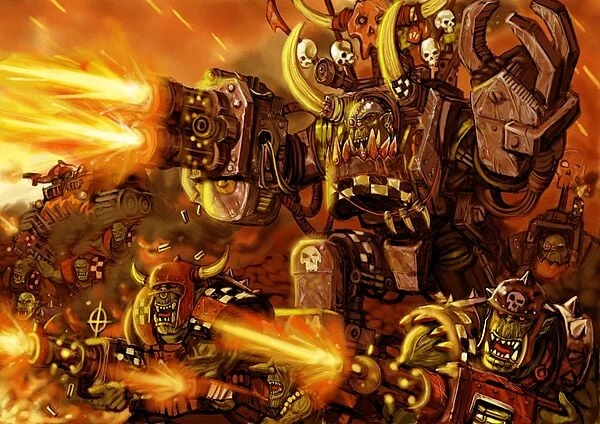
In warhammer 40k there is a faction called “ork” that derive its power from belief. Orks paint a starship red because they think it’ll make it go faster, and if enough of them believe it then it does.
The financialized American economy is largely the same. The value of a company is not based on its sales or development but on the perception and belief of those qualities.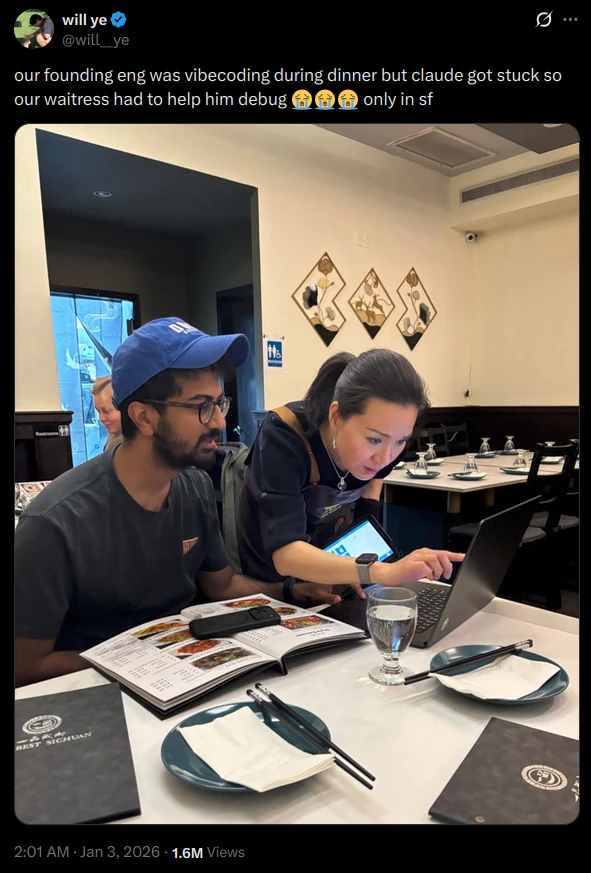
Products aren’t real, the work isn’t real, and none of it matters, just the image of these things. As long as Garry Tan or some VC thinks work is being done then they’ll keep investing, they’ll open another round of funding for their AI wrapper (coded with AI) that integrated AI into business strategies streamlining efficiency for B2B SaaS.
Does this accomplish anything? No. Do the customers gain value? No. Do the people paying for these “programs” know what they’re buying? No, but the finance department got to lay off a dozen people and claim that “integrated AI products boosted efficiency.” Meanwhile their middle management is filing for another 10,000 indians so they can import their third cousin to send a check back to their 2nd grandma.
Leftists are too retarded to understand what’s happening so they’ll call it “late stage capitalism” but the reality is that this is just an over leveraged finance economy.
This is why 60 years ago white guys at IBM built computers that guided rockets to the moon and you never heard from them. The product they made laid the foundations for the technology we enjoy today. But 60 years after that we have mystery meat randoms posting their performative “grind” at a diner where the waitress has to help them write a new prompt into a coding machine.
That way they can show this post at their next funding round to show that something is being done so they can keep collecting fake money to pump their evaluations.
None of this money flowing around is real, it’s just the belief that it is. But the belief is all that matters, if you simply stop believing then it all comes down.
The space ship is faster because it’s red. AI will lead to personal robot servants for everyone, and GPT will figure out a way to make itself profitable. As long as you believe then it’s true.
Don’t look down, we stopped walking on land a long time ago. -
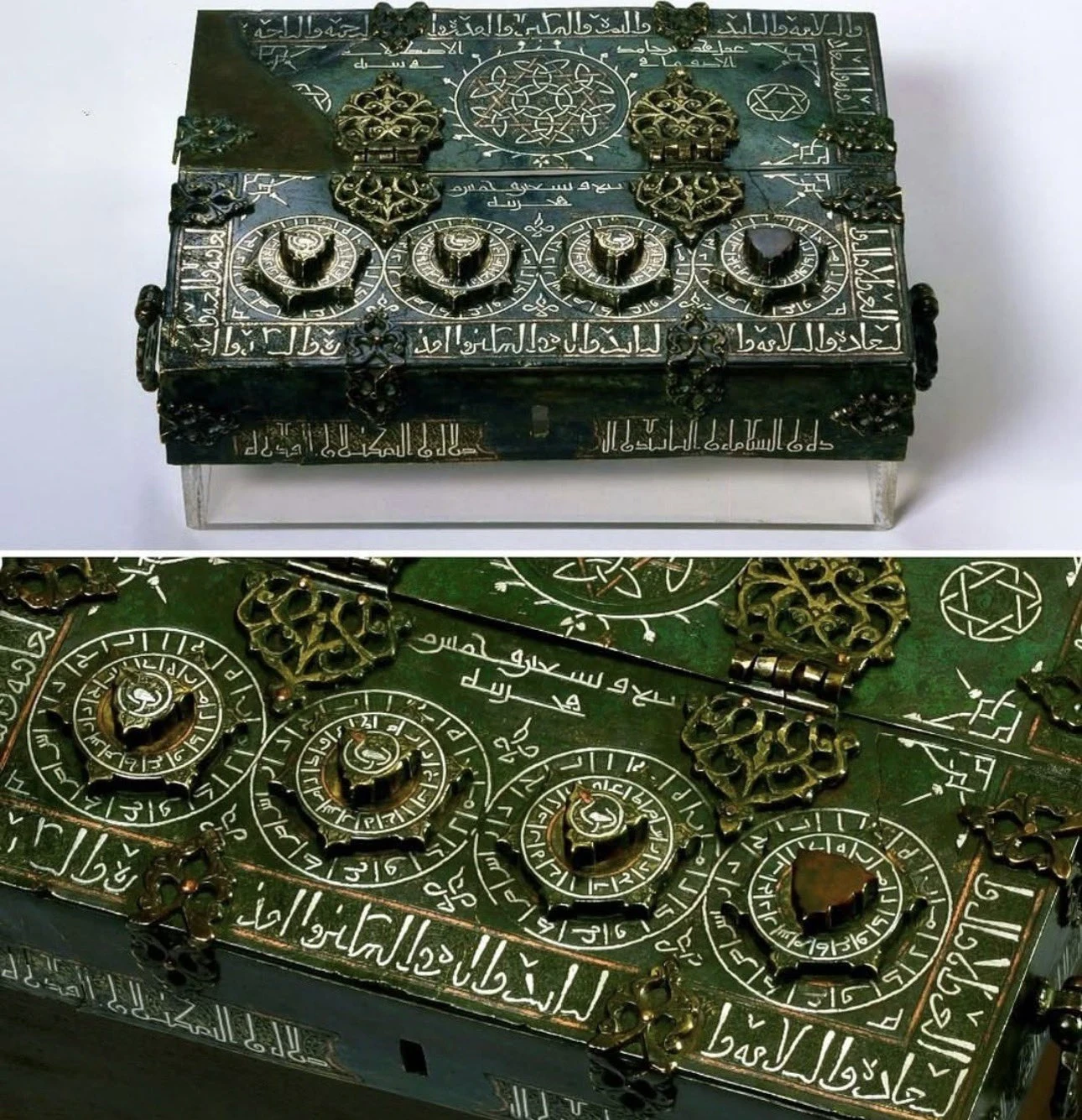
This 800-year-old lockbox was designed with more than 4 billion possible combinations. Iran, AD 1200–1201
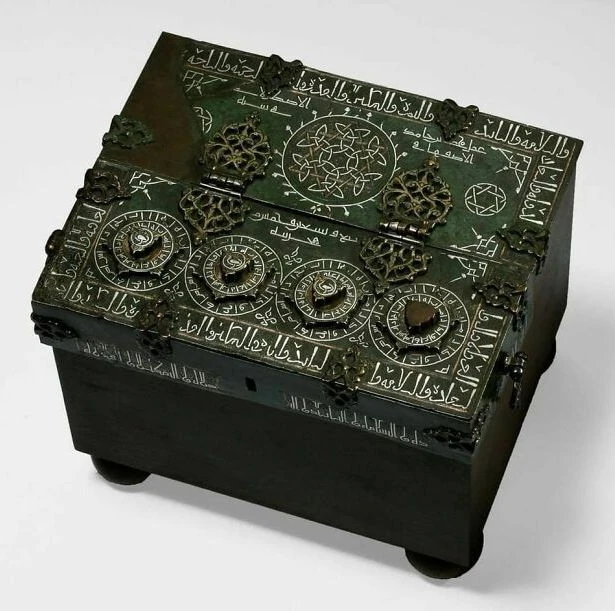
I accidentally left my little box at the supermarket last Tuesday. It has now reappeared in Iran, circa 1200 AD. Please return immediately.
-
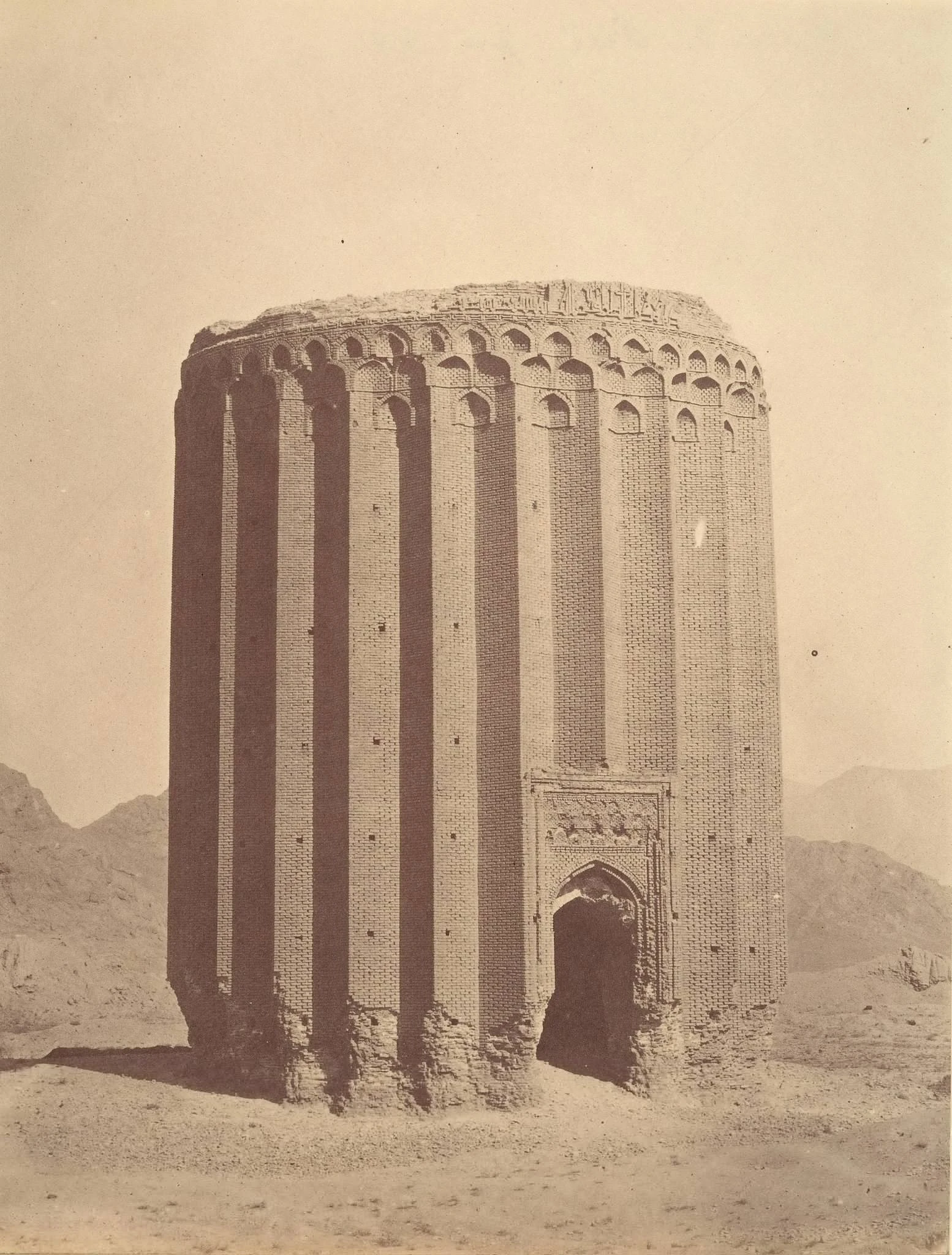
Tower of Toghrul (12th century), located in the city of Rayy, Iran, photographed in the 1860s by Luigi Pesce (1818–1891)