tag > Systems
-
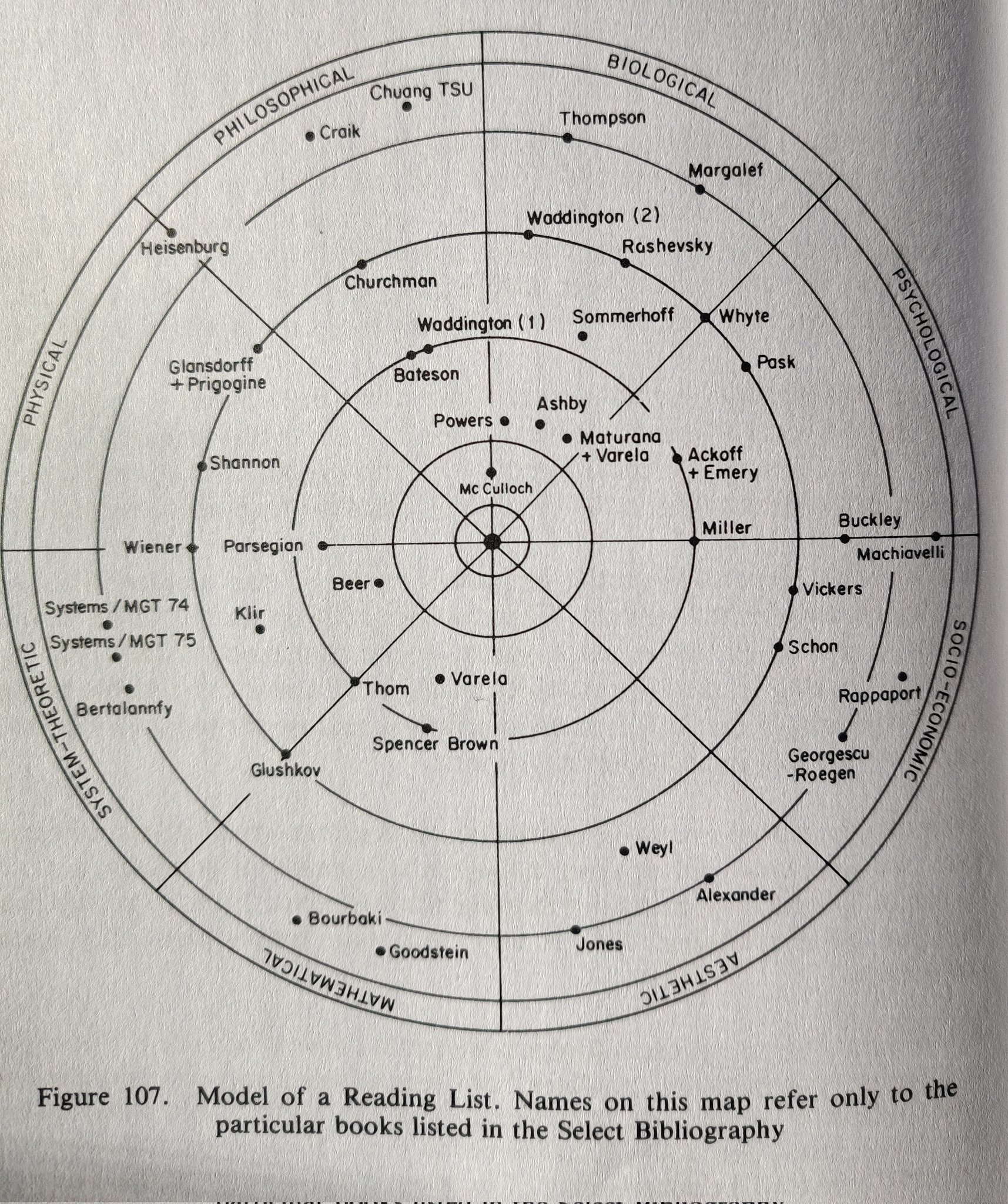
"This diagram is too simplistic." - Margaret Mead

#Comment: A quote that nicely encapsulates the mentality of cryptocratic techno-complexity fetishists, then and now. In a world where "knowledge is fractal and the closer you get, the more you'll find" and paradoxes lurk behind every corner, complexity is the preferred form of masturbation of busy-minded intellectual people that desperately are searching for means to ignore infinity and death. As Leonardo Da Vinci once remarked: "Simplicity is the ultimate form of sophistication".
-
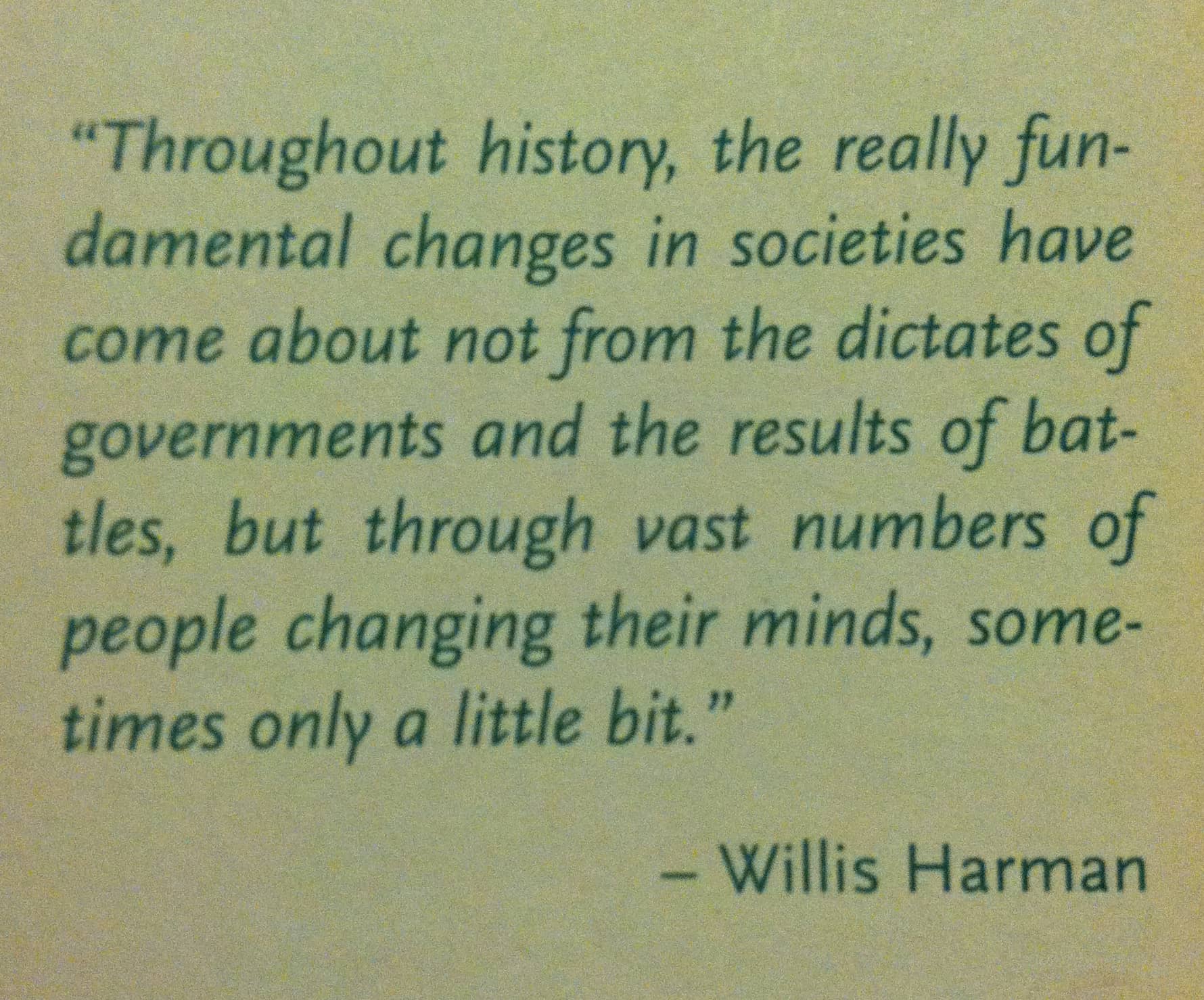
"Changing Images of Man" - Book by O.W.Markley and Willis Harman (1974, SRI International) (PDF)

Related: Scientists on Acid: The Story Behind “Changing Images of Man” - Changing Images 2000 - Integral Approaches to Re-Imagining and Re-Making Ourselves and the World - by Thomas J. Hurley - Interview with Willis Harman on Metaphysics and Modern Science - Willis Harman on Noetic Science

#Book #Cryptocracy #Systems #Culture #Psychedelic #Religion #History
-
Do what I tell you, because complexity, okay? - by Ben Pile - A necessary take down of the horrendously brain-dead, fear-driven, bullshit psyops that is George Monbiot
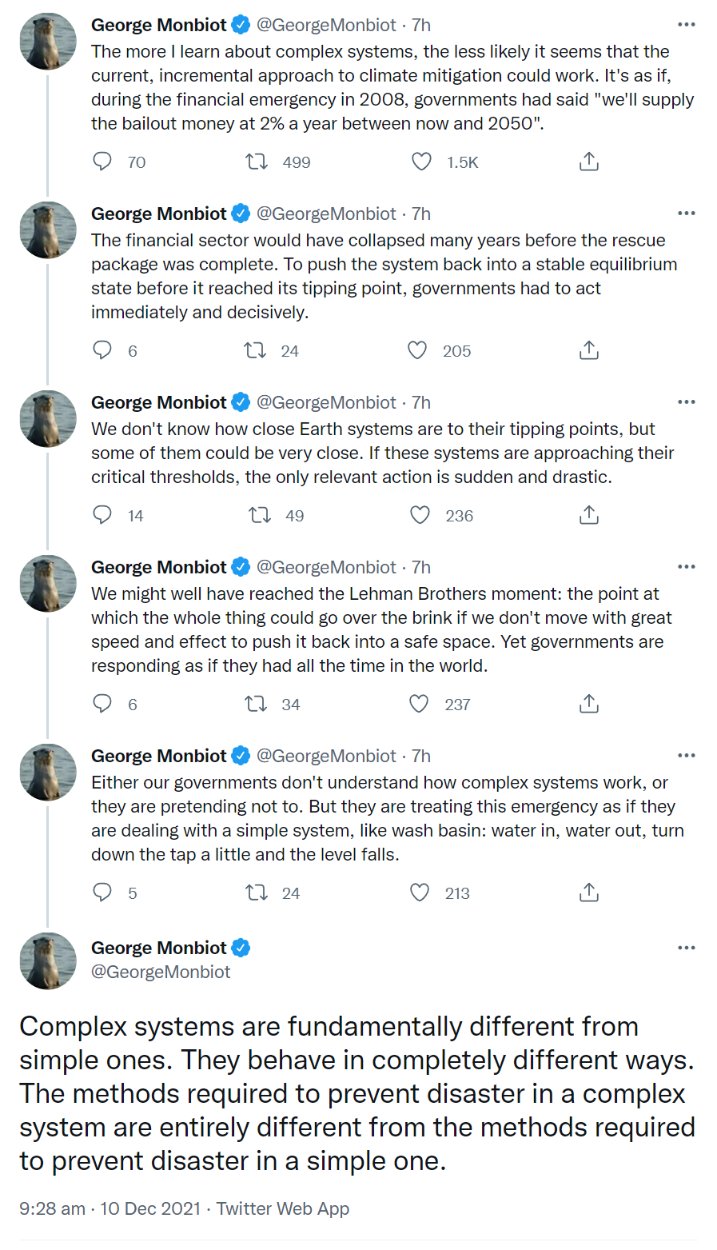
Do what I tell you, because complexity, okay?
In a "complex system", the effect of an intervention might be exactly the same as a non-intervention. Conversely, an incautious intervention might be catastrophic.
But George thinks he knows.
Folk such as George are *obsessed* with "systems". They conceive of the world as a "system", which they claim to have knowledge of. But what they really want to do is systematise human life, to reflect what they believe is the greater 'system'.
In other words, it is ideology dressed as objectivity. Many have claimed to have grasped the meaning of cosmological, social or natural orders, and demanded that the world be reorganised on the basis of these systems of understanding. And tragedy followed.
-
Alcoholics_Anonymous (AA) is a fascinating case-study in resilient bottom-up org design
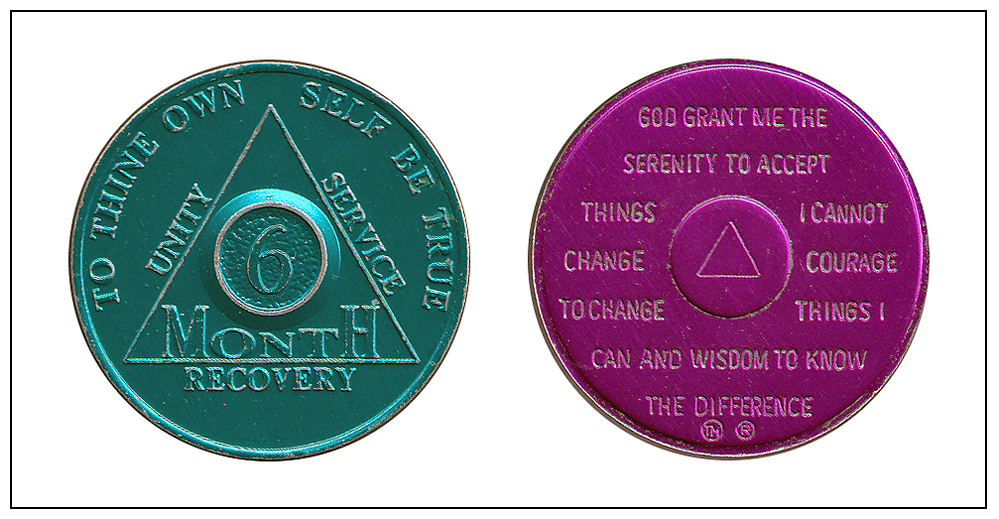
- Alcoholics Anonymous (AA) is an international fellowship requiring no membership dues or fees dedicated to helping alcoholics peer to peer in sobriety through its spiritually inclined Twelve Steps program.
- AA says it is "not organized in the formal or political sense", and Bill Wilson, borrowing the phrase from anarchist theorist Peter Kropotkin, called it a "benign anarchy".
- The Steps also suggest the healing aid of an unspecified God—"as we understood Him"—but are nonetheless accommodating to agnostic, atheist, and non-theist members.
- In Ireland, Shane Butler said that AA "looks like it couldn't survive as there's no leadership or top-level telling local cumanns what to do, but it has worked and proved itself extremely robust". Butler explained that "AA's 'inverted pyramid' style of governance has helped it to avoid many of the pitfalls that political and religious institutions have encountered since it was established here in 1946.
- The Traditions hold that helping others recover from alcoholism is AA's primary purpose. That it should have no opinions on anything else to avoid public controversy. That members and groups should not use AA to gain wealth, prestige, or property. That dogma and hierarchies are to be avoided. That AA groups are autonomous and self-supporting—declining outside contributions—but are barred from lending the AA name to other entities. And, without threat of retribution or means of enforcement, that members should remain anonymous in public media.
- A member who accepts a service position or an organizing role is a "trusted servant" with terms rotating and limited, typically lasting three months to two years and determined by group vote and the nature of the position. Each group is a self-governing entity with AA World Services acting only in an advisory capacity.
- AA groups are self-supporting, relying on voluntary donations from members to cover expenses.[27] The AA General Service Office (GSO) limits contributions to US$3,000 a year.[31] Above the group level, AA may hire outside professionals for services that require specialized expertise or full-time responsibilities.
- AA's program is an inheritor of Counter-Enlightenment philosophy. AA shares the view that acceptance of one's inherent limitations is critical to finding one's proper place among other humans and God. Such ideas are described as "Counter-Enlightenment" because they are contrary to the Enlightenment's ideal that humans have the capacity to make their lives and societies a heaven on Earth using their own power and reason.
- This commitment is facilitated by a change in the member's worldview. To help members stay sober AA must, they argue, provide an all-encompassing worldview while creating and sustaining an atmosphere of transcendence in the organization. To be all-encompassing AA's ideology emphasizes tolerance rather than a narrow religious worldview that could make the organization unpalatable to potential members and thereby limit its effectiveness.
- US courts have not extended the status of privileged communication, such as that enjoyed by clergy and lawyers, to AA related communications between members.
More on AA's history: https://silkworth.info/ - Frank Buchman Oxford Group Documentary
#P2P #Praxis #Health #Politics #Religion #OpenSource #Networks #Systems
-
Unintended Consequences: In complex systems, cause & effect are often distant in time & space

-
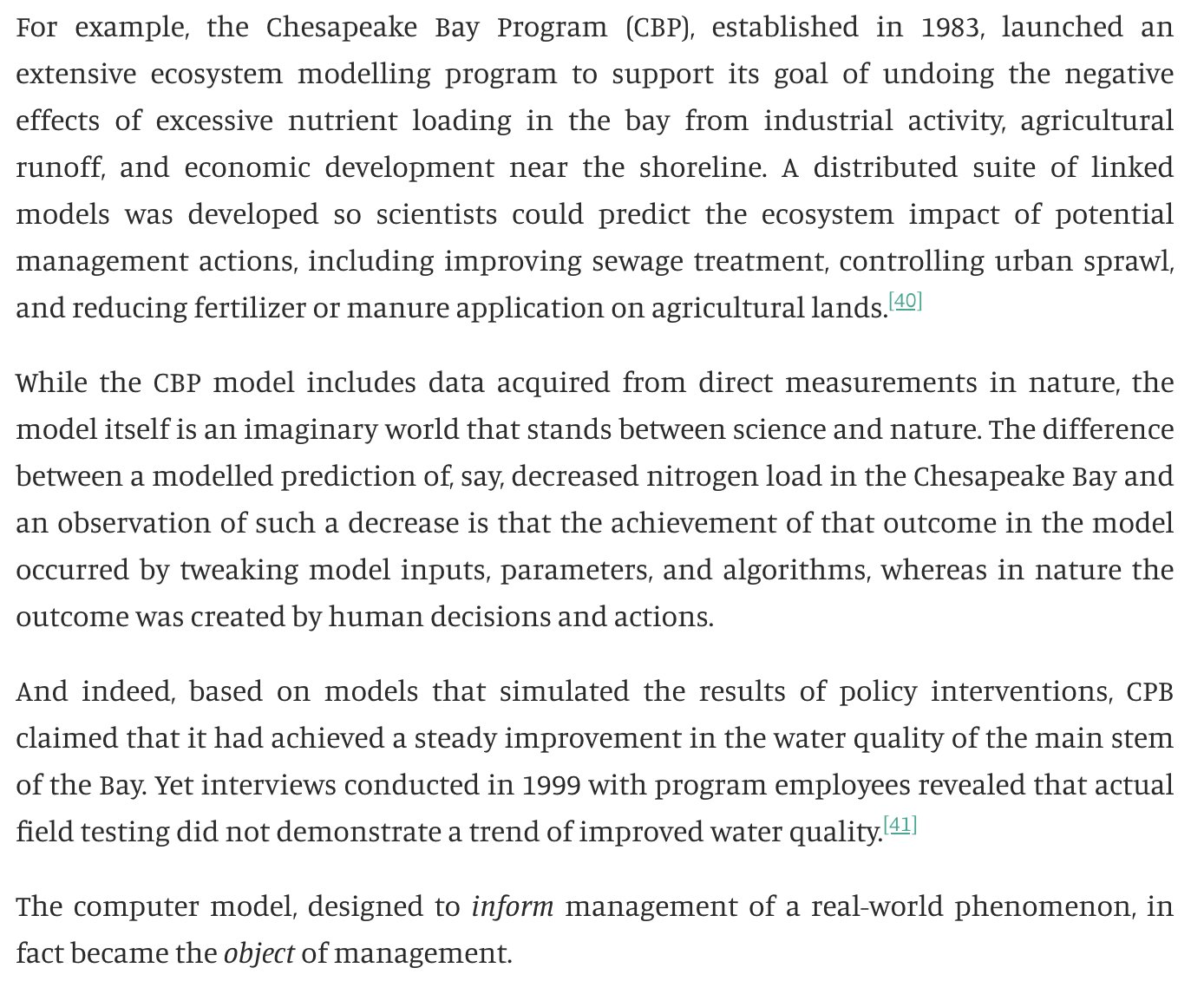
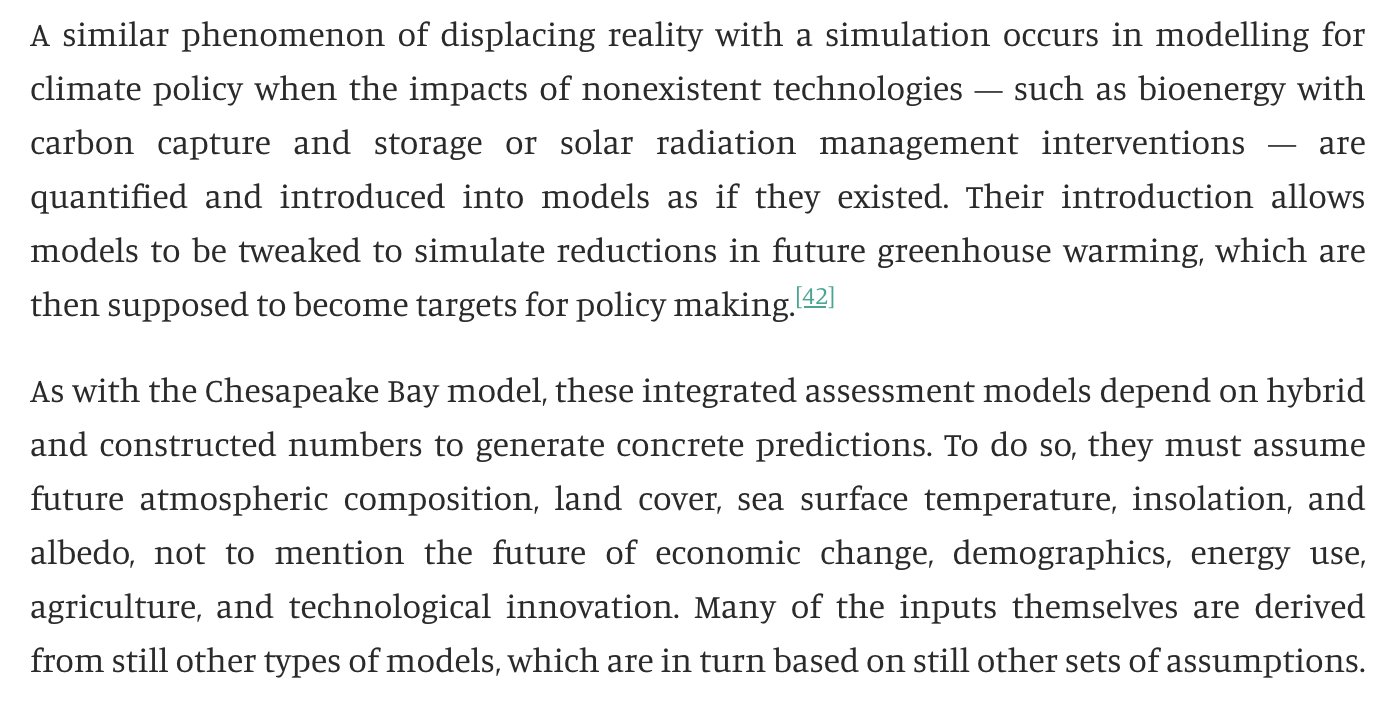
Policy Making in the Post-Truth World - On the Limits of Science and the Rise of Inappropriate Expertise - Rayner and Sarewitz’s warning that we avoid turning models designed to inform problem management into the object of management themselves.
-
To see the forest for the trees - by Niti Bhan

Last night, Samim said something on skype that has completely changed my perspective and focal length. He pointed out that ‘the system’ is vast and beyond our comprehension. That it is nature who runs the planet. Life on earth is a complex and complicated interdependent dance of balance and harmony. And, we, humans, are simply one part of this immense natural system. We mustn’t forget that. To imagine we can understand, and then control this system is a reflection of ‘man’s’ hubris.
Immediately, this made me take a step back – in space and time – and see the whole in my mind’s eye. Humanity and its concerns shrank to its proper perspective, when seen from the point of view of ‘life on earth’. None of this would be surprising or new to our ancients and our ancestors, as well as those peoples still living far closer to life in nature.
What is different, to me, at this point in time, is that this shift in focal length came at a time when humankind is dealing with a worldwide pandemic – a human sickness – and one cannot escape the numerous and varied examples from all over the planet that provide evidence of what has become a meme – “nature is healing”. Samim said we do not know the full power and capability of nature and the planet, yet we imagine we’re in charge. He’s right.
Acknowledging this by sitting back and letting my embodied sense arrive at its own conclusions led to this reorientation of perspective. Humanity’s concerns felt petty against the backdrop of life on earth, and the great and small cycles of the planet. This humbling awareness has been a powerful and positive feeling, rather than one that diminishes. One’s problems and concerns find their proper place, and being alive and breathing in the air in the forest outside my home becomes the most important thing to evoke a sense of joy and bliss.
That which I was seeking to find since late March when I began exploring my writing and thinking on the blog – the change of perspective, the refocusing of the mind’s eye, the withdrawing of the distant vision to recenter on the domestic – suddenly came into clear focus. I feel empowered when I’m made aware that I’m part of a wilder, vaster, natural ecosystem of life on this planet, and not simply a cog in some pile of big data somewhere unnatural.
-
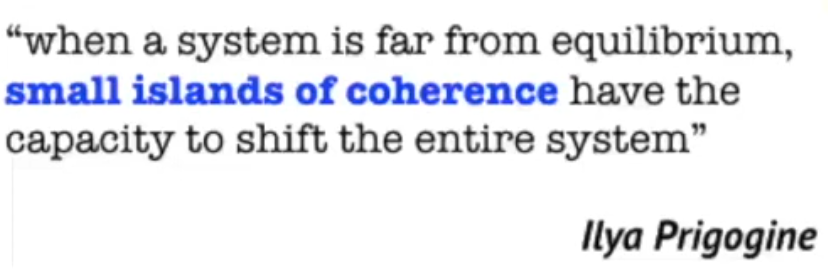
A Theory Of Change, by Ilya Prigogine - found via a talk by John Thackara
-
Christopher Alexander on Generative Systems

A generating system… is a kit of parts, with rules about the way these parts may be combined. Almost every ‘system as a whole’ is generated by a ‘generating system’. If we wish to make things which function as ‘wholes’ we shall have to invent generating systems to create them. - Christopher Alexander, 1968, “Systems Generating Systems”
If you want to make a living flower, you don't build it, you grow it from the seed. - Christopher Alexander
-
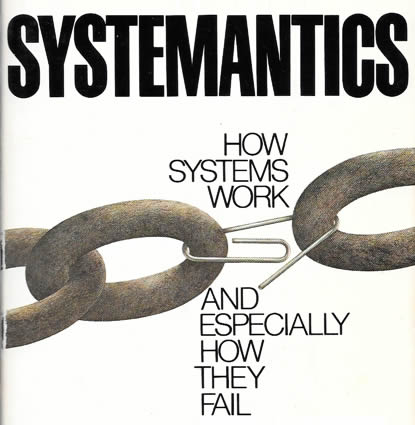
"The System is already altered by the probe used to test it." - quotes from John Gall's classic book "Systemantics"