tag > Military
-
This window of opportunism (about intel)
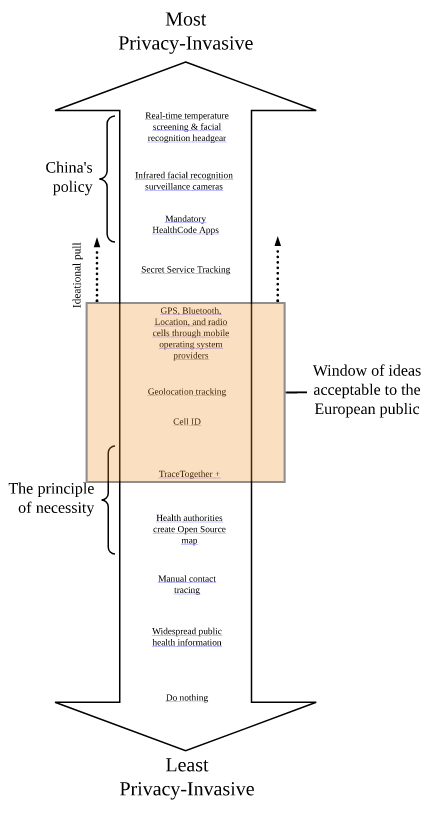
The Chinese Communist Party is using the current crisis to showcase its most dystopian iteration of total surveillance yet. As Europe anxiously looks to Beijing for technological solutions to Covid-19, the window of what we perceive to be acceptable surveillance practice may shift accordingly. It is therefore essential that we stick to the principles of proportionality and necessity. They force us to spell out the aim of surveillance and tell us where to search for inspiration instead.
This is likely to have significant implications for surveillance policy in other parts of the world. For one because the CCP has a strong political and economic interest in convincing other countries that its model of governance is viable. Covid-19 has only given wings to its attempt to broadly export authoritarianism. For another, because the attention citizens and politicians in Europe pay to the Chinese example in the pandemic is likely to shift what they will consider reasonable surveillance practice.
-
Combined DNA Index System (CODIS)
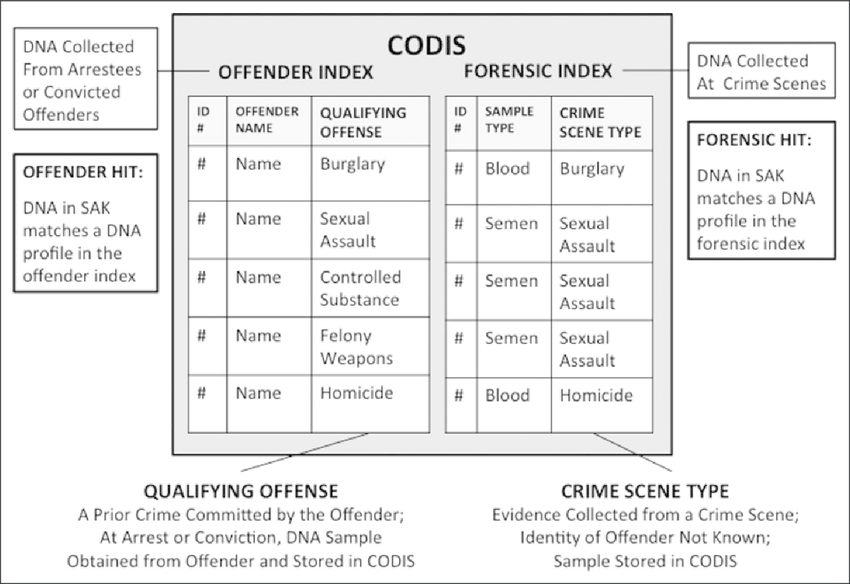
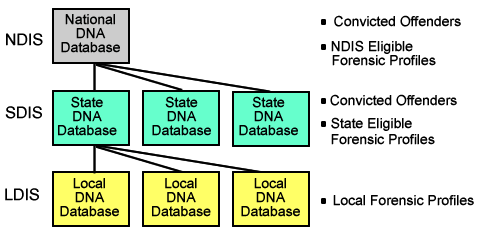
Since 1996, the Combined DNA Index System (CODIS) is the national DNA data-base of the USA, created and maintained by the Federal Bureau of Investigation(FBI). It combines forensic science and computer technology into a tool which enables federal, state, and local forensic laboratories to exchange and compare DNA profiles electronically.
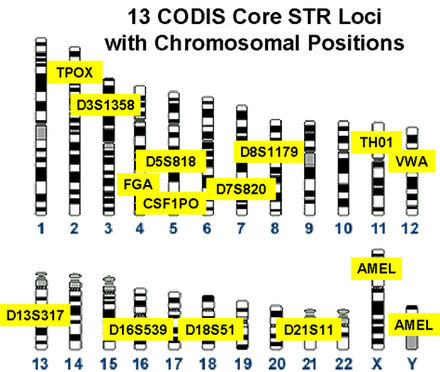
In that way the CODIS STR loci help in linking serial violent crimes to each other and to identify the offenders. The DNA Identification Act of 1994 dignified the FBI’s authority to establish a National DNA Index System (NDIS) for law enforcement purposes. Across the USA, over 190 public law enforcement laboratories participate in NDIS. More than 90 forensic laboratories in more than 50 countries use the CODIS software for their own database initiatives.
Thirteen core STR loci were selected to be the basis of the future CODIS national database on November! 3-14, 1997, in STR Project meeting. Later, additional seven loci (D1S1656, D2S441, D2S1338, D10S1248, D12S391, D19S433,and D22S1045) were added to the CODIS core in 2015, which came to effect from January 2017.
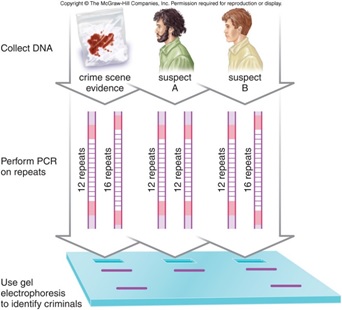
Different countries employ different STR-based DNA-profiling systems, e.g., 20 core CODIS universal in North America, 17 loci system in the UK(DNA-17), and 18 loci system in Australia. CODIS STR loci DNA-profiling system is based on multiplex reactions which result in testing many STR regions at the same time.
Text from the book "DNA Fingerprinting: Advancements and Future Endeavors"
The following related text on DNA Profiling from Wikipedia
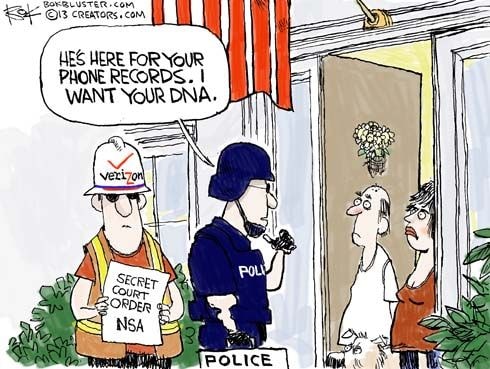
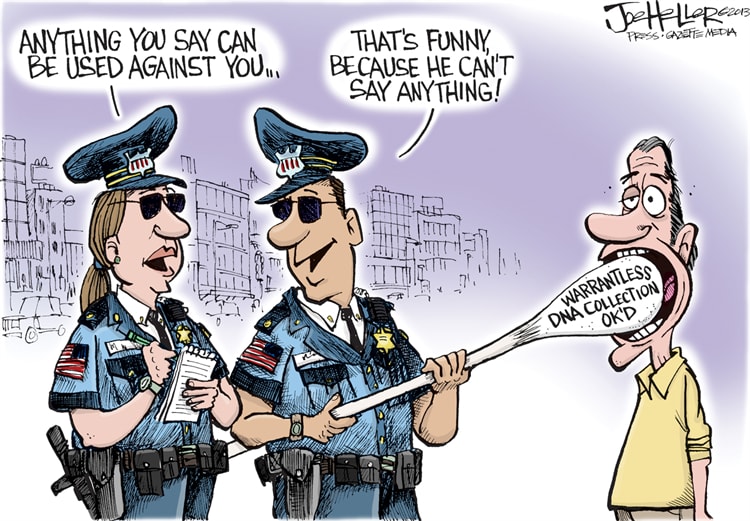
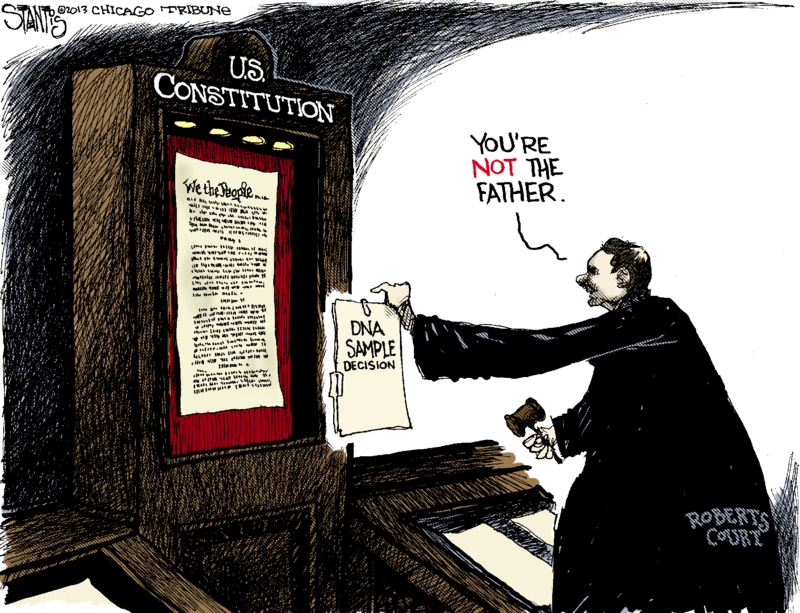
The U.S. Patriot Act of the United States provides a means for the U.S. government to get DNA samples from suspected terrorists. DNA information from crimes is collected and deposited into the CODIS database, which is maintained by the FBI. CODIS enables law enforcement officials to test DNA samples from crimes for matches within the database, providing a means of finding specific biological profiles associated with collected DNA evidence.
When a match is made from a national DNA databank to link a crime scene to an offender having provided a DNA sample to a database, that link is often referred to as a cold hit. A cold hit is of value in referring the police agency to a specific suspect but is of less evidential value than a DNA match made from outside the DNA Databank.
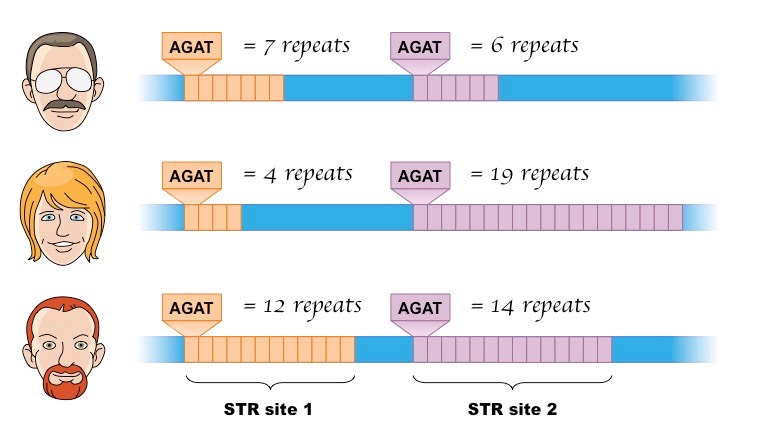
FBI agents cannot legally store DNA of a person not convicted of a crime. DNA collected from a suspect not later convicted must be disposed of and not entered into the database. In 1998, a man residing in the UK was arrested on accusation of burglary. His DNA was taken and tested, and he was later released. Nine months later, this man's DNA was accidentally and illegally entered in the DNA database.
-
In Italy, Going Back to Work May Depend on Having the Right Antibodies (NYTimes)
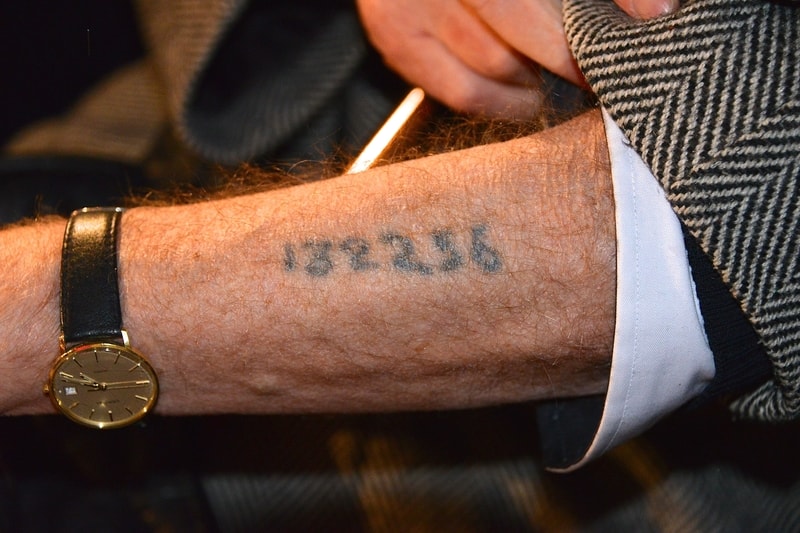
Photo: Identification of inmates in German concentration camps - The Fascists had many "special licences" The conservative president of the northeastern Veneto region has proposed a special “license” for Italians who possess antibodies that show they have had, and beaten, the virus. The former prime minister, Matteo Renzi, a liberal, has spoken about a “Covid Pass” for the uninfected. Prime Minister Giuseppe Conte said that while the lockdown remained in place, the government had begun working with scientists to determine how to send people who have recuperated back to work. With its echoes of a “Brave New World,” the debate about how to reopen arrived in earnest this week in Italy.
-
Fears over covert DNA database (FT, 2008) (Unpaywalled)
Valuable intelligence on thousands of suspected terrorists risks being lost because of backlogs at a little-known US federal government database that processes DNA samples gathered in Iraq, Afghanistan and elsewhere. The unfinished work at the database – part of a classified intelligence partnership of military, intelligence and law enforcement agencies – has been referred to in public documents but has not been openly discussed by US government officials.
DNA profiling (Wikipedia)
DNA profiling (also called DNA fingerprinting) is the process of determining an individual's DNA characteristics. DNA analysis intended to identify a species, rather than an individual, is called DNA barcoding. DNA profiling is a forensic technique in criminal investigations, comparing criminal suspects' profiles to DNA evidence so as to assess the likelihood of their involvement in the crime. It is also used in parentage testing, to establish immigration eligibility, and in genealogical and medical research. DNA profiling has also been used in the study of animal and plant populations in the fields of zoology, botany, and agriculture.
-
China proposes a new internet protocol that gives government ultimate control (reclaimthenet)
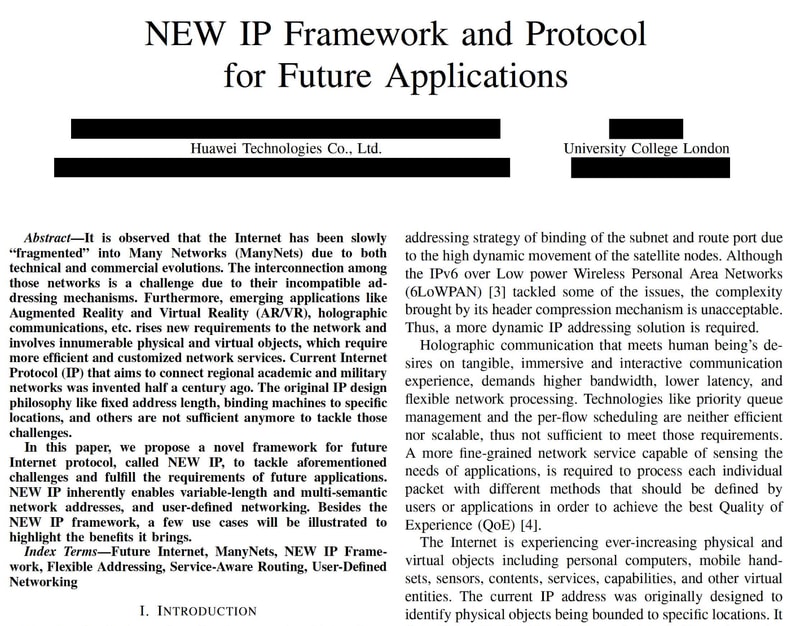
After years of meddling with the internet and censoring everything left and right, China now wants to introduce a new authoritarian-friendly internet protocol. The Financial Times has recently gained access to several documents about the protocol. Huawei, China’s Ministry of Industry and Information Technology (MITT), and state-run Unicom and China Telecom were the ones to craft the proposal and presented it to the UN’s International Telecommunication Union (ITU).
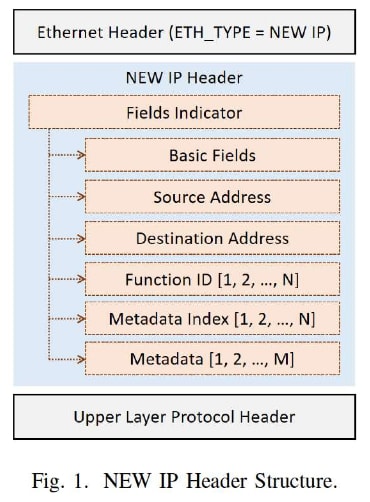
It was found that Russia and maybe Saudi Arabia were in favor of the proposal, whereas nations such as the US and UK expressed concerns. Based on what the developers of the protocol say, it may be standardized at a conference in India later this year with the testing of the protocol beginning in early 2021. On the whole, China’s new proposal states that the internet must catch up with the future and that the “current designs are obviously insufficient”. Considering the fact that the underlying technical architecture of the internet hasn’t really changed in a long time, China’s thoughts to modernize the whole infrastructure does sound like a necessary step to take. The proposal calls for an advanced internet that has improved security and efficiency while supporting holograms as well as latency stability.
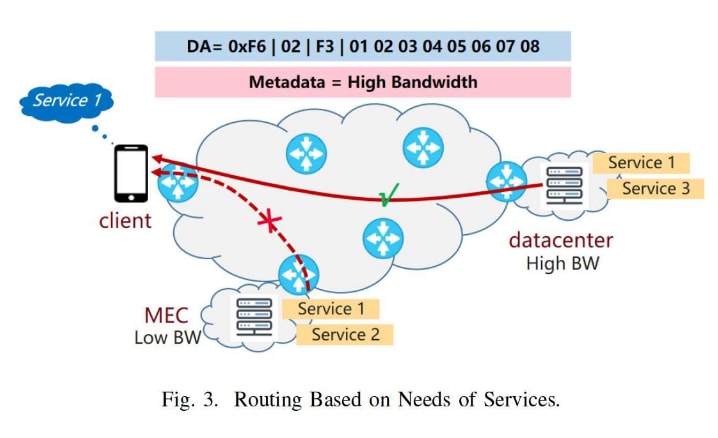
Finally, the new protocol aims to integrate the interactions between ManyNets (networks from IoT and satellites) and the internet seamlessly. But there is a strong concern with the new proposal that was even pointed out by countries such as the US and UK. The new proposal, if accepted globally, will give governments the ultimate power over the internet accessibility in their nations.
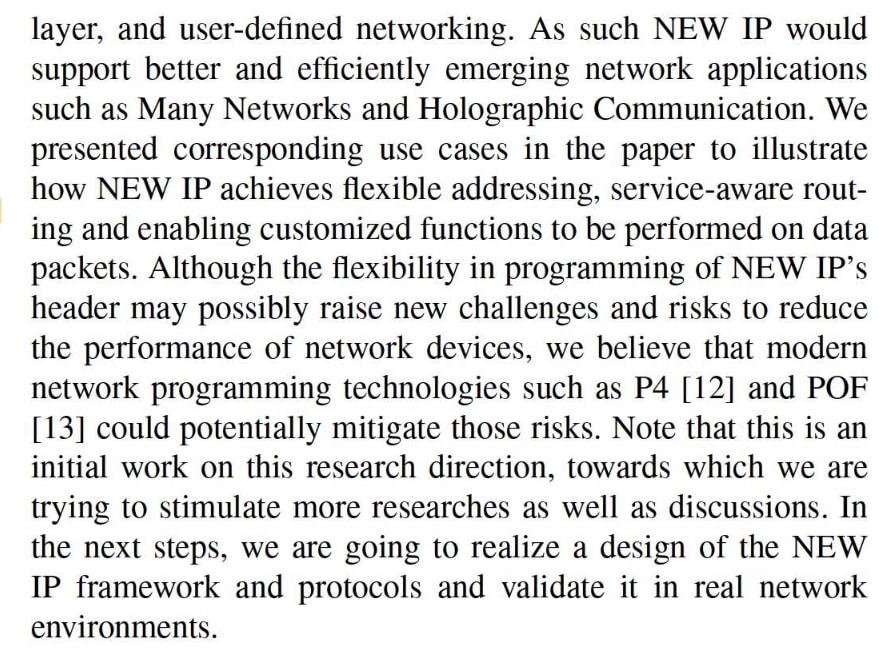
Such a “top-down” internet architecture will lead to potential internet censorship. With many countries already practicing blatant internet censorship, especially China, the idea of placing more power over internet accessibility into the hands of a country’s government may not be the wisest course of action. It is also worth noting that authoritarian governments such as Russia are already moving in the direction of gaining “cyber sovereignty“. For instance, Russia already tested its own heavily controlled internet.
At such a juncture, the new proposal by China, while promising the hopes of a better future, might make it easy for countries to practice internet censorship.
#Technology #Infrastructure #Internet #Politics #Economics #Military
-
Draper's Genetically Modified Cyborg DragonflEye Takes Flight (Spectrum IEEE)
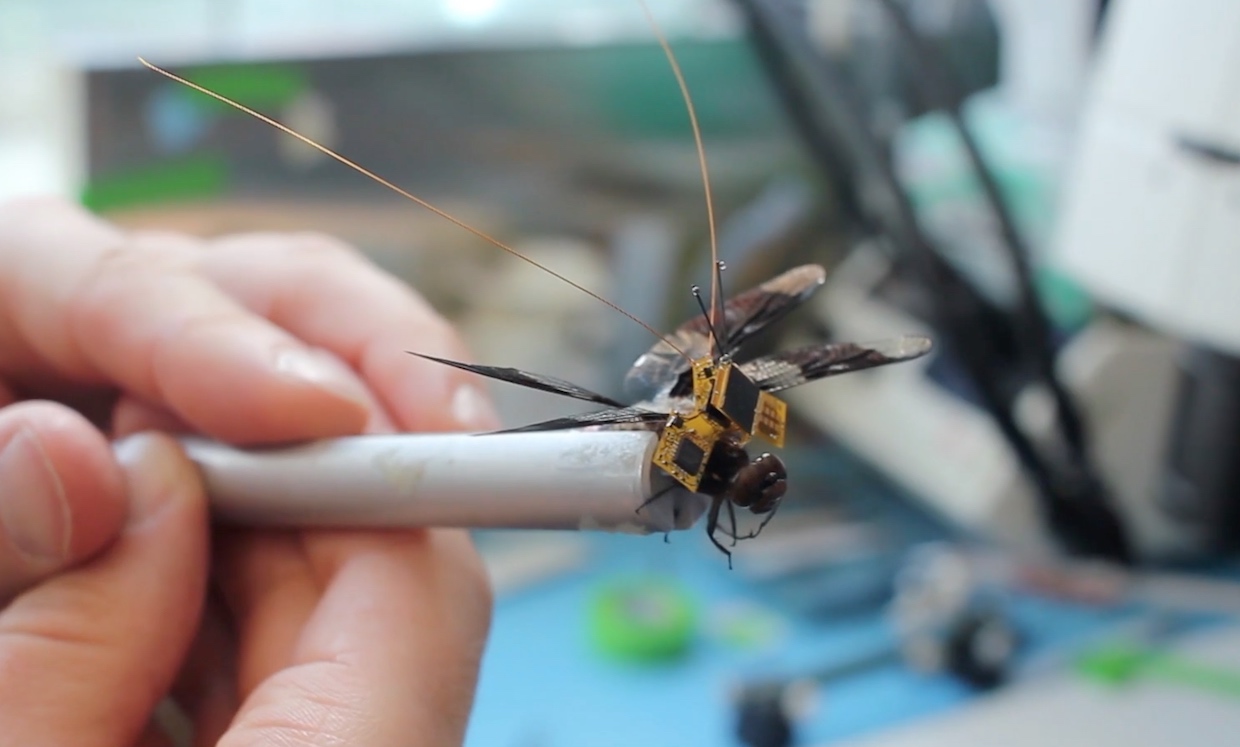
In January, we wrote about a cybernetic micro air vehicle under development at Draper called DragonflEye. DragonflEye consists of a living, slightly modified dragonfly that carries a small backpack of electronics. The backpack interfaces directly with the dragonfly’s nervous system to control it, and uses tiny solar panels to harvest enough energy to power itself without the need for batteries.
-
Testing for dna…er… I mean, corona virus - by gizadeathstar
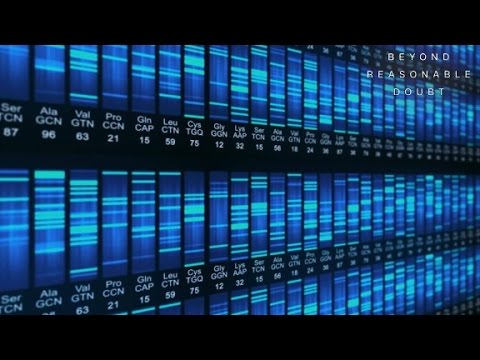
"However, that raises another less-obvious but still-implied question, and hence our high octane speculation of the day. The coupling of testing with sequencing companies suggests the possibility that the tests could include a covert DNA sampling itself, building up a large database. Indeed, perhaps the sequencing expertise was needed in a certain way, for if one suspected biowarfare were being carried out, one would want sample of patients' DNA to see what, if any, might be genetic markers for people taken ill with the virus. And that possibility suggests in turn yet another possibility. Perhaps, just perhaps, one of the objectives of the whole plandemic is to create a climate of opinion for massive testing (voluntary or otherwise), because the designers of the operation are looking for some particular "group" of "someones" not otherwise visible to the naked eye, but only detectable through genetic sequencing."
-
Moscow To Launch Mandatory Surveillance App To Track Residents In Coronavirus Lockdown (npr.org)
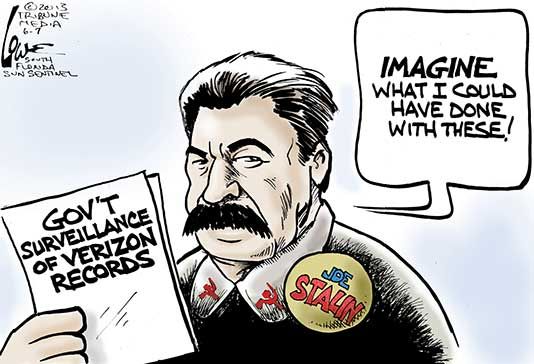
City authorities in Moscow are rolling out new digital "social monitoring" tools targeting the public, after what officials say were constant violations of the city's quarantine imposed this week to fight the spread of the new coronavirus. Under restrictions in place since Monday, most of the city's 12 million residents must remain indoors, barring a few exceptions. But starting Thursday, Muscovites will have their movements tracked through a mandatory app required on their smartphones. Don't have one? The city says it will lend out devices.
"One thing is clear," wrote Leonid Volkov, a chief strategist of opposition leader Alexei Navalny, on his Telegram channel. "The coronavirus will eventually leave but this digital concentration camp will remain."
-
The Application of Cognitive Science in Military Science - A Narrative Review - by Khodabakhsh Ahmadi, Nasirudin Javidi (Journal of Military Medicine January 2020)
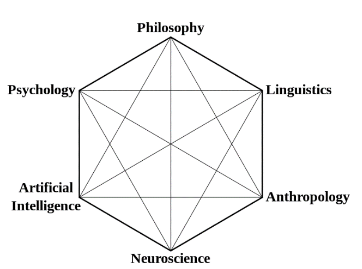
Science that have contributed to the birth of cognitive science Abstract: The current review aims to explore the applications of cognitive science in military science to answer the question of what cognitive science is currently used in the military. Cognitive science is an interdisciplinary and scientific study of the mind and its processes that examines the structure, process, and cognitive functioning of the mind. The main subcategories of cognitive science are cognitive modeling, cognitive psychology, cognitive neuroscience, cognitive linguistics, philosophy of mind and artificial intelligence.
The applications of cognitive science in the military field are examined at two levels: first, at the level of human resources, and second, at the level of military equipment. At the level of human resources, increasing the energy efficiency of the soldiers' bodies and increasing the hours of continuous activity, increasing the speed of repairing war injuries, increased wakefulness, reduced fear and pain sensation in the nervous system, control of mind and behavior, night vision technology, the full integration of technology with the nervous system, the bolt project (eliminating the limitations Language differences), developing DNA diagnosis system, humanoid robots, hunter robots, transfer robots, Peteman Human Beatles, Nanobut Robots, Body Refactoring Project and Artificial Eye Project.
The use of cognitive sciences in the field of military equipment includes: cognitive weapons, auxiliary skeleton, health trackers, cyber-insects, Exacto project, Heldes project, Earth project, Alpha-Doug project, one-Shot project, Z-Man project, Vulture project Stratospheric airship, UFP project and bird robot in Defense Advanced Research Projects Agency (Darpa).Cognitive science plays a crucial role in the development of military science and technology, both in the field of manpower and in the field ofmilitary equipment. Therefore, more research is needed on how to expand this science. We hope to see more growth and prosperity in the Armed Forces.
-
China's coronavirus health code apps raise concerns over privacy (Guardian)
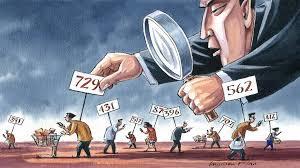
As millions of people in China emerge from weeks of lockdown, their freedom of movement is largely dependent on phone apps. The “health code” service – run on the ubiquitous platforms Alipay and WeChat and developed for the Chinese government – give users colour-coded designations based on their health status and travel history, and a QR code that can be scanned by authorities. The apps are specific to each city or province, but generally people given a green code are allowed to travel relatively freely. A yellow code indicates that the holder should be in home isolation, and a red code says the user is a confirmed Covid-19 patient and should be in quarantine.
#Comment: Digital totalitarianism is just getting started and is here to stay, to be implemented globally in the foreseeable future. The long held aspiration of international technocratic "elites" to "manage" humans in a similar fashion as animal livestock, is reaching maturity. While touted as "the future of globalisation during the forth industrial revolution, enabling shared prosperity and security in times of climate change" at places like the World Economic Forum, digital totalitarianism might results in a substantial loss of agency for many.
-
S Korea unleashes all-out policy assault on virus - ‘Big Brother’ on steroids (Asiantimes)
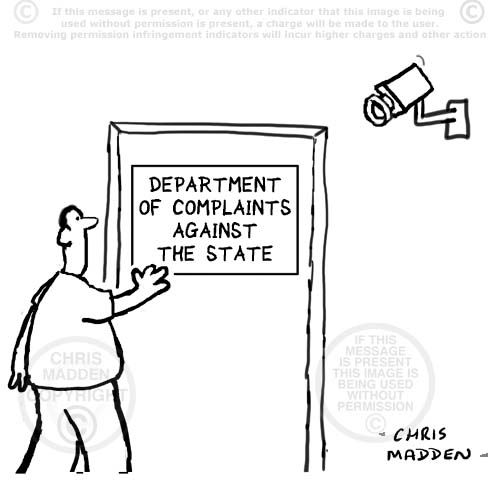
The Korea Center for Disease Control and Prevention is in charge of the new digital surveillance system. It combines information from 27 public and private organizations including the National Police Agency, the Credit Finance Association, three mobile carriers and 22 credit card firms. This vast collection of big data is amassed, trawled through and analyzed by AI. The system is a comprehensive upgrade to a previous program under which “data detectives” combined CCTV footage, GPS location information, credit card payments and other metrics to track down persons who may have been in contact with the infected person.
-
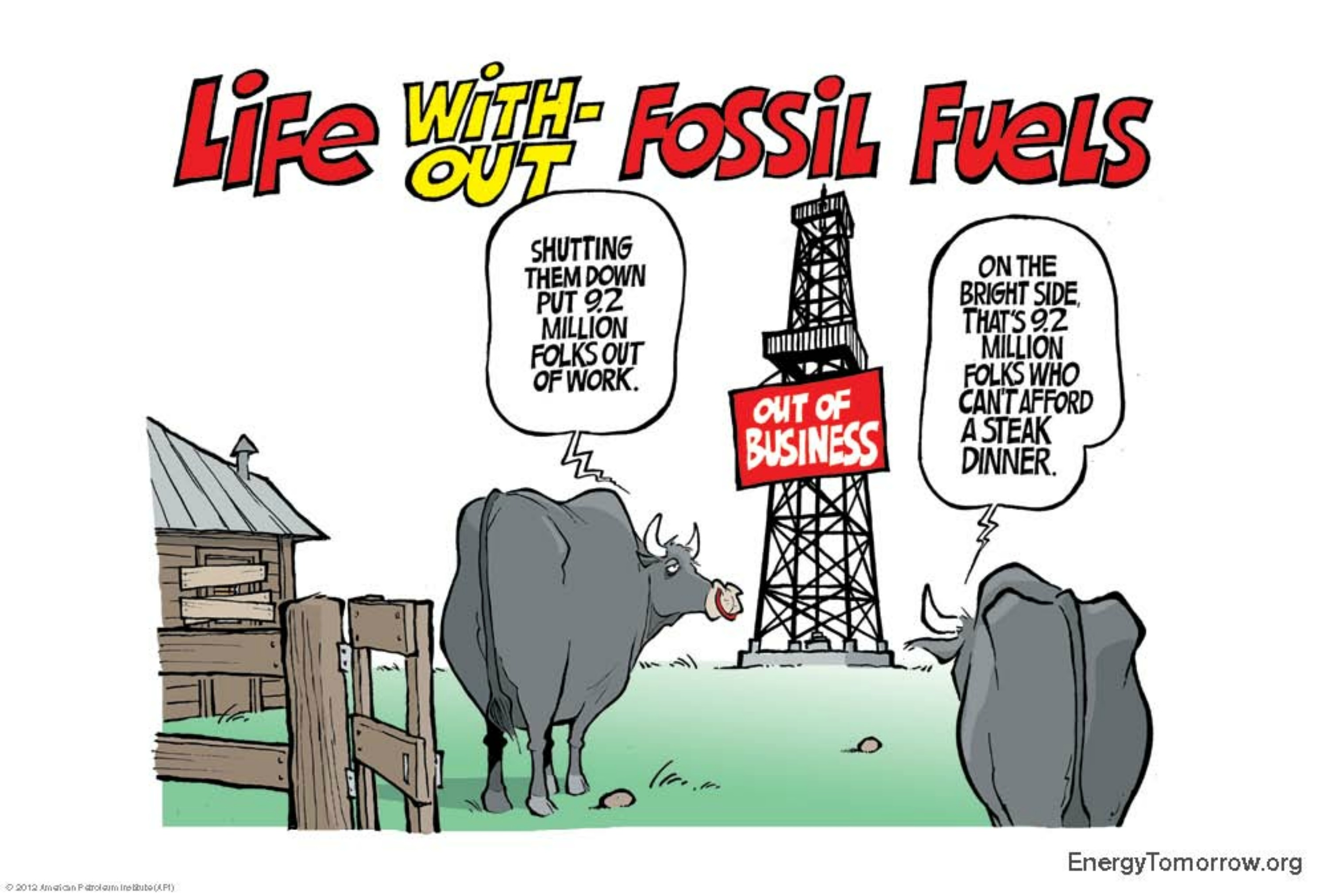
The great oil industry collapse of the 2020s has started
Oil Prices Could Fall Another 20% (oilprice.com)
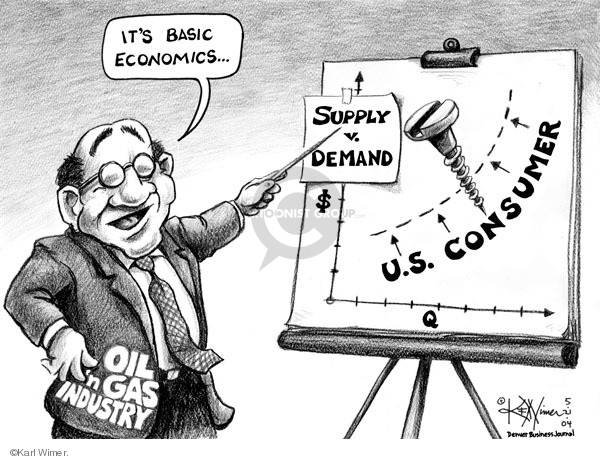
Brent crude was down four percent Friday afternoon at $27.50 per barrel. US crude was five percent lower at $21.47 per barrel. Prices were on track for their fifth weekly drop in a row as coronavirus ravages economies around the world. The price war launched by Saudi Arabia almost three weeks ago after talks with Russia over price stabilisation broke down has sent prices to their lowest level in 17 years. The Brent crude price was around $65 per barrel at the start of January.
US crude oil price falls below $20 (FT)
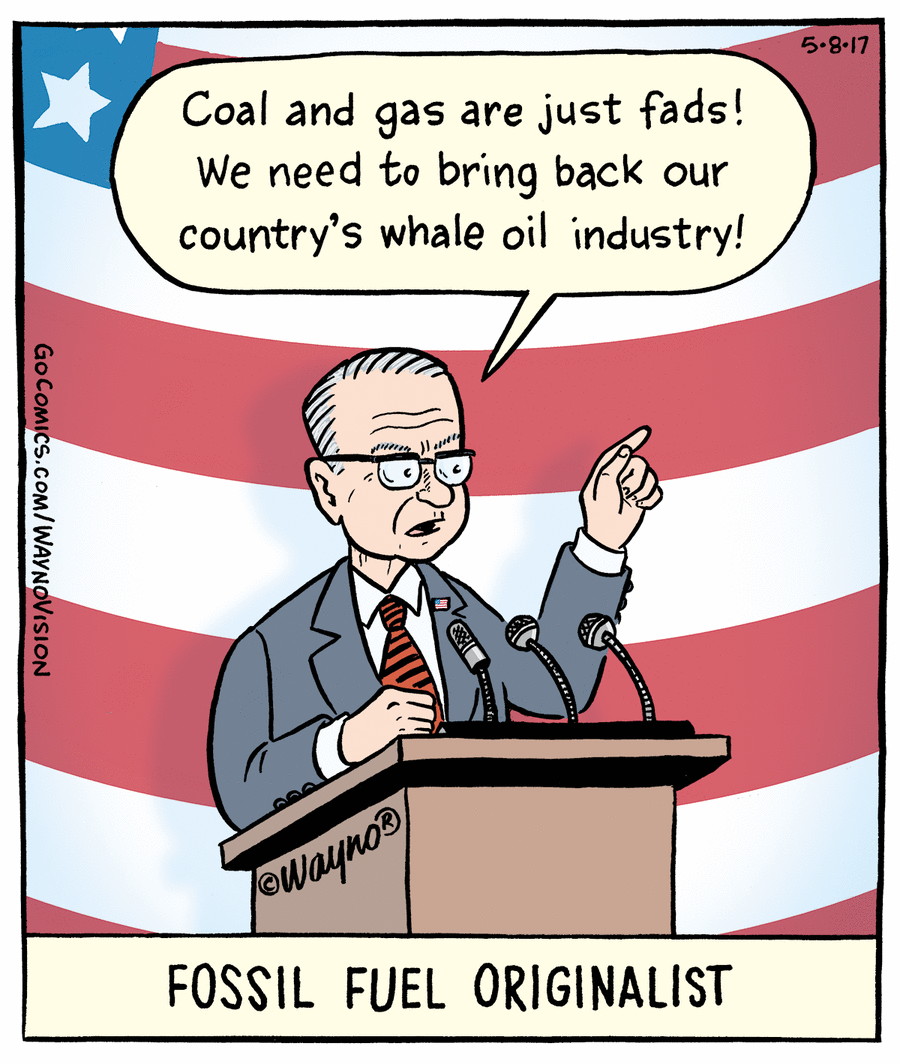
US crude oil prices fell below $20 a barrel on Monday, close to their lowest level in 18 years, as traders bet production would have to shut to cope with the collapse in demand from the coronavirus pandemic. The global oil industry is facing its biggest demand drop in history, with traders and analysts forecasting crude consumption could fall as much as a quarter next month because of widespread lockdowns across the western world as the pandemic spreads.
Oil in Canada hit $3.80 per barrel this morning in Canada.
@MarinKatusa: A starbucks latte is now almost 2X more expensive than a barrel of oil in Canada today. A barrel of oil is cheaper than a donut and coffee from Tim Hortons.
Russia's Rosneft stops operations in Venezuela (TASS)
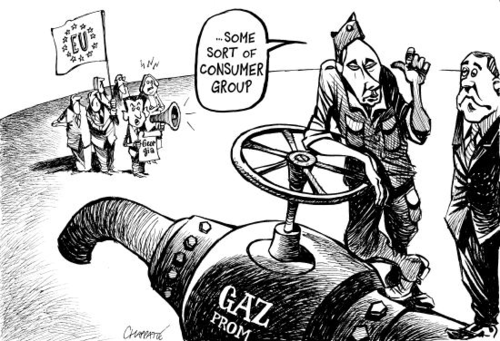
Russia's Rosneft stops operations in Venezuela, sells assets related to functioning in that country. A company owned by Russia has acquired Rosneft’s assets in Venezuela, the cabinet’s press office told TASS on Saturday. "The government of the Russian Federation has acquired assets in Venezuela from Rosneft. A company 100% owned by the Russian Federation has become the owner," the press service said.
Russian state gave up majority share of Rosneft in Venezuela deal (Yahoo News)
The Russian state has cut its holding in oil giant Rosneft to below a majority stake as part of its deal to buy the group's Venezuelan assets, announced over the weekend, a source familiar with the details told Reuters. Rosneft, Russia's largest oil producer, said on Saturday it had sold all its assets in Venezuela to an unnamed company owned by the Russian government. The group said it would receive in return payment worth 9.6% of Rosneft's equity capital, which would be held by a subsidiary. It did not say who the seller of that stake was. Before the deal, Russia, via state holding company Rosneftegaz, owned slightly over 50% of Kremlin-controlled Rosneft's capital.
Russia’s Plan To Bankrupt U.S. Shale Could Send Oil To $60 (oilprice.com)

As soon as U.S. shale leaves the market, prices will rebound and could reach $60 a barrel, Rosneft’s Igor Sechin said recently. As fate would have it, in what many would have until recently considered an impossible scenario, a lot of U.S. shale might do just that. Breakeven prices for U.S. shale basins range between $39 and $48 a barrel, according to data compiled by Reuters. Meanwhile, West Texas Intermediate (WIT) is trading below $25 a barrel and has been for over a week now.
The world's on the brink of running out of places to put oil (financial post)
With supply exceeding demand by 12.4 million barrels a day, producers will be forced to cut output by June
Collapse (documentary)
Sitting in a room that looks like a bunker, Ruppert briefly recounts his life including his parents' ties to U.S. intelligence agencies and Ruppert’s own career as an LAPD beat cop and detective. Ruppert then summarizes current energy and economic issues, focusing mainly around the core concepts of peak oil and sustainable development. He also criticizes fiat money, fractional reserve banking, compound interest, and leveraging, and discusses alleged CIA drug trafficking. The bulk of the film presents Ruppert making an array of predictions including social unrest, violence, population dislocation and governmental collapses in the United States and throughout the world. He draws on news reports and data available via the Internet, but he applies a unique interpretation which he calls “connecting the dots”.
USA im Irak: Letzter Akt einer Chaos-Politik? (heise)
90 Prozent der Einkünfte kommen vom Ölgeschäft. Bei dem derzeit niedrigen Ölpreis wird es für die irakische Regierung schwierig, dass sie überhaupt Gehälter bezahlen kann. 30 Prozent der Beschäftigten im Irak leben als Beamte oder Vertragspartner von Staatsgeldern. Das Gesundheitswesen ist vollkommen von den Staatseinnahmen abhängig.
EasyJet grounds 'entire fleet' over coronavirus (Techexplorer)
British airline easyJet on Monday said it had grounded its entire fleet because of the coronavirus pandemic but would still be available for rescue flights to repatriate stranded customers.
Coronavirus may cause global food shortages as panic buying and export curbs hit supply (SCMP)
UN Food and Agricultural Organisation says there could be global food shortages in April and May as a result of supply problems caused by the coronavirus. China is heavily dependent on imports for some crops like soybeans, which may be affected by disruptions to global logistics networks.
UN warns that COVID-19 pandemic could trigger global food shortage (World Socialist Web)
The United Nations Food and Agriculture Organization (FAO) warned of the impact of the COVID-19 virus on the global food supply chain in a notice on their website writing: “We risk a looming food crisis unless measures are taken fast to protect the most vulnerable, keep global food supply chains alive and mitigate the pandemic’s impacts across the food system.”
-
Fun fact 27/120: There are nuclear submarines out there carrying 40 nuclear warheads controlled by a computer running Windows XP. (via)
-
Cuban Embassy Attacks And The Microwave Auditory Effect - by Adam Fabio (hackaday, 2017)
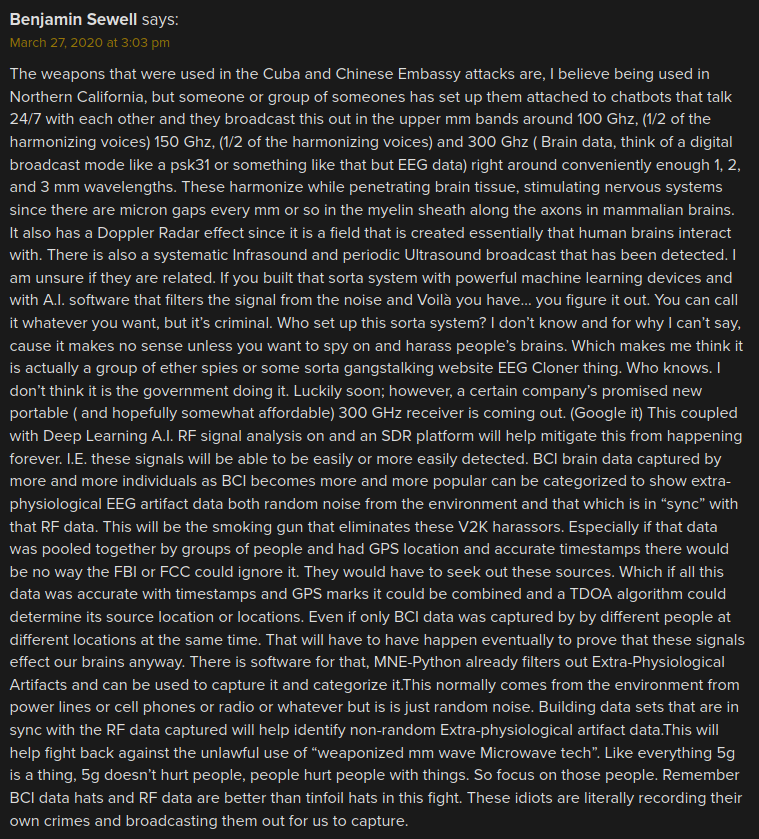
You may have seen a series of articles coming out about US staffers in Cuba. 21 staffers have suffered a bizarre array of injuries ranging from hearing loss to dizziness to concussion-like traumatic brain injuries. Some reported hearing incapacitating sounds in the embassy and in their hotel rooms. The reports range from clicking to grinding, humming, or even blaring sounds. One staffer described being awoken to a horrifically loud sound, only to have it disappear as soon as he moved away from his bed. When he got back into bed, the mysterious sound came back. So what’s going on? Bizarre accidents? Cloak and dagger gone awry? Mass hysteria among the US state department, or something else entirely?
-
Facebook is losing another board member, and is appointing a former Treasury official as its lead independent director (Business Insider)
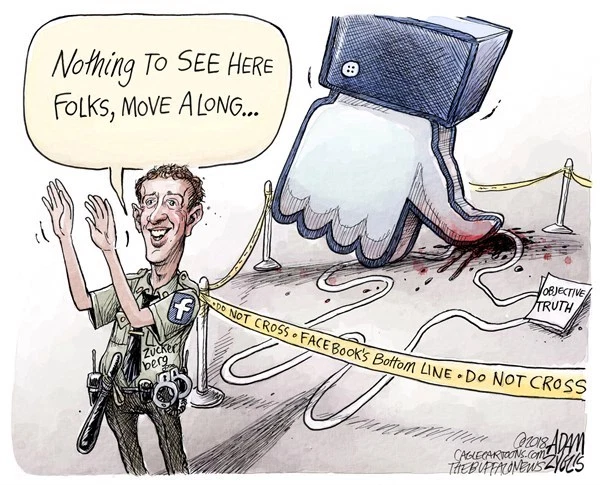
Facebook named Robert Kimmitt, a former deputy Treasury secretary and US ambassador to Germany, as its lead independent board director on Thursday. "We've been looking for a leader who can bring significant oversight and governance experience," Mark Zuckerberg said of Kimmitt's appointment. Another board member, Jeffrey Zients, will be stepping down at the company's next shareholder meeting. The moves are the latest in a series of significant shakeups on Facebook's board in recent months.

Robert M. Kimmitt (born December 19, 1947) was United States Deputy Secretary of the Treasury under President George W. Bush. He served from 1991 to 1993 as United States Ambassador to Germany and was awarded the U.S. Defense Department Distinguished Public Service Award as well as Germany's Order of Merit. r. Kimmitt was a managing director of Lehman Brothers from 1993 to 1997.
Kimmitt was on the CIA National Security Advisory Panel (1997).
Jeffrey Zients (born November 12, 1966) is an American chief executive officer, management consultant, and entrepreneur. Zients is currently the President of The Cranemere Group. From February 2014 to January 2017, he served as Director of the United States National Economic Council and President Obama's Economic Advisor. While working at Bain, Zients reported to South African Mary Menell; they later were married in South Africa with Menell's parents' family friend Nelson Mandela in attendance.

Facebook Is ‘Just Trying to Keep the Lights On’ as Traffic Soars in Pandemic (NYTimes)
The social network is straining to deal with skyrocketing usage as its 45,000 employees work from home for the first time.
Mark Zuckerberg, Priscilla Chan and Bill Gates to fund $25M coronavirus research group (cbs)
That’s 0.04% of their net worth. In other words, it is the cost of a PR campaign.
-
Amid pandemic, Pentagon urges ‘hyper-vigilance’ against foreign investment (defensenews)

The Pentagon’s top acquisition official is worried that adversary nations may use the economic downturn caused by the new coronavirus pandemic to buy out American-made technologies. During a Wednesday news conference, Ellen Lord warned that it “is critically important that we understand that during this crisis, the [defense-industrial base] is vulnerable to adversarial capital, so we need to ensure that companies can stay in business without losing their technology.” The Pentagon over the last several years has become increasingly vocal about concerns that foreign nations — primarily China — are investing in U.S. startup companies whose technologies could have national security applications. Those startups have been willing to accept Chinese funds in exchange for Beijing having ownership or access to certain technologies.
-
Wuhan doctors plan long-term look at coronavirus impact on male sex hormone (SCMP)
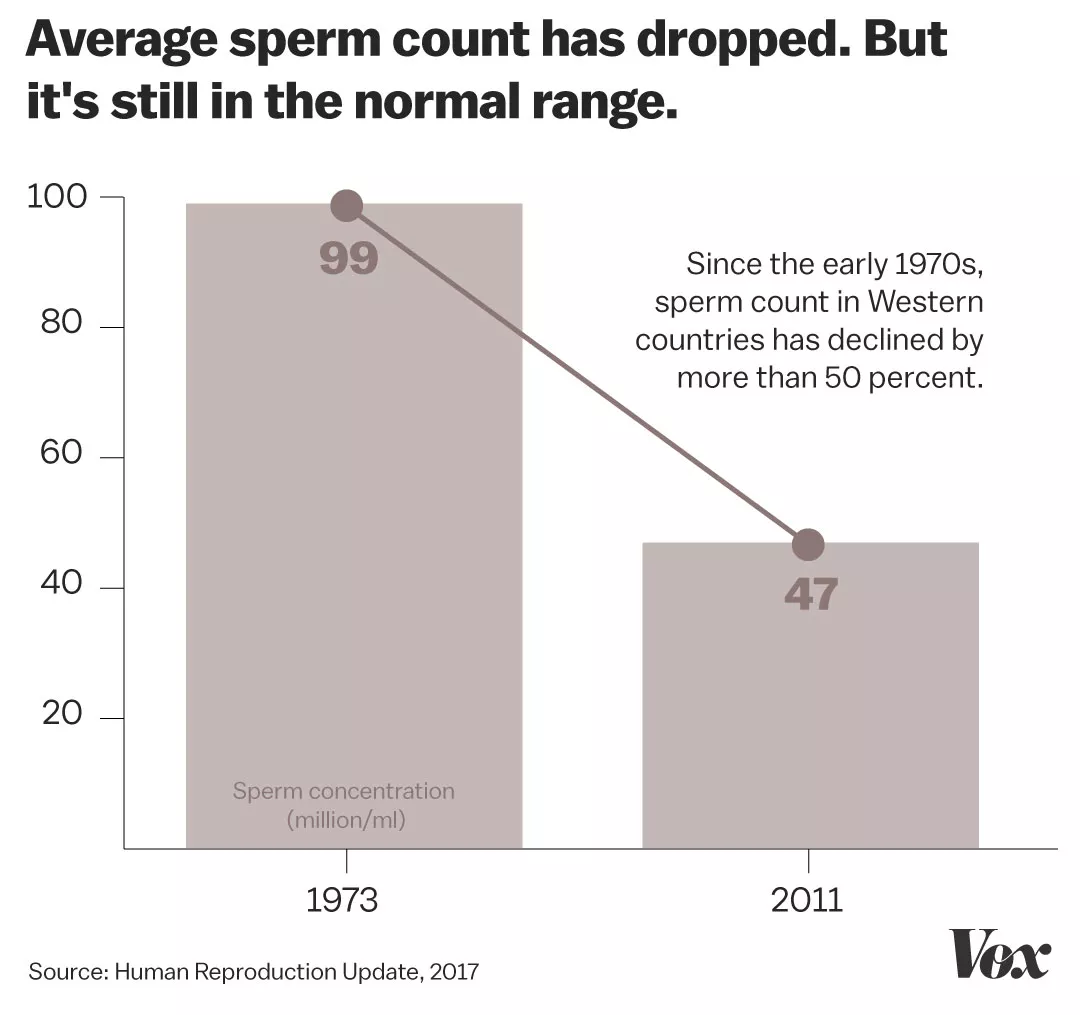
Doctors in the central Chinese city of Wuhan plan to embark on a long-term study of the effects of the coronavirus on the male reproductive system, building on small-scale research indicating that the pathogen could affect sex hormone levels in men. Though still preliminary and not peer reviewed, the study is the first clinical observation of the potential impact of Covid-19, the disease caused by the coronavirus, on the male reproductive system, especially among younger groups.
-
Mobile phone industry explores worldwide tracking of users (Guardian)
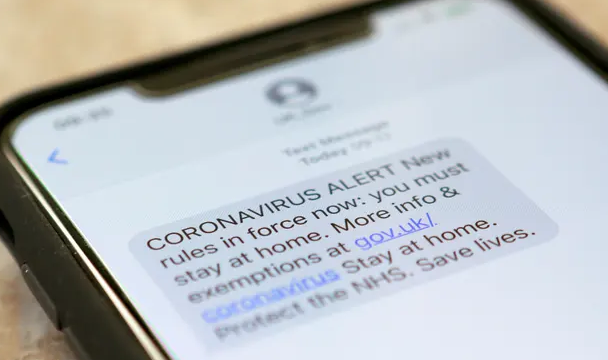
The mobile phone industry has explored the creation of a global data-sharing system that could track individuals around the world, as part of an effort to curb the spread of Covid-19. The Guardian has learned that a senior official at GSMA, held discussions with at least one company that is capable of tracking individuals globally through their mobile devices, and discussed the possible creation of a global data-sharing system.