tag > Internet
-
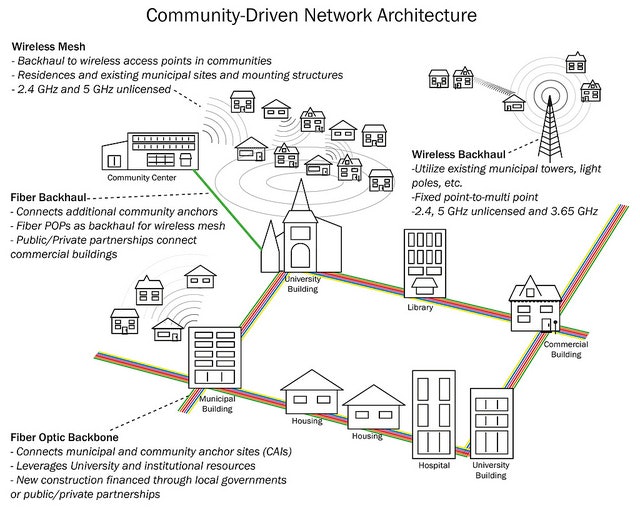
Without Net Neutrality, Is It Time To Build Your Own Internet? (Inverse)
Here's what you need to know about mesh networking.
-
No Escape from Our Techno-Feudal World - By Pepe Escobar

This article was originally published on Asia Times.
The political economy of the Digital Age remains virtually terra incognita. In Techno-Feudalism, published three months ago in France (no English translation yet), Cedric Durand, an economist at the Sorbonne, provides a crucial, global public service as he sifts through the new Matrix that controls all our lives.
Durand places the Digital Age in the larger context of the historical evolution of capitalism to show how the Washington consensus ended up metastasized into the Silicon Valley consensus. In a delightful twist, he brands the new grove as the “Californian ideology”.
We’re far away from Jefferson Airplane and the Beach Boys; it’s more like Schumpeter’s “creative destruction” on steroids, complete with IMF-style “structural reforms” emphasizing “flexibilization” of work and outright marketization/financialization of everyday life.
The Digital Age was crucially associated with right-wing ideology from the very start. The incubation was provided by the Progress and Freedom Foundation (PFF), active from 1993 to 2010 and conveniently funded, among others, by Microsoft, At&T, Disney, Sony, Oracle, Google and Yahoo.
In 1994, PFF held a ground-breaking conference in Atlanta that eventually led to a seminal Magna Carta: literally, Cyberspace and the American Dream: a Magna Carta for the Knowledge Era, published in 1996, during the first Clinton term.
Not by accident the magazine Wired was founded, just like PFF, in 1993, instantly becoming the house organ of the “Californian ideology”.
Among the authors of the Magna Carta we find futurist Alvin “Future Shock” Toffler and Reagan’s former scientific counselor George Keyworth. Before anyone else, they were already conceptualizing how “cyberspace is a bioelectronic environment which is literally universal”. Their Magna Carta was the privileged road map to explore the new frontier.
Those Randian heroes
Also not by accident the intellectual guru of the new frontier was Ayn Rand and her quite primitive dichotomy between “pioneers” and the mob. Rand declared that egotism is good, altruism is evil, and empathy is irrational.
When it comes to the new property rights of the new Eldorado, all power should be exercised by the Silicon Valley “pioneers”, a Narcissus bunch in love with their mirror image as superior Randian heroes. In the name of innovation they should be allowed to destroy any established rules, in a Schumpeterian “creative destruction” rampage.
That has led to our current environment, where Google, Facebook, Uber and co. can overstep any legal framework, imposing their innovations like a fait accompli.
Durand goes to the heart of the matter when it comes to the true nature of “digital domination”: US leadership was never achieved because of spontaneous market forces.
On the contrary. The history of Silicon Valley is absolutely dependent on state intervention – especially via the industrial-military complex and the aero-spatial complex. The Ames Research Center, one of NASA’s top labs, is in Mountain View. Stanford was always awarded juicy military research contracts. During WWII, Hewlett Packard, for instance, was flourishing thanks to their electronics being used to manufacture radars. Throughout the 1960s, the US military bought the bulk of the still infant semiconductor production.
The Rise of Data Capital, a 2016 MIT Technological Review report produced “in partnership” with Oracle, showed how digital networks open access to a new, virgin underground brimming with resources: “Those that arrive first and take control obtain the resources they’re seeking” – in the form of data.
So everything from video-surveillance images and electronic banking to DNA samples and supermarket tickets implies some form of territorial appropriation. Here we see in all its glory the extractivist logic inbuilt in the development of Big Data.
Durand gives us the example of Android to illustrate the extractivist logic in action. Google made Android free for all smartphones so it would acquire a strategic market position, beating the Apple ecosystem and thus becoming the default internet entry point for virtually the whole planet. That’s how a de facto, immensely valuable, online real estate empire is built.
The key point is that whatever the original business – Google, Amazon, Uber – strategies of conquering cyberspace all point to the same target: take control of “spaces of observation and capture” of data.
About the Chinese credit system…
Durand offers a finely balanced analysis of the Chinese credit system – a public/private hybrid system launched in 2013 during the 3rd plenum of the 18th Congress of the CCP, under the motto “to value sincerity and punish insincerity”.
For the State Council, the supreme government authority in China, what really mattered was to encourage behavior deemed responsible in the financial, economic and socio-political spheres, and sanction what is not. It’s all about trust. Beijing defines it as “a method of perfecting the socialist market economy system that improves social governance”.
The Chinese term – shehui xinyong – is totally lost in translation in the West. Way more complex than “social credit”, it’s more about “trustworthiness”, in the sense of integrity. Instead of the pedestrian Western accusations of being an Orwellian system, priorities include the fight against fraud and corruption at the national, regional and local levels, violations of environmental rules, disrespect of food security norms.
Cybernetic management of social life is being seriously discussed in China since the 1980s. In fact, since the 1940s, as we see in Mao’s Little Red Book. It could be seen as inspired by the Maoist principle of “mass lines”, as in “start with the masses to come back to the masses: to amass the ideas of the masses (which are dispersed, non-systematic), concentrate them (in general ideas and systematic), then come back to the masses to diffuse and explain them, make sure the masses assimilate them and translate them into action, and verify in the action of the masses the pertinence of these ideas”.
Durand’s analysis goes one step beyond Soshana Zuboff’s
The Age of Surveillance Capitalism when he finally reaches the core of his thesis, showing how digital platforms become “fiefdoms”: they live out of, and profit from, their vast “digital territory” peopled with data even as they lock in power over their services, which are deemed indispensable.
And just as in feudalism, fiefdoms dominate territory by attaching serfs. Masters made their living profiting from the social power derived from the exploitation of their domain, and that implied unlimited power over the serfs.
It all spells out total concentration. Silicon Valley stalwart Peter Thiel has always stressed the target of the digital entrepreneur is exactly to bypass competition. As quoted in Crashed: How a Decade of Financial Crises Changed the World, Thiel declared, “Capitalism and competition are antagonistic. Competition is for losers.”
So now we are facing not a mere clash between Silicon Valley capitalism and finance capital, but actually a new mode of production:
a turbo-capitalist survival as rentier capitalism, where Silicon giants take the place of estates, and also the State. That is the “techno-feudal” option, as defined by Durand.
Blake meets Burroughs
Durand’s book is extremely relevant to show how the theoretical and political critique of the Digital Age is still rarified. There is no precise cartography of all those dodgy circuits of revenue extraction. No analysis of how do they profit from the financial casino – especially mega investment funds that facilitate hyper-concentration. Or how do they profit from the hardcore exploitation of workers in the gig economy.
The total concentration of the digital glebe is leading to a scenario, as Durand recalls, already dreamed up by Stuart Mill, where every land in a country belonged to a single master. Our generalized dependency on the digital masters seems to be “the cannibal future of liberalism in the age of algorithms”.
Is there a possible way out? The temptation is to go radical – a Blake/Burroughs crossover. We have to expand our scope of comprehension – and stop confusing the map (as shown in the Magna Carta) with the territory (our perception).
William Blake, in his proto-psychedelic visions, was all about liberation and subordination – depicting an authoritarian deity imposing conformity via a sort of source code of mass influence. Looks like a proto-analysis of the Digital Age.
William Burroughs conceptualized Control – an array of manipulations including mass media (he would be horrified by social media). To break down Control, we must be able to hack into and disrupt its core programs. Burroughs showed how all forms of Control must be rejected – and defeated: “Authority figures are seen for what they are: dead empty masks manipulated by computers”.
Here’s our future: hackers or slaves.
-
'Extremely Aggressive' Internet Censorship Spreads In the World's Democracies (umich.edu)
#Comment: The Banana-republic-yfication and breakdown of nation-states continues to move forward at breathtaking speed. The increasingly extreme use of surveillance, repression and violence by governments and corporations is a clear sign of the growing desperation of the ruling elites, which completely lost the plot and are highly vulnerable. Fun times.
-
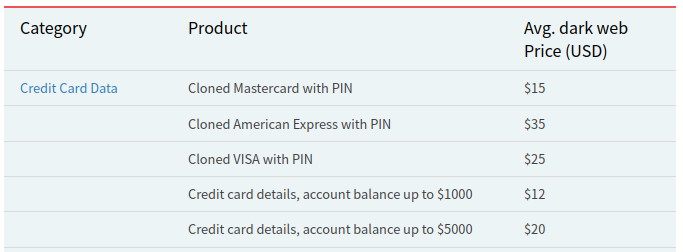
The dark web has a longstanding reputation as a haven for the worst kinds of criminal activity. This reputation is not wholly unjustified, as there are indeed terrible things happening around the world that can be bought and sold on the dark web.
-
This is Fine: Optimism & Emergency in the P2P Network - by Cade Diehm
Excellent Article! Here is its conclusion section: "We can no longer marvel at the novel interactions afforded by peer-to-peer technologies, nor perform political theatrics within these networks. We need to lay aside our delusions that decentralisation grants us immunity – any ground ceded to the commons will be met with amplified resistance from those who already own these spaces. When this happens, every single arrogant tradeoff, every decision made in ignorance that assumes a stable march towards progress without regression will be called to account. Without cohesive organisation, mobilisation to harden security and privacy and without a sincere commitment from protocol designers to revise their collective assumptions, the push back from incumbent power will leverage each and every socio-technical flaw in each and every network. The fallout and trauma for increasingly digitalised communities will unquestionably dwarf the 2000s Copyright War. If there is no collective worldview reset, the peer-to-peer movement will remain a historical novelty, a technological bauble and thought experiment for detached technologists unable to understand the political gravity of their tools, and whose life work will never withstand the attacks against it."
-
"The best way to get the right answer on the internet is not to ask a question; it's to post the wrong answer." - Cunningham's Law
-
Pinduoduo to invest USD 7 billion in rural areas in next five years (kr-asia)
Over 240 million users have bought agricultural products on Pinduoduo last year, amounting to USD 19.3 billion in sales.
-
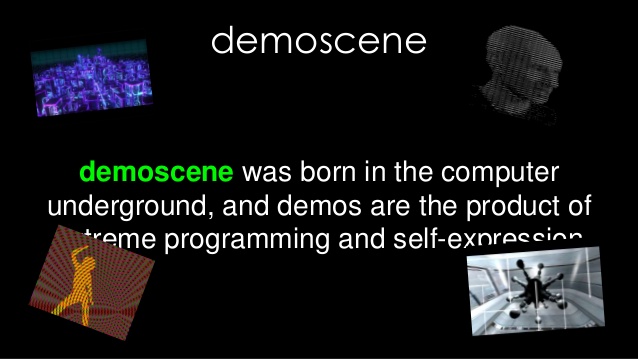
Finland became the forerunner of understanding and accepting digital culture in general and the Demoscene in particular as cultural heritage. Right before the Easter weekend the Finnish Heritage Agency announced, that the Ministry of Education and Culture listed the Demoscene on proposals from the National Board of Antiquities and the Intangible Cultural Heritage Expert Group as national cultural heritage of humanity together with eleven other cultural practices.
-
China proposes a new internet protocol that gives government ultimate control (reclaimthenet)
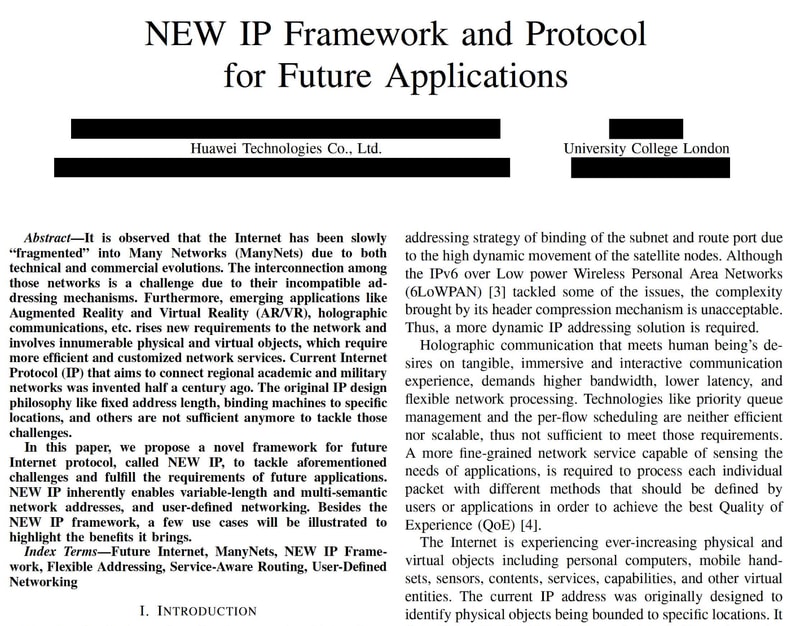
After years of meddling with the internet and censoring everything left and right, China now wants to introduce a new authoritarian-friendly internet protocol. The Financial Times has recently gained access to several documents about the protocol. Huawei, China’s Ministry of Industry and Information Technology (MITT), and state-run Unicom and China Telecom were the ones to craft the proposal and presented it to the UN’s International Telecommunication Union (ITU).
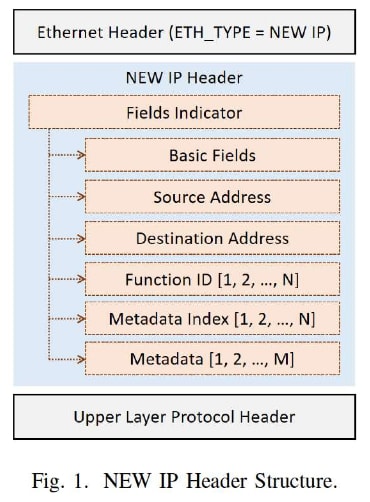
It was found that Russia and maybe Saudi Arabia were in favor of the proposal, whereas nations such as the US and UK expressed concerns. Based on what the developers of the protocol say, it may be standardized at a conference in India later this year with the testing of the protocol beginning in early 2021. On the whole, China’s new proposal states that the internet must catch up with the future and that the “current designs are obviously insufficient”. Considering the fact that the underlying technical architecture of the internet hasn’t really changed in a long time, China’s thoughts to modernize the whole infrastructure does sound like a necessary step to take. The proposal calls for an advanced internet that has improved security and efficiency while supporting holograms as well as latency stability.
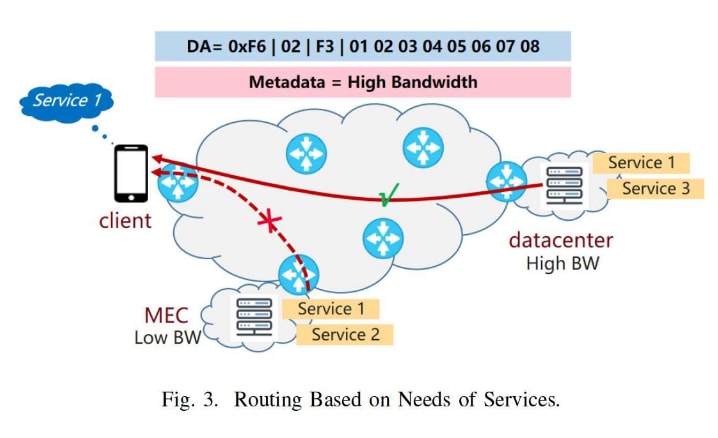
Finally, the new protocol aims to integrate the interactions between ManyNets (networks from IoT and satellites) and the internet seamlessly. But there is a strong concern with the new proposal that was even pointed out by countries such as the US and UK. The new proposal, if accepted globally, will give governments the ultimate power over the internet accessibility in their nations.
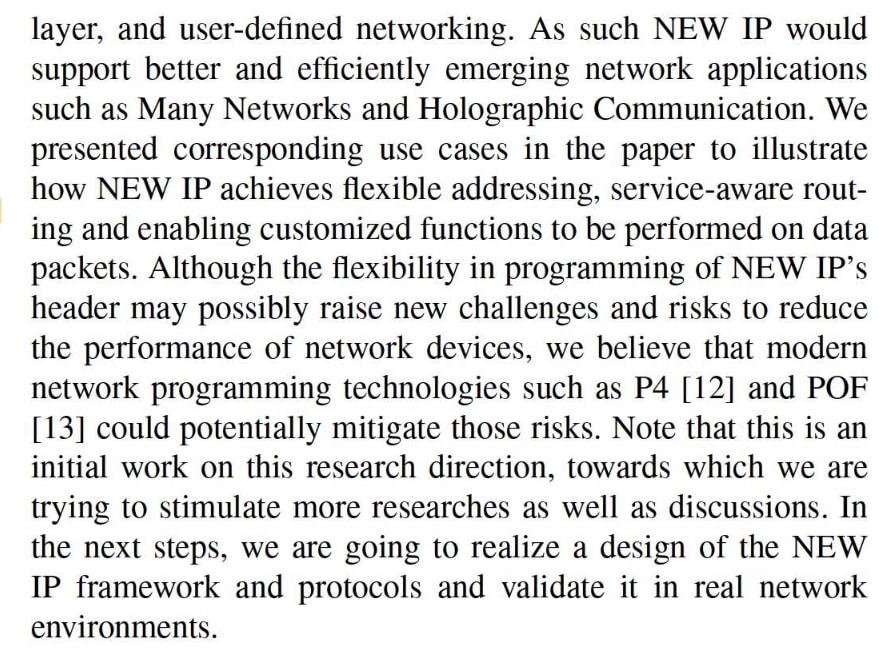
Such a “top-down” internet architecture will lead to potential internet censorship. With many countries already practicing blatant internet censorship, especially China, the idea of placing more power over internet accessibility into the hands of a country’s government may not be the wisest course of action. It is also worth noting that authoritarian governments such as Russia are already moving in the direction of gaining “cyber sovereignty“. For instance, Russia already tested its own heavily controlled internet.
At such a juncture, the new proposal by China, while promising the hopes of a better future, might make it easy for countries to practice internet censorship.
#Technology #Infrastructure #Internet #Politics #Economics #Military
-
COVID-19 Pushes Up Internet Use 70 Percent, Streaming More Than 12 Percent (forbes)
The first internet streaming and usage figures are coming in as the coronavirus pandemic places a quarter of the world's population under lockdown. As millions of people go online for entertainment and more, total internet hits have surged by between 50% and 70%, according to preliminary statistics. Streaming has also jumped by at least 12%, estimates show. [Maria Rua Aguete of Omdia, the tech research arm of Informa Tech] said the annual figures are revealing: "Ecommerce will be the other sector that will see a revenue boost as a result of the pandemic, adding $175 billion in revenue in 2020, which represents a 5% increase."
-
If You Like RSS, You'll Love Fraidycat
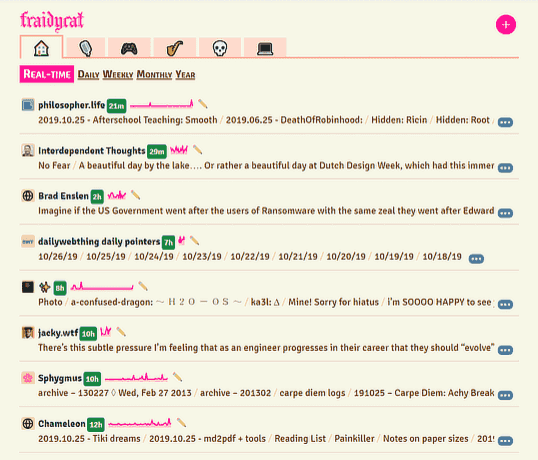
Fraidycat is a desktop app or browser extension for Firefox or Chrome. I use it to follow people (hundreds) on whatever platform they choose - Twitter, a blog, YouTube or TiddlyWiki. There is no news feed. Rather than showing you a massive inbox of new posts to sort through, you see a list of recently active individuals. No one can noisily take over this page, since every follow has a summary that takes up a mere two lines.
#Comment: I absolutely love this! Fantastic approach to the evolution of RSS and Content Feeds.
-
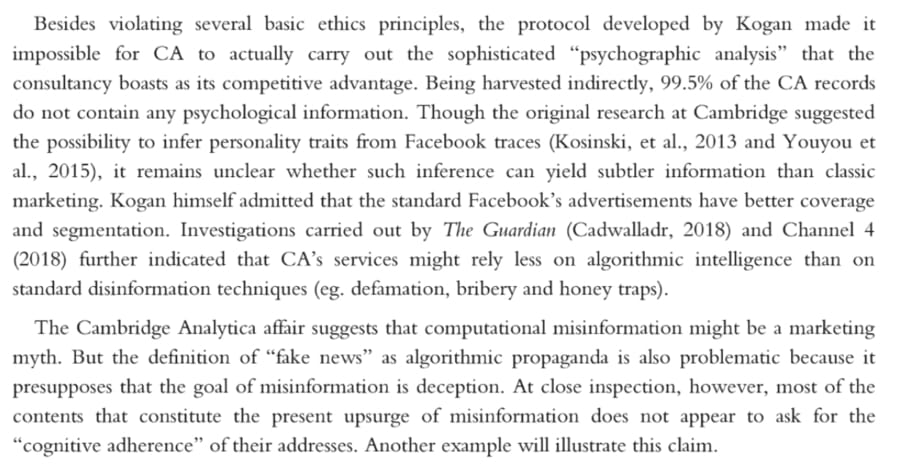
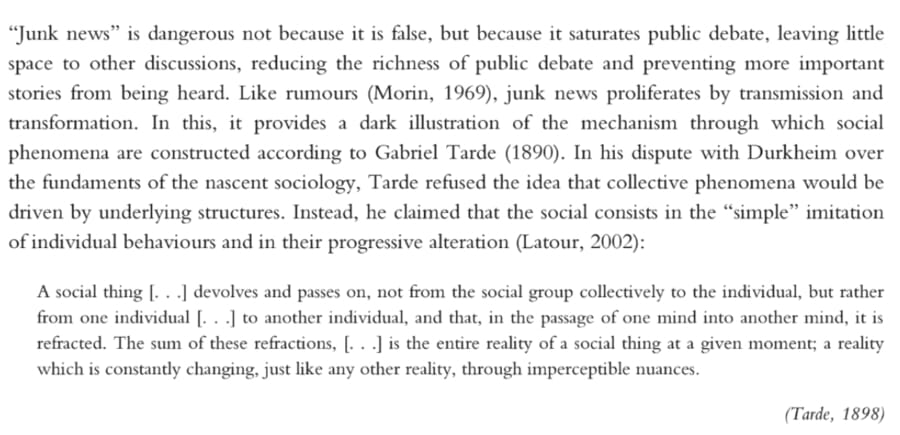
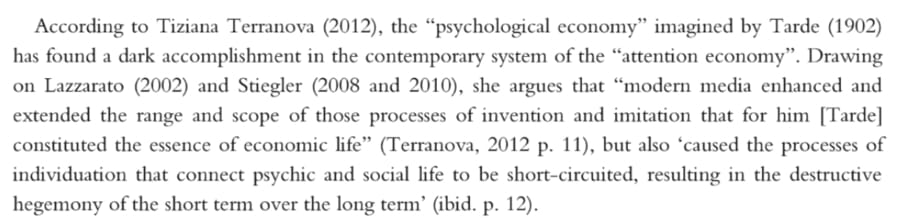
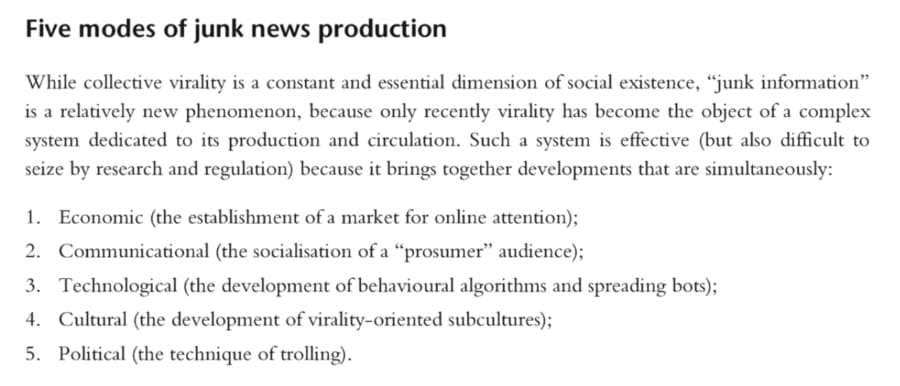
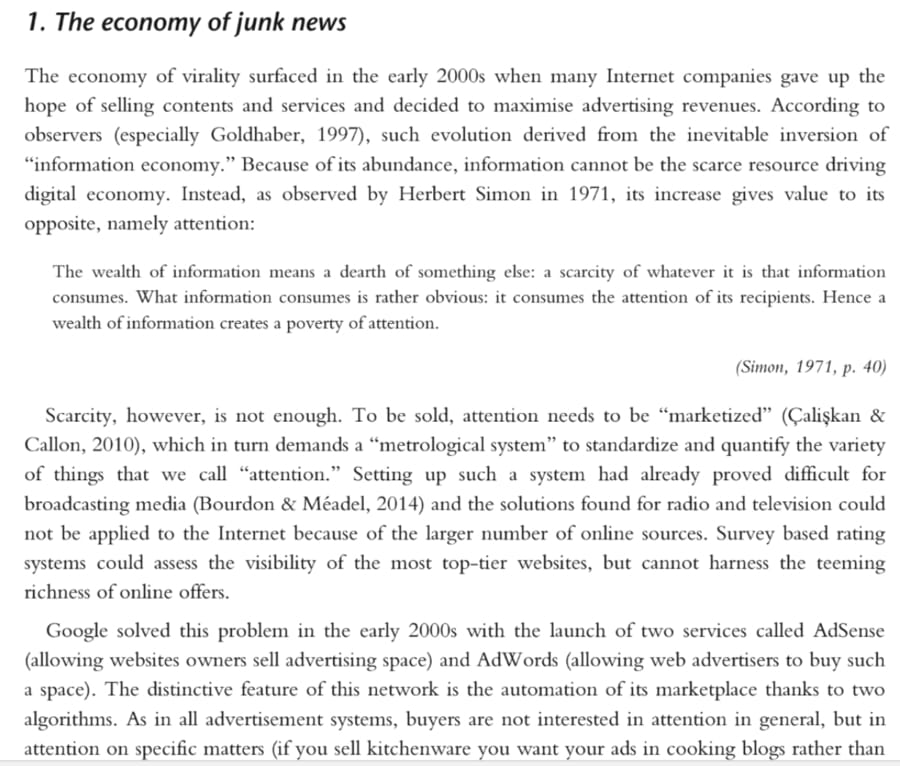
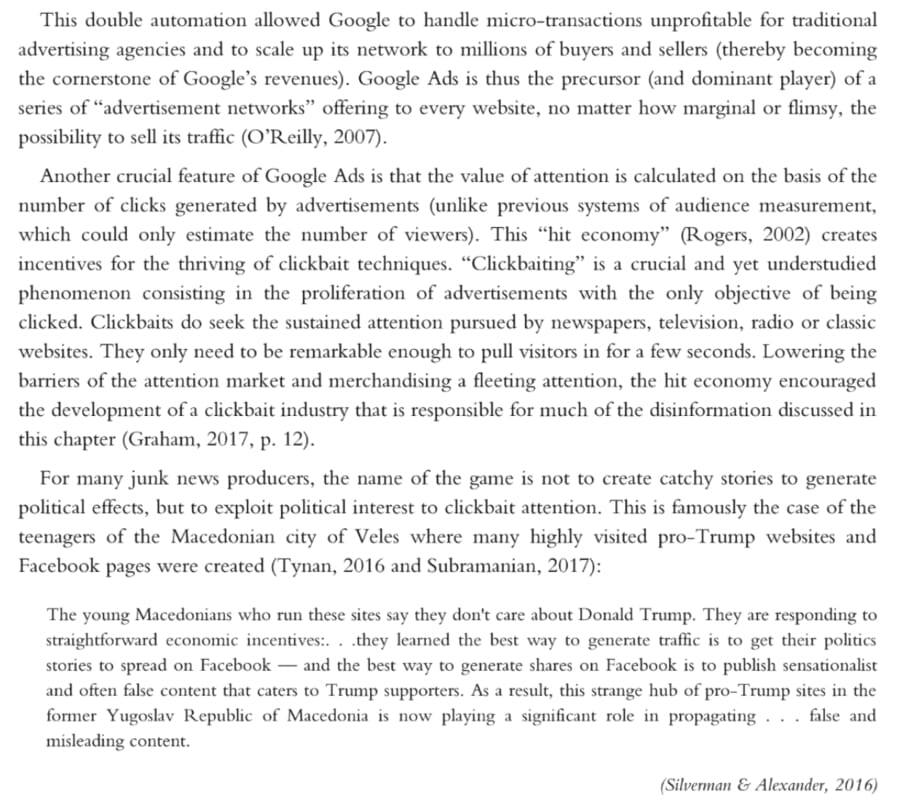
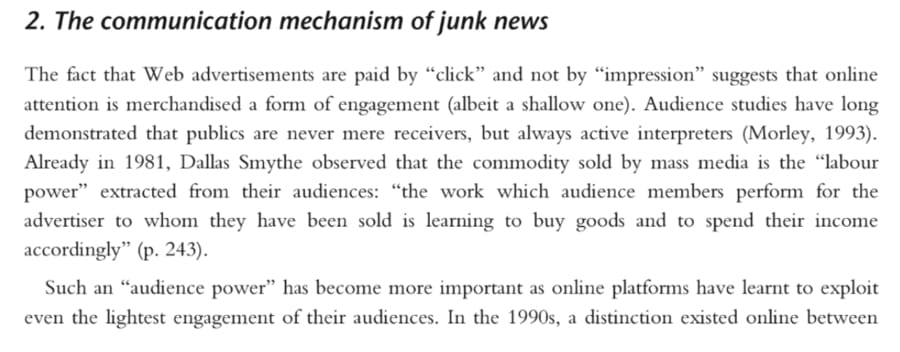
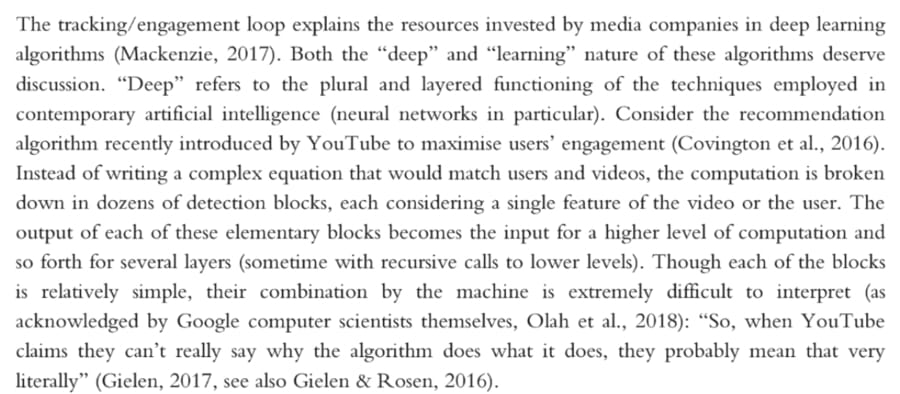
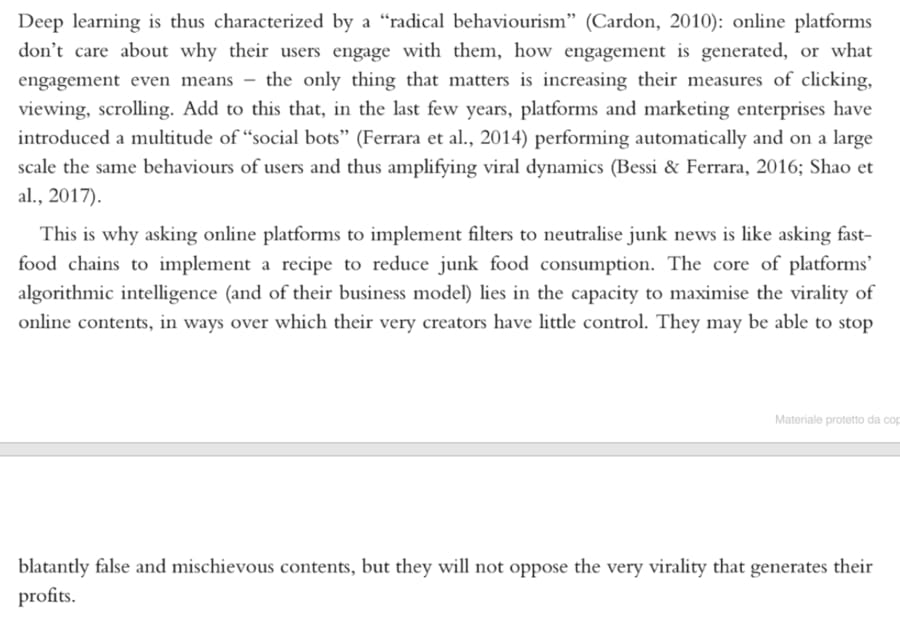
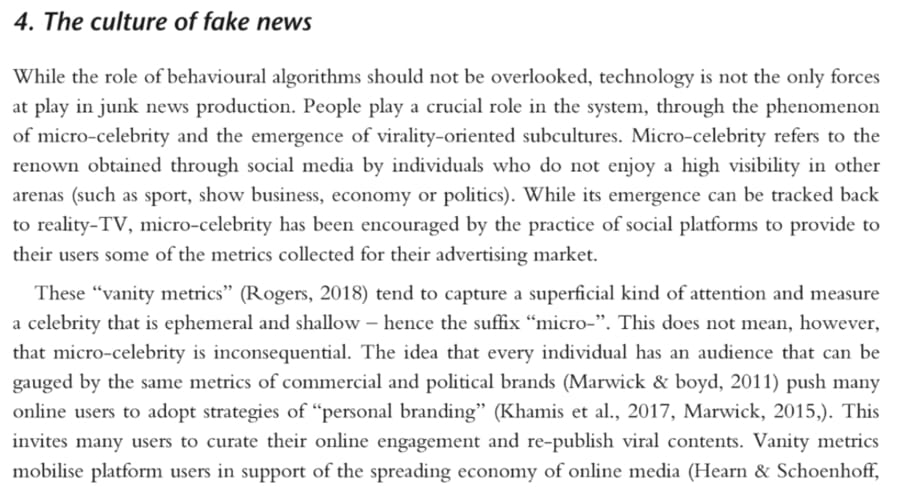
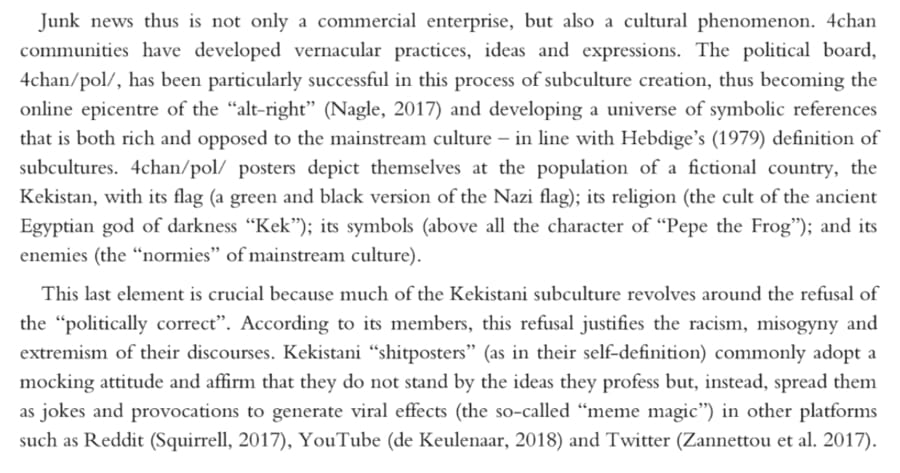
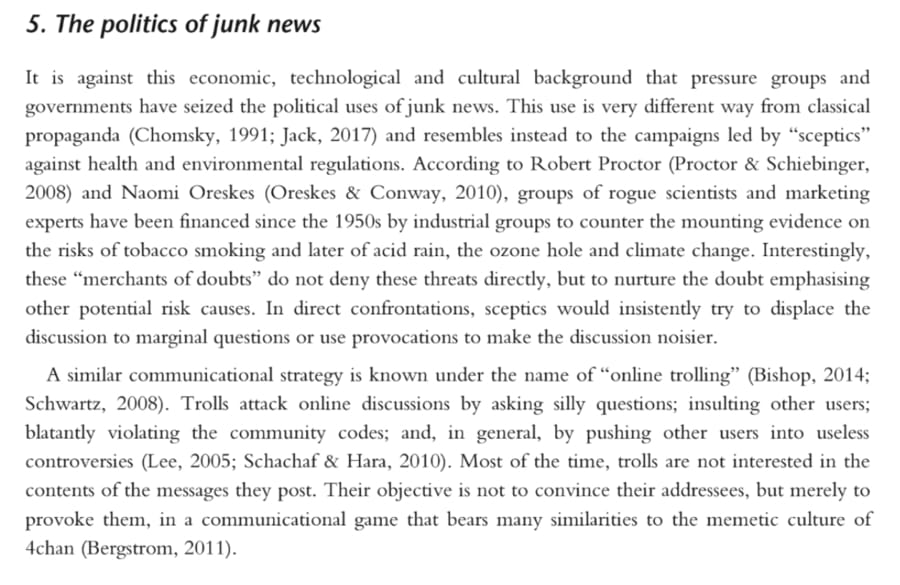
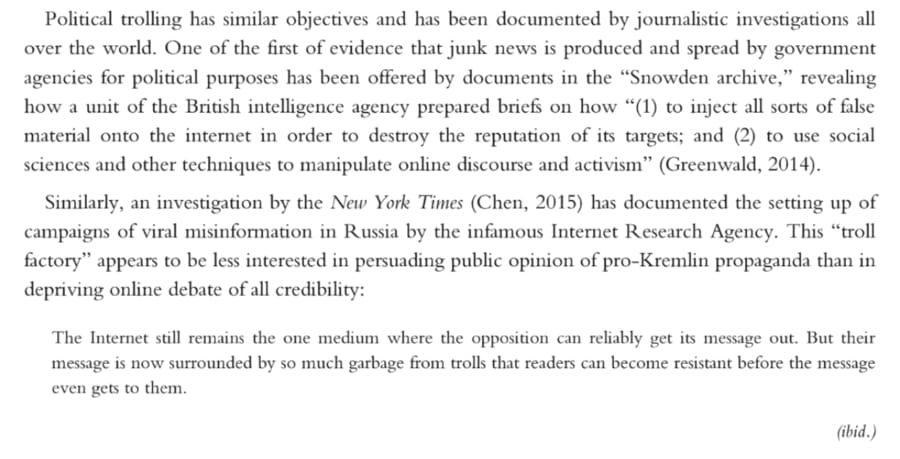
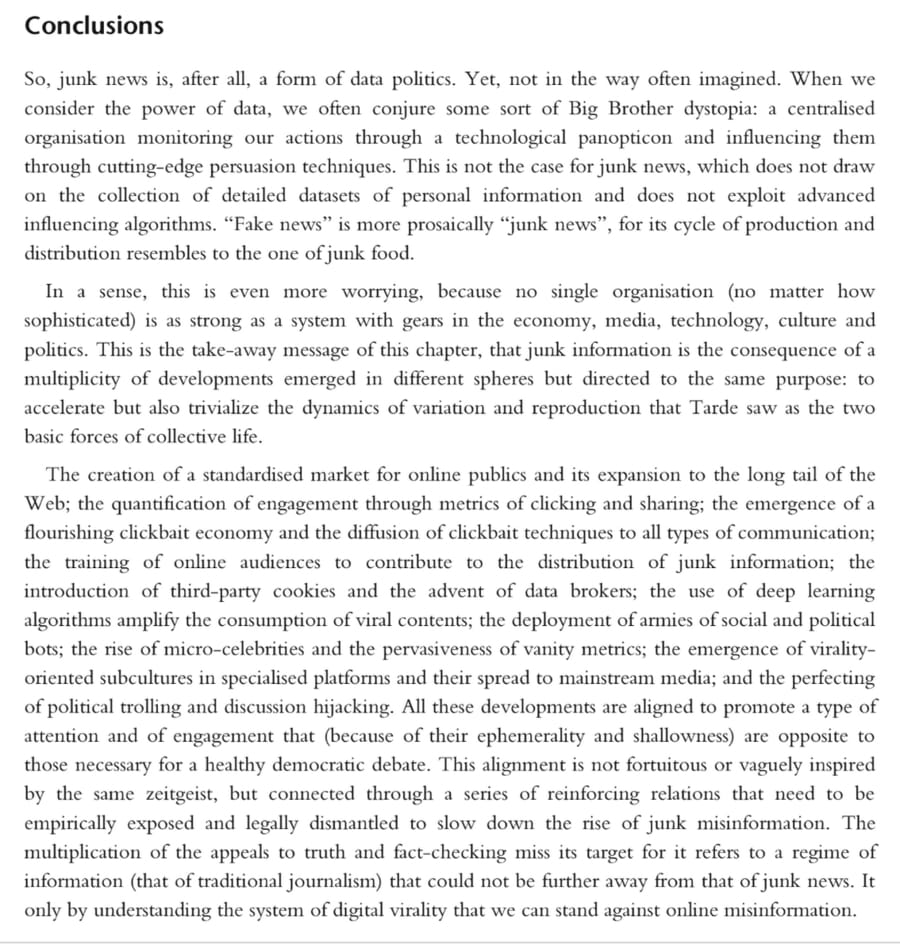
From Fake news to Junk News. The data politics of online virality - by Tommaso Venturini.
Part of the book "Data Politics: Worlds, Subjects, Rights" - by Didier Bigo (site) et.al (2019)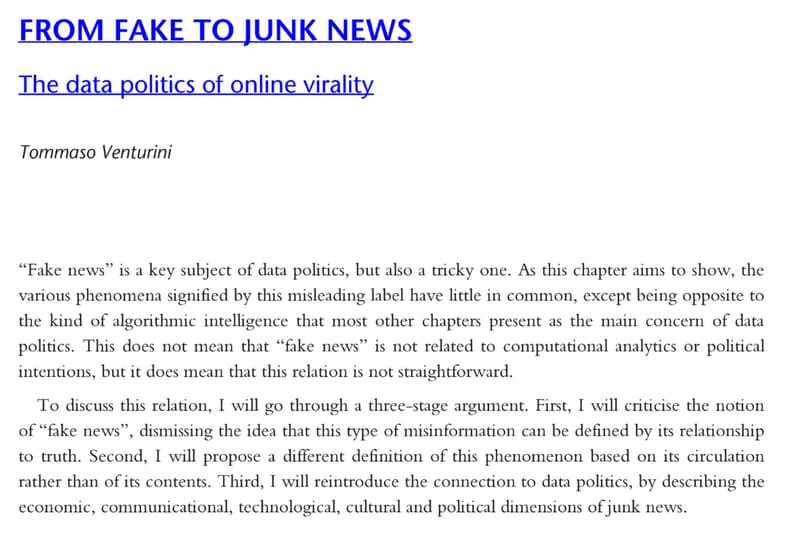
Didier Bigo on Security, Surveillance and Democracy
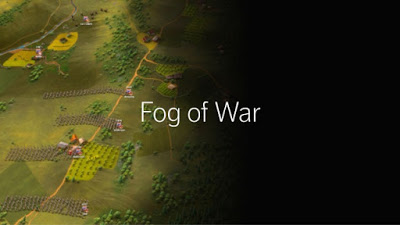
Fog of Information - by tekgnostics
“In this day and age... we are faced with a Fog of Information that is as distracting and detrimental as the fog of war.” - from “Bread & Circuses”
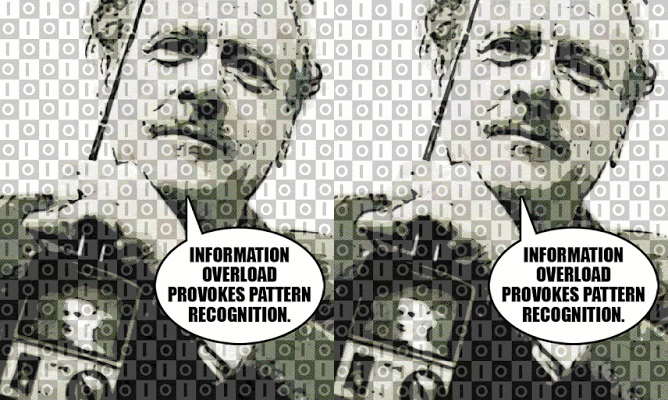
"Information overload occurs when the amount of input to a system exceeds its processing capacity. Decision-makers have fairly limited cognitive processing capacity. Consequently, when information overload occurs, it is likely that a reduction in decision quality will occur."
"It's not a matter what is true that counts but a matter of what is perceived to be true" - Henry Kissinger
#Politics #SE #InfoSec #Bots #Culture #KM #Internet #Military #RTM
-
An RSS to ActivityPub converter: https://github.com/dariusk/rss-to-activitypub #P2P #Internet
-
"After the Facebook scandal it’s time to base the digital economy on public v private ownership of data" - by @evgenymorozov : #Politics #Internet https://www.theguardian.com/technology..
We must find a way to make firms like Facebook pay for accessing our data – conceptualised as something we own in common
-
The information weapon: Why the internet was always spying on you:
https://thisishell.com/interviews/990-yasha-levine #InternetBack in the 1960s when they first developed networked computers and databases and analysis software - people were already thinking into the future, and thinking about creating an early warning radar system for human society - a networked computer system that could sit on top of the world, and watch it for threats, and intercept them before they caused harm - on a global and societal level, but even on a personal level. And we're seeing that right now. The internet has become a radar system for people and societies.