tag > ML
-
Quantifying the World and Its Webs: Mathematical Discrete vs Continua in Knowledge Construction (PDF) - by Giuseppe Longo (2019) (Short video of Longo about his paper)
A Mathematical Critique of Computational Thinking in the Sciences of Nature - talk by Giuseppe Longo (1h, 2017)
Alphabets, Axioms, DNA: On Human Knowledge and the Myth of Alphanumeric Coding - talk by Giuseppe Longo (30min, 2019)
-
Never Underestimate the Intelligence of Trees - Plants communicate, nurture their seedlings, and get stressed - Article by Nautils about Suzanne Simard's work.



The secret language of trees - Short Video by Camille Defrenne & Suzanne Simard
-
Presenting POET (Paired Open-Ended Trailblazer) - by Jeff Clune (Uber AI Labs)
ICML 2019 Tutorial: Recent Advances in Population-Based Search for Deep Neural Networks
-
Notes on Robert Rosen (1934 - 1998), an American theoretical biologist:
‘What are the defining characteristics of a natural system for us to perceive it as being alive?’’ - Robert Rosen in "Life Itself: A Comprehensive Inquiry Into the Nature, Origin, and Fabrication of Life"
"I do not consider myself a philosopher. I am a biologist, attempting to grapple with the Schrodinger question, “What is Life?” It turns out that this is not an empirical question, to be resolved through observation in a laboratory" - Robert Rosen in "Boundaries and barriers: On the limits to scientific knowledge" (1996)
"No finite organism can completely model the infinite universe, but even more to the point, the senses can only provide a subset of the needed information; the organism must correct the measured values and guess at the needed missing ones."..."Indeed, even the best guesses can only be an approximation to reality - perception is a creative process." - from "Robert Rosen: The Well Posed Question And Its Answer-why Are Organisms Different From Machines?" - by Donald C. Mikulecky
The human body completely changes the matter it is made of roughly every 8 weeks, through metabolism, replication and repair. Yet, you're still you --with all your memories, your personality... If science insists on chasing particles, they will follow them right through an organism and miss the organism entirely. — Robert Rosen, (as told to his daughter, Ms. Judith Rosen)
Presentation "Anticipatory Systems Theory: What the science of Life and Mind can teach us about science, itself" - by Judith Rosen
Presentation: "Robert Rosen And George Lakoff: The Role Of Causality In Complex Systems" - by Hamid Y. Javanbakht
-
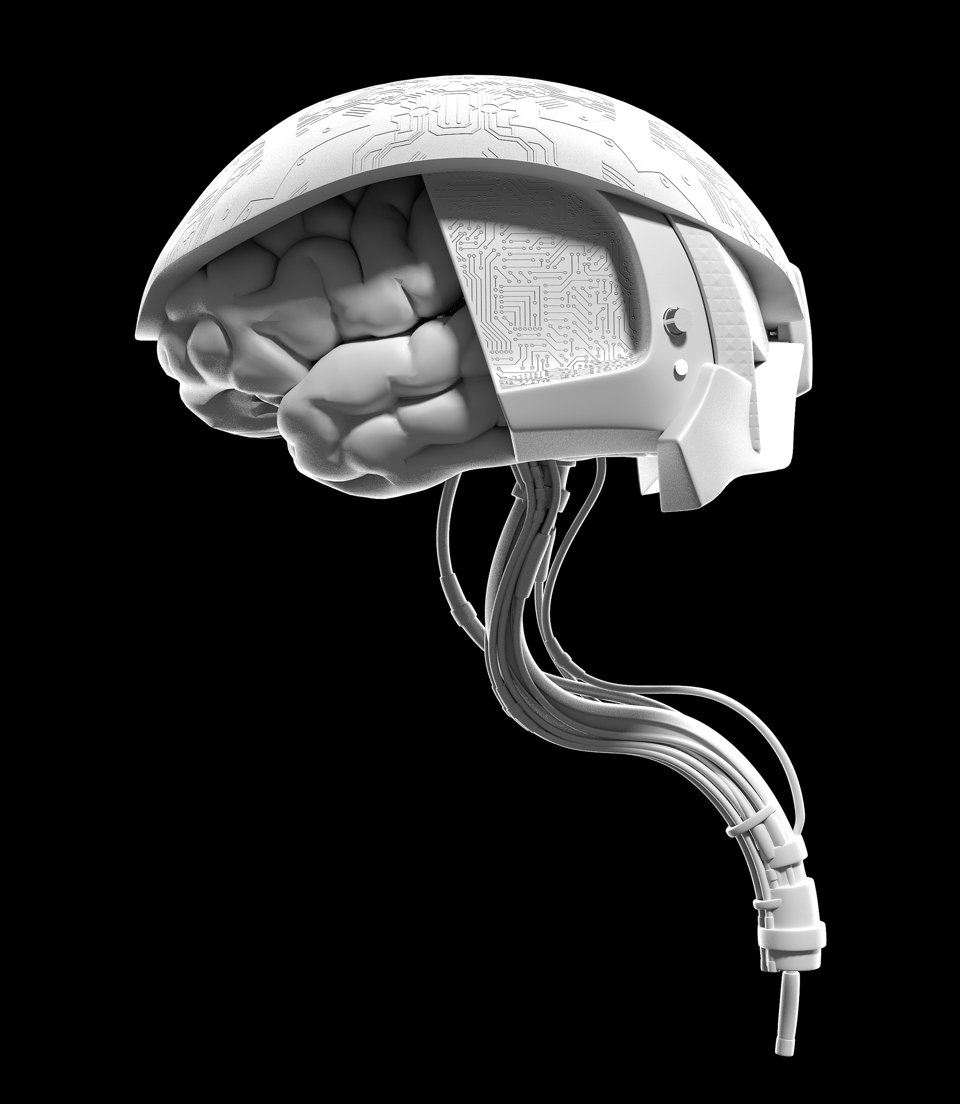
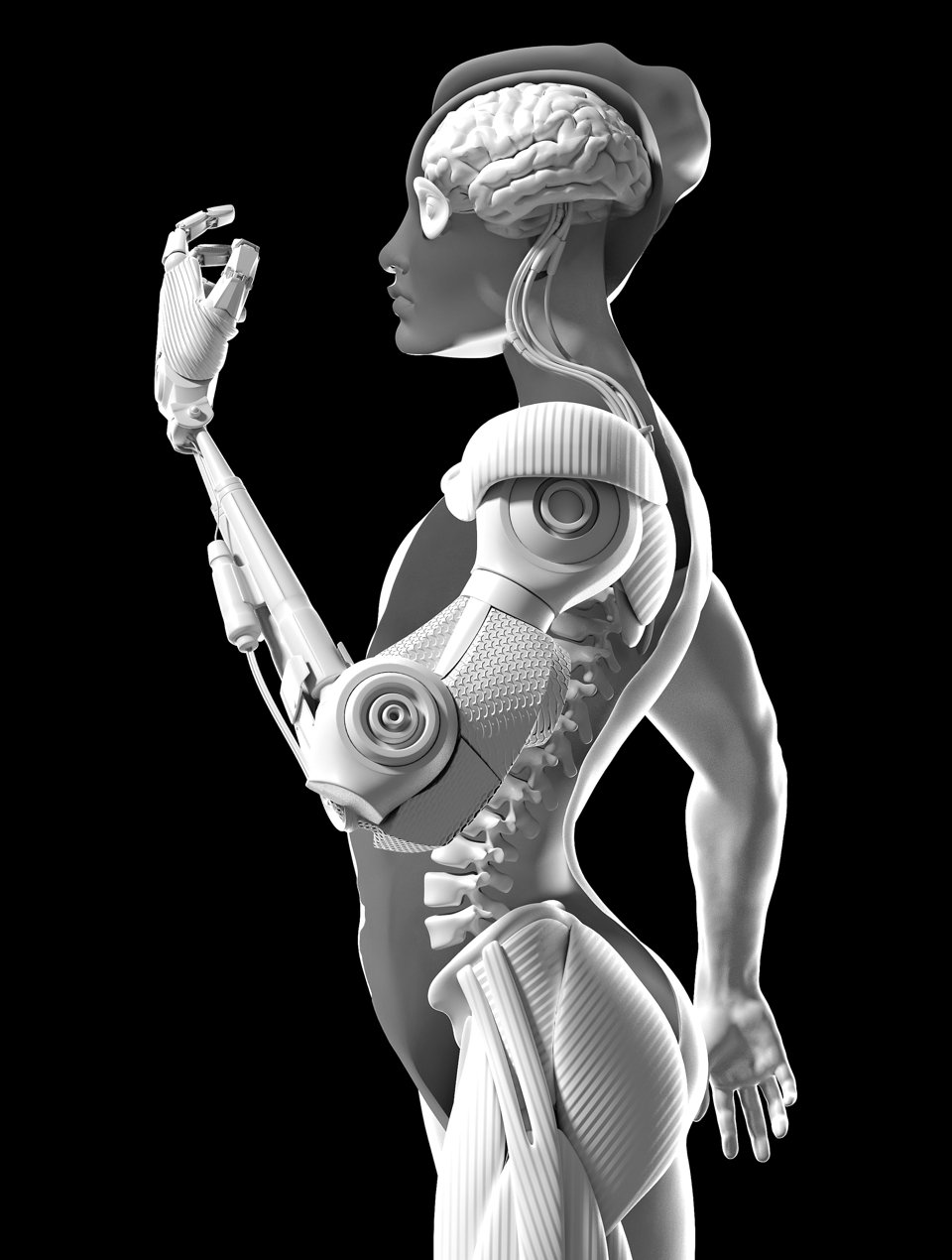
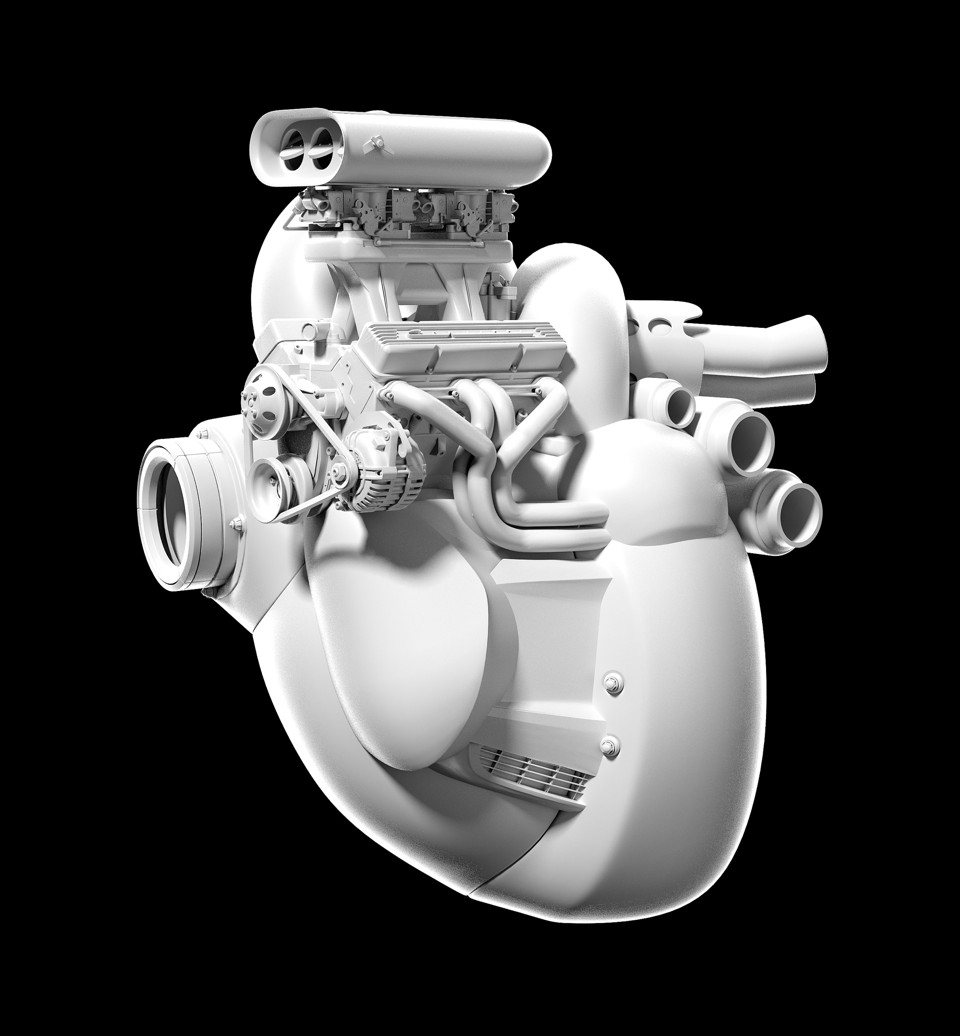
On DARPA’s research into human enhancement (The Atlantic)
The mission: “to ‘free the mind from the limitations of even healthy bodies.’ What the agency learns from healing makes way for enhancement. The mission is to make human beings something other than what we are, with powers beyond the ones we’re born with and beyond the ones we can organically attain.” “How can I liberate mankind from the limitations of the body?” one researcher asked. One aspiration: "the ability, via computer, to transfer knowledge and thoughts from one person’s mind to another’s."
-
Interesting read about Donald O. Hebb (1904 - 1985) - famous Canadian psychologist known for his theory of Hebbian learning, the father of neuropsychology and neural networks - and his involvement with CIA interrogation techniques, including sensory deprivation:
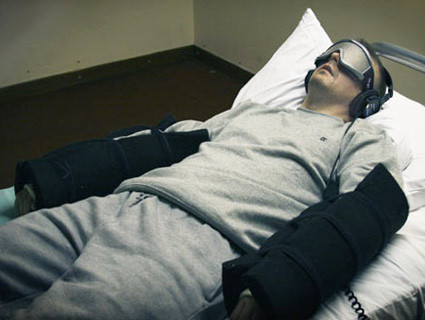
2008 BBC reenactment of Donald Hebb's experiments "In classified experiments, Donald Hebb found that he could induce a state akin to drug-induced hallucinations and psychosis in just 48 hours – without drugs, hypnosis, or electric shock. Instead, for two days student volunteers at McGill University simply sat in a comfortable cubicle deprived of sensory stimulation by goggles, gloves, and earmuffs. “It scared the hell out of us,” Hebb said later, “to see how completely dependent the mind is on a close connection with the ordinary sensory environment, and how disorganizing to be cut off from that support.”"
Related:
- What Extreme Isolation Does to Your Mind - by Motherjones
- CIA’s psychological torture is rooted in experiments at Dachau - by The Alliance For Human Research Protection
- Alfred Mccoy, Hebb, the CIA and Torture - by Richard E. Brown (Journal of the History of the Behavioral Sciences, 2007)
-
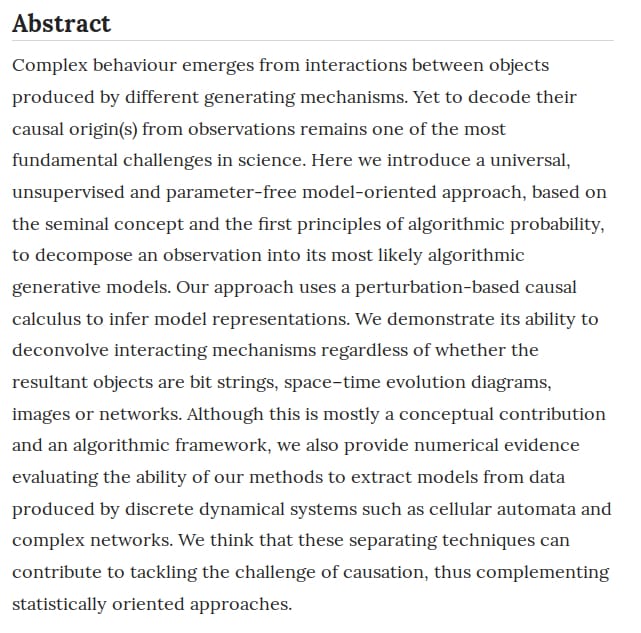
Causal deconvolution by algorithmic generative models (2019, Nature) - by Hector Zenil, Narsis A. Kiani, Allan A. Zea & Jesper Tegnér (Code)


-

Here is my Pataphysics remix:
"The funniest solution is most likely the right one." - Samim's Razor
Related: "Bontrager's Law": "Every-thing is more complicated than it seems."
-
Interview with Gregory Chaitin and links about Algorithmic Information Dynamics
"It seems to me that the most important discovery since Gödel was the discovery by Chaitin, Solomonoff & Kolmogorov of the concept called Algorithmic Probability which is a fundamental new theory of how to make predictions given a collection of experiences & this is a beautiful theory, everybody should learn it, but it’s got one problem, that is, that you cannot actually calculate what this theory predicts because it is too hard, it requires an infinite amount of work. However, it should be possible to make practical approximations to the theory that would make better predictions than anything we have today. Everybody should learn all about that and spend the rest of their lives working on it." - Marvin Minsky (2014)
Assorted AlgoInfoCult Members
- https://www.algorithmicdynamics.net/
- http://www.scholarpedia.org/article/Algorithmic_Information_Dynamics
- https://algorithmicnature.org/
- https://livingsystems.kaust.edu.sa/
- https://www.oxfordimmunealgorithmics.co.uk/
- http://www.hutter1.net/ait.htm
- https://www.hectorzenil.net/research.html
- http://www.complexitycalculator.com/
- https://www.automacoin.com/
- https://labores.eu/
- Santa Fe Institute complexity explorer - algorithmic-information-dynamics
-
Doodles by Ray Solomonoff (1926 - 2009) the inventor of algorithmic probability, General Theory of Inductive Inference and a founder of algorithmic information theory.
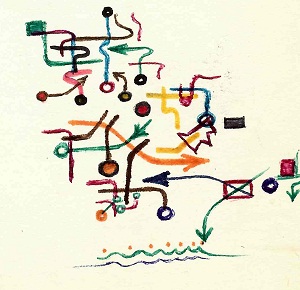
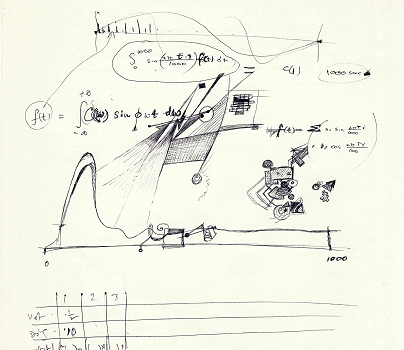
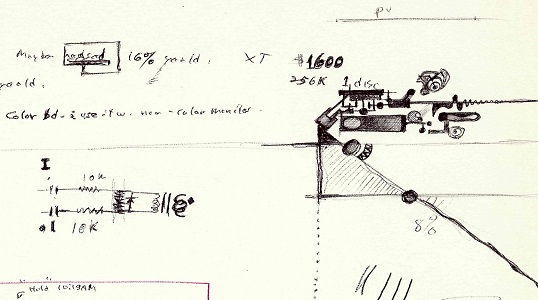
"Many pages of Ray's writings and formulas are decorated with doodles. Some are funny, some poetic and some mysterious --- perhaps they are signs of what he was thinking. "
-
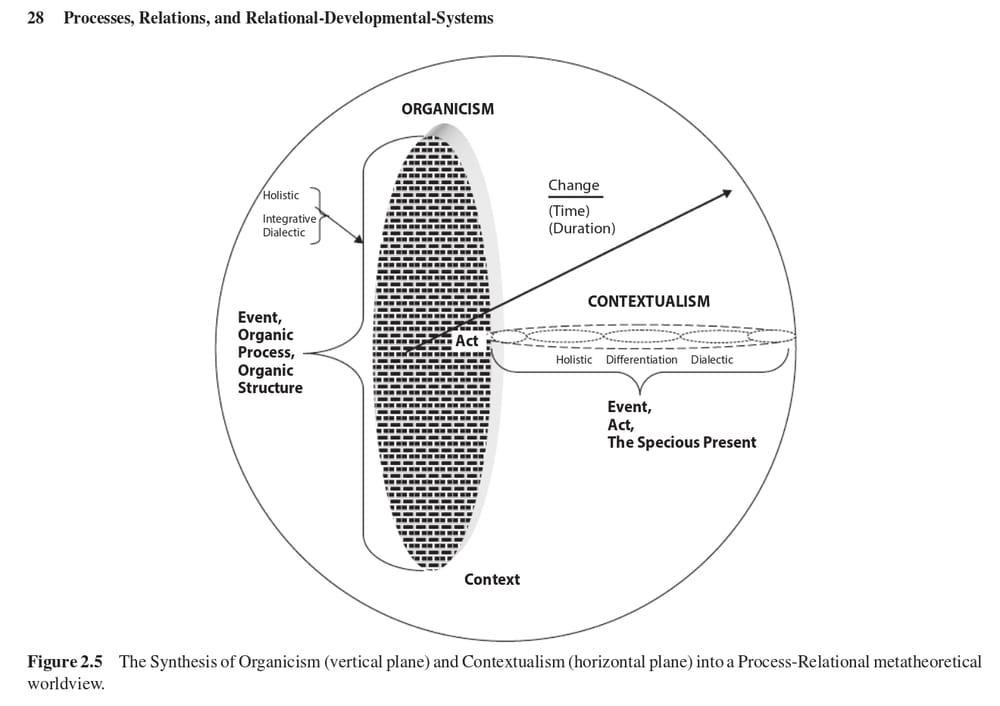
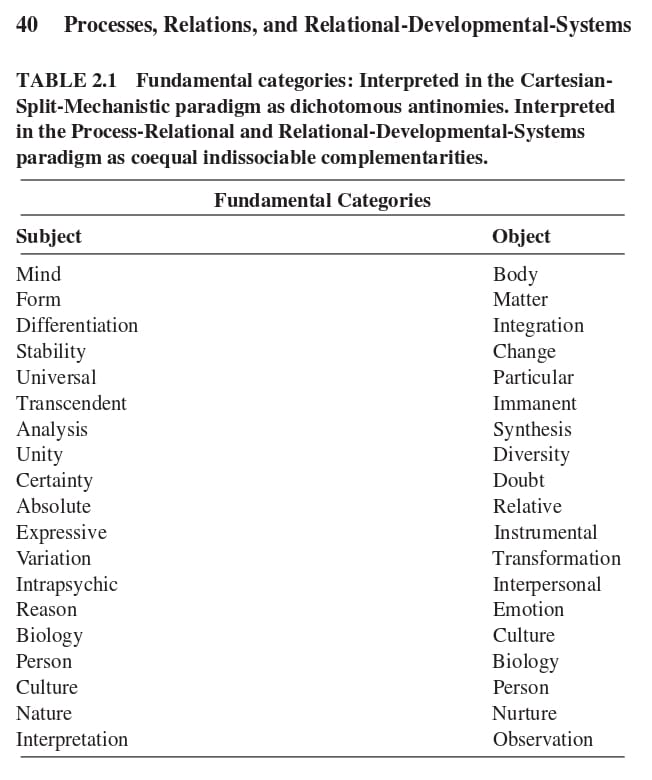
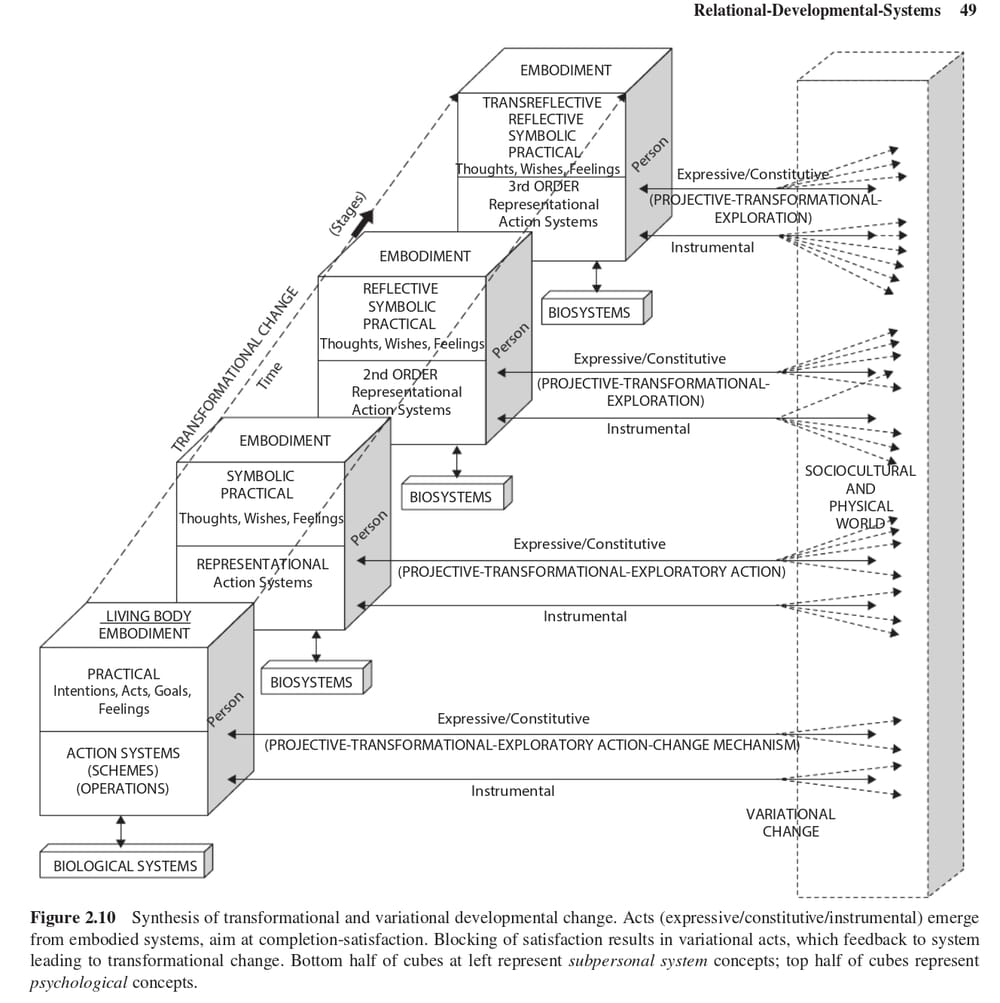
Processes, Relations & Relational-Developmental-Systems - by Willis F. Overton (2015)
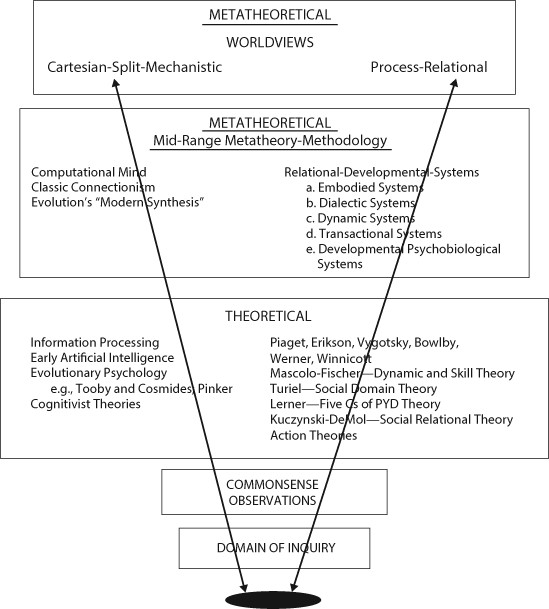
Conceptual context of the Cartesian-Split-Mechanistic and the Process-Relational paradigms. Abstract: "Any science, including developmental science, functions within a broad set of concepts that generally go unnoticed during day to day research activities. These background ideas constitute the conceptual framework or context within which day-to-day research activities operate. A conceptual framework that has until recently dominated virtually all of science has been termed the Cartesian-Split-Mechanistic scientific research paradigm. In a number of scientific fields, including developmental science the inadequacies of this paradigm have become crystal clear, and new data has increasingly been highlighting these inadequacies. In this chapter this research paradigm is compared and contrasted with a newly emerged alternative scientific research paradigm termed the Process-Relational and Relational-Developmental-Systems paradigm. It has been said that science is taking a relational turn. This chapter explores the nature of this turn, and its implications for theory and methods, especially in developmental science."
-
Modelling serendipity in a computational context - Research paper by Joseph Corneli, Anna Jordanous, Christian Guckelsberger, Alison Pease, Simon Colton (2019)
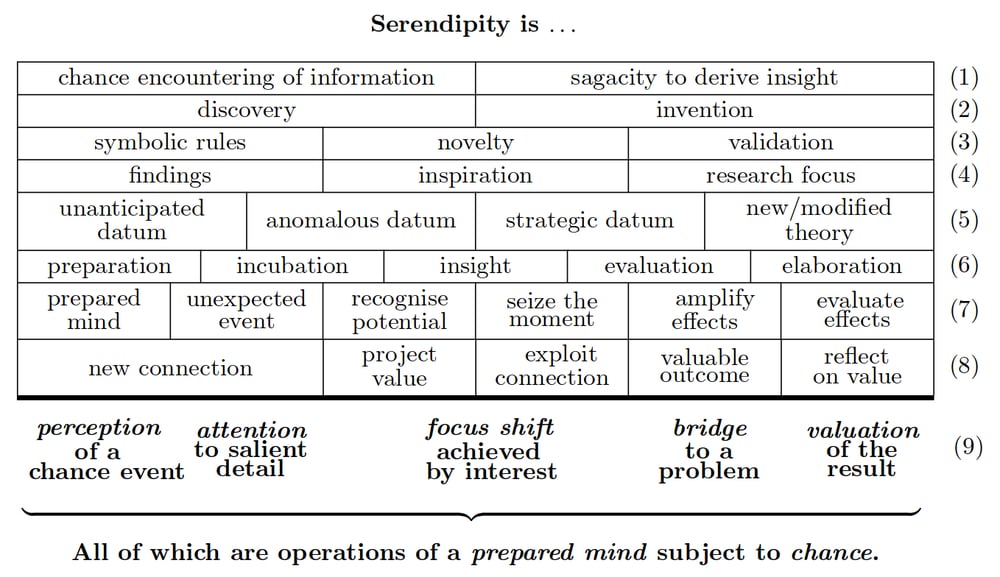
A more naive interpretation of serendipity from the paper "Designing a Semantic Sketchbook to Create Opportunities for Serendipity" (2012):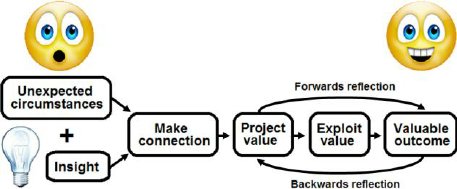
"All models are wrong, but some are useful" - George Box
-
Exploring Abductive Reasoning - The Logic of Maybe
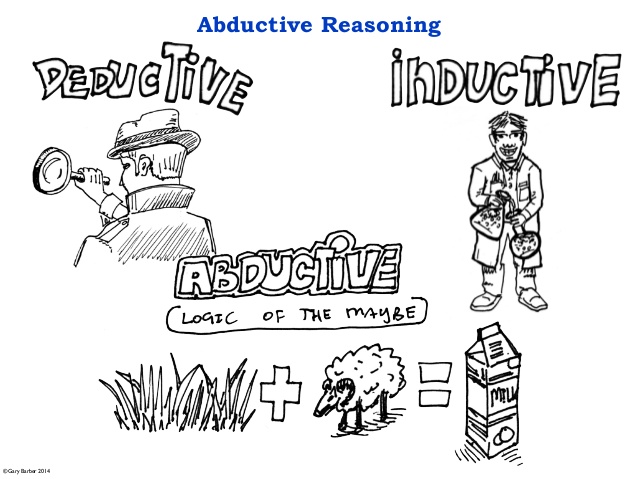
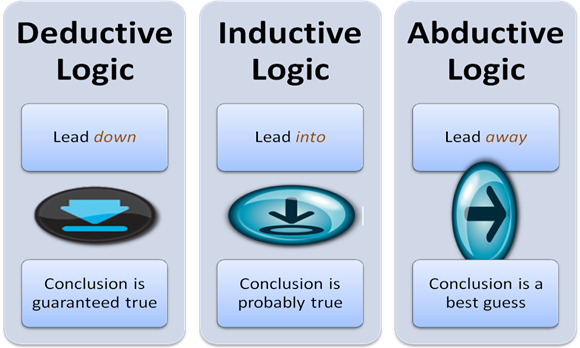
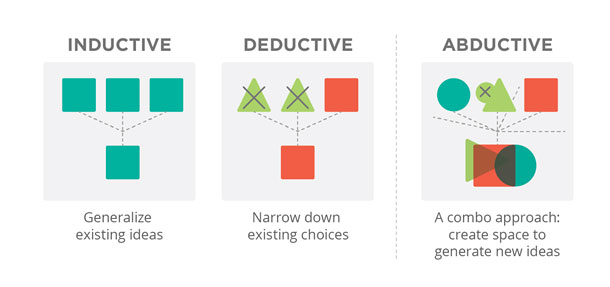
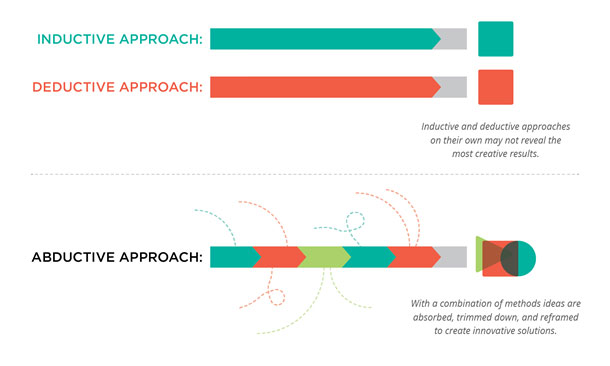
Abductive reasoning is a form of logical inference which starts with an observation or set of observations then seeks to find the simplest and most likely explanation for the observations. This process, unlike deductive reasoning, yields a plausible conclusion but does not positively verify it. Abductive conclusions are thus qualified as having a remnant of uncertainty or doubt, which is expressed in retreat terms such as "best available" or 'most likely.
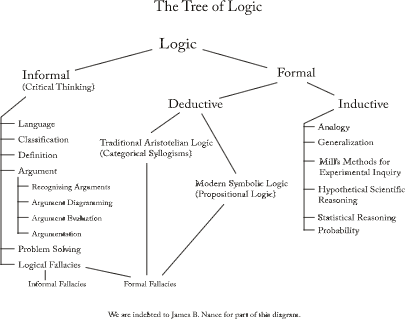
Put differently, Abduction is drawing a conclusion using a heuristic that is likely, but not inevitable given some foreknowledge.e.g., I observe sheep in a field, and they appear white from my viewing angle, so sheep are white. Contrast with the deductive statement: "Some sheep are white on at least one side". To simplify and summaries: Deductive = Top down logic - Inductive = Bottom up logic - Abductive = What seems most probably?
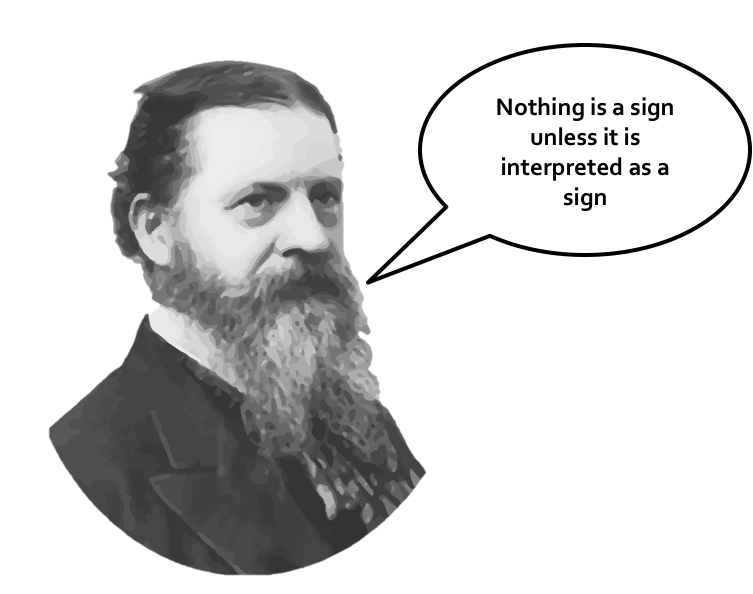
The American philosopher Charles Sanders Peirce (1839–1914) introduced abduction into modern logic. Over the years he called such inference hypothesis, abduction, presumption, and retroduction. He considered it a topic in logic as a normative field in philosophy, not in purely formal or mathematical logic, and eventually as a topic also in economics of research. (wikipedia)
In later years his view came to be:- Abduction is guessing. It is "very little hampered" by rules of logic. Even a well-prepared mind's individual guesses are more frequently wrong than right. But the success of our guesses far exceeds that of random luck and seems born of attunement to nature by instinct (some speak of intuition in such contexts).
- Abduction guesses a new or outside idea so as to account in a plausible, instinctive, economical way for a surprising or very complicated phenomenon. That is its proximate aim.
- Its longer aim is to economize inquiry itself. Its rationale is inductive: it works often enough, is the only source of new ideas, and has no substitute in expediting the discovery of new truths.
- Pragmatism is the logic of abduction. Upon the generation of an explanation, the pragmatic maxim gives the necessary and sufficient logical rule to abduction in general. The hypothesis, being insecure, needs to have conceivable implications for informed practice, so as to be testable and, through its trials, to expedite and economize inquiry. The economy of research is what calls for abduction and governs its art.
Abductive Reasoning Illustrations: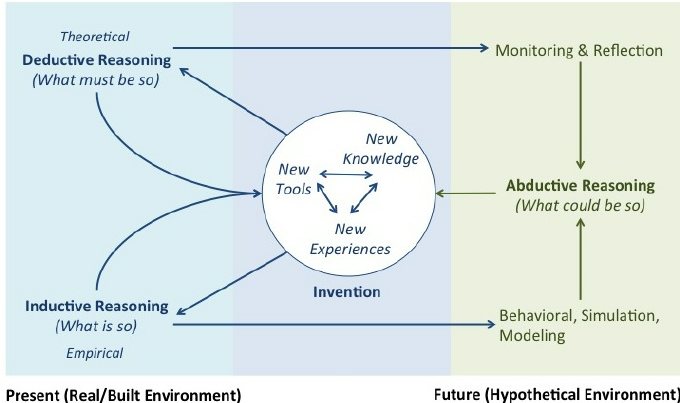
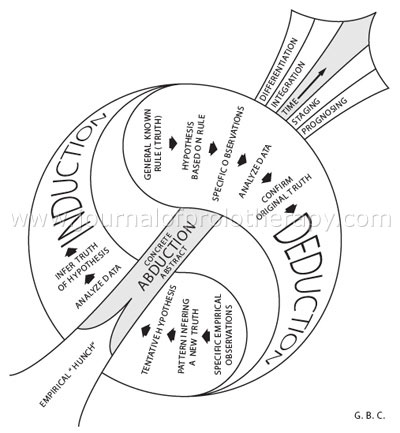
Abductive Reasoning Links:
- Stanford Encyclopedia of Philosophy - Abduction
- Book: Abductive Reasoning - by Douglas N. Walton (2005)
- Journal: Abductive Cognition - The Epistemological and Eco-Cognitive Dimensions of Hypothetical Reasoning - by Lorenzo Magnani (2009)
- Building a Rationale for Evidence-Based Prolotherapy in an Orthopedic Medicine Practice, Part 1: A Short History of Logical Medical Decision Making - By Gary B. Clark
- Using Your Logical Powers: Abductive Reasoning for Business Success - by Iffat Jokhio, Ian Chalmers (2015)
- Looking past yesterday's tomorrow: Using futures studies methods to extend the research horizon - by Jennifer Mankoff et.al (2013)
- Abduction as a Rational Means to Creativity. Unexpressed Knowledge and Scientific Discovery - by Lorenzo Magnani et.al
- Creativity: Surprise and abductive reasoning - by Maria Eunice Quilici Gonzalez (2005)
- Lightning Talk: The Seven Horses of Abductive Reasoning - by C.A. Corriere (2018)
Related Approaches:
The following text from Noah Raford's "On design and the use of abductive reasoning" post, provides a good overview of recent history of Abductive methods in Design:
"The interest in the use of abductive, analogic and intuitive problem-solving has major roots in the “design studies” movement of the late 1960’s & 1970’s.
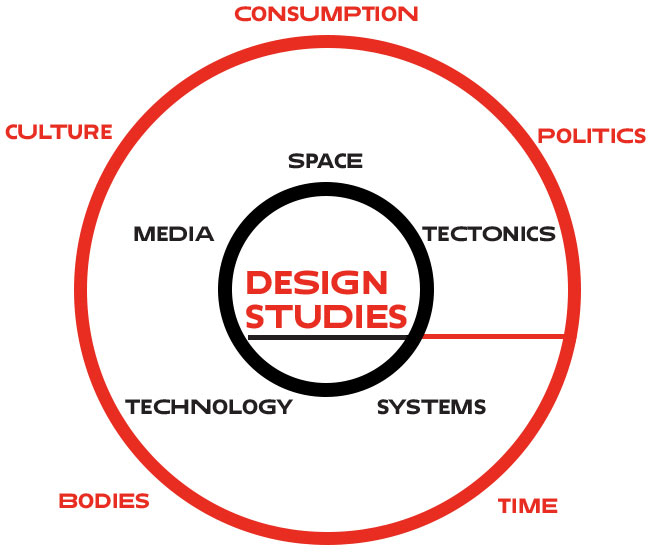
This movement started in the UK, primarily thanks to the work of Leslie Martin and Lionel March at the Cambridge Centre at the Cambridge School of Architecture. March and Martin were at the head of a generation of scholars seeking to systematise and understand how architects and designers thought about the world. This paralleled research into cybernetics & AI in the states by Herbert Simon, but for some reason it seems that there was a critical confluence of design thinkers in the UK at that time, and most of the literature around induction, abduction, etc. seems to come from this period.
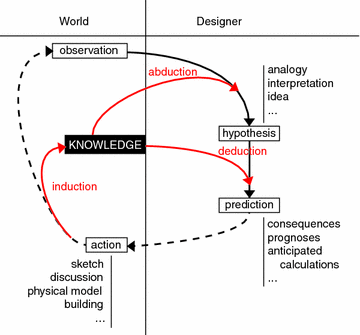
Image: "Architectural Design Thinking as a
Form of Model-Based Reasoning" (2013)The key ideas: The original intention of this group was to understand and document the design process. The hope was that if you understood how architects and designers perceived the world, you could replicate this in computer or expert-systems (and then do away with or “improve” the designer). Because replicability was one of the key goals, a natural sciences approach was taken to observing designers. A lot of controlled experiments were set up in laboratories to test “design problem solving”, most of which failed miserably. This led to a more ethnographic approach, including some of the first anthropological approaches to knowledge elicitation that I’ve ever seen.
What they found was that:
“Scientists adopt a problem-focused strategy and architects a solution-focused strategy.” (Lawson, 1979)
“The scientific method is a pattern of problem-solving behaviour employed in finding out the nature of what existis, whereas the design method is a pattern of behaviour employed in inventing things of value which do not yet exists. Science is analytic, design is constructive.” (Gregory, 1966)
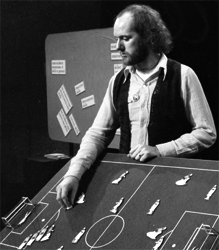
Image: "Nigel Cross explains the
design process" (1975)This places a heavy emphasis on action, testing, and observation, in that order, and highlights the essentially creative nature of design. Nigel Cross, who is still teaching at the Open University, suggests that design is “a process of pattern-synthesis, when the solution is not simply ‘lying there in the data’ but has to be actively constructed by the designer’s own efforts.”. You can see how this relates to the notion of abduction. Peirce suggests that, “the whole fabric of our knowledge is one matted felt of pure hypothesis confirmed and refined by induction.” This is very similar to design. In other words,
“[Architects] learn about the nature of the problem largely as a result of trying out solutions, whereas the scientists set out specifically to study the problem.” (Lawson, 1980)
Schum notes that if Peirce is correct, “new ideas emerge as we combine, marshal or organize thoughts and evidence in different ways.” Because the design method is fundamentally exploratory, it is about hypothesis generation based on the most uncertain and sketchy forms of data. It uses both abductive and constructive reasoning to show “what might be”, instead of deductive reasoning to show “what is”." Read more..

In recent decades, Abductive Logic and Reasoning has been extensively studied in the context of Artificial Intelligence and Machine Learning research. A few links, old & new:
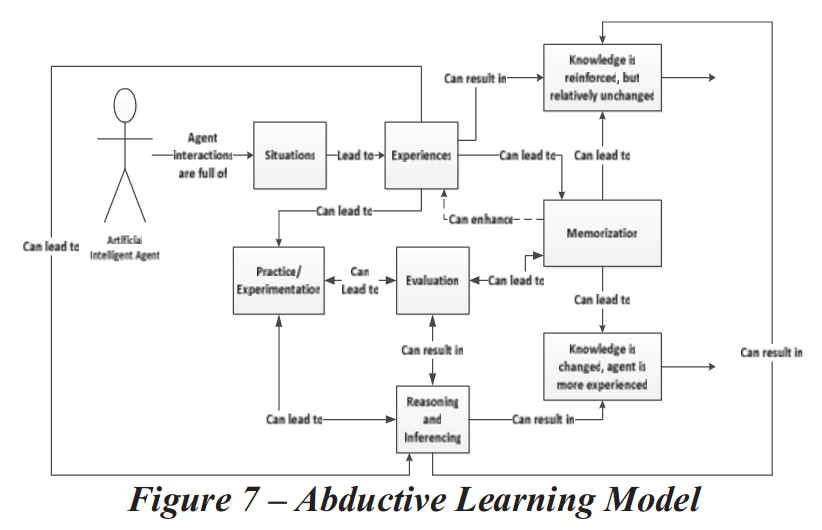
- Abductive Artificial Intelligence Learning Models - by James A. Crowder and John N. Carbone (Raytheon Intelligence, 2017)
- Approaches to abductive reasoning: an overview - by Gabriele Paul (1993)
- AI Approaches to Abduction - by Gabriele Paul (1998)
- Logic-Based Abductive Inference - Sheila A.McLlraith (Stanford, 1998)
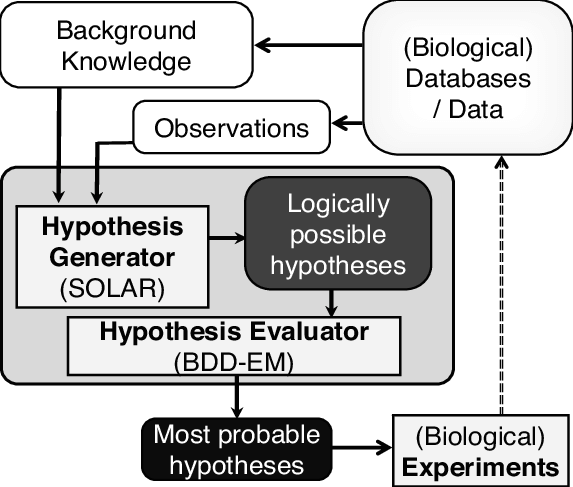
- Evaluating Abductive Hypotheses using an EM Algorithm on BDDs (2009)
- Bridging Machine Learning and Logical Reasoning by Abductive Learning - by Wang-Zhou Dai et.al (2019) and video presentation of research
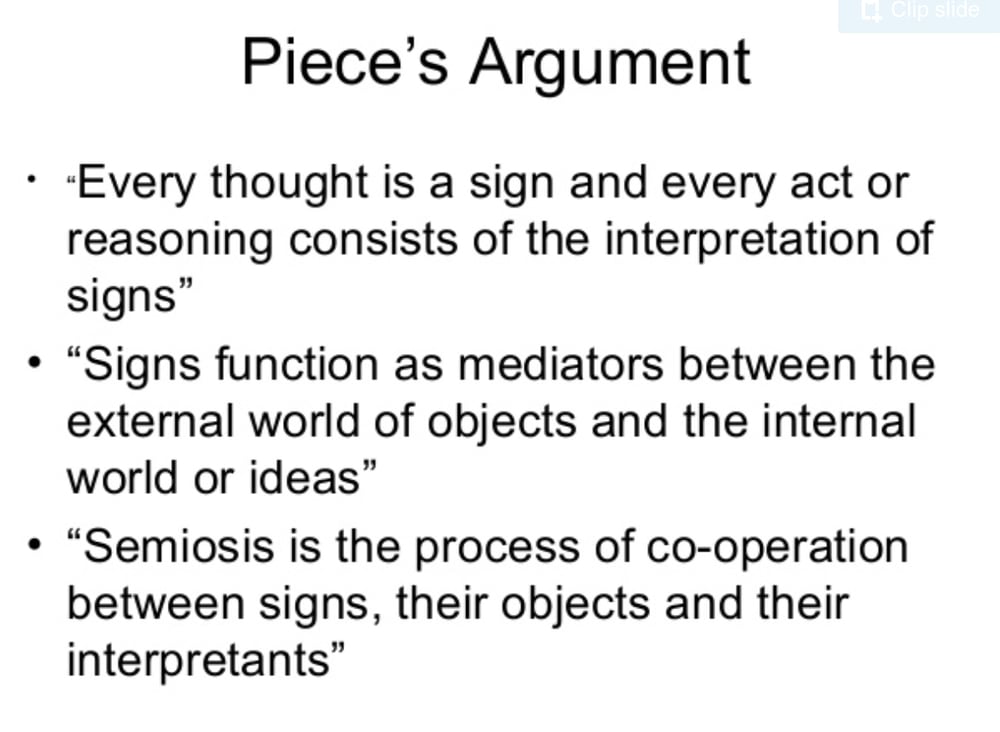
Related Ideas by Abductive Logic pioneer Charles Sanders Peirce, on Semiotics:
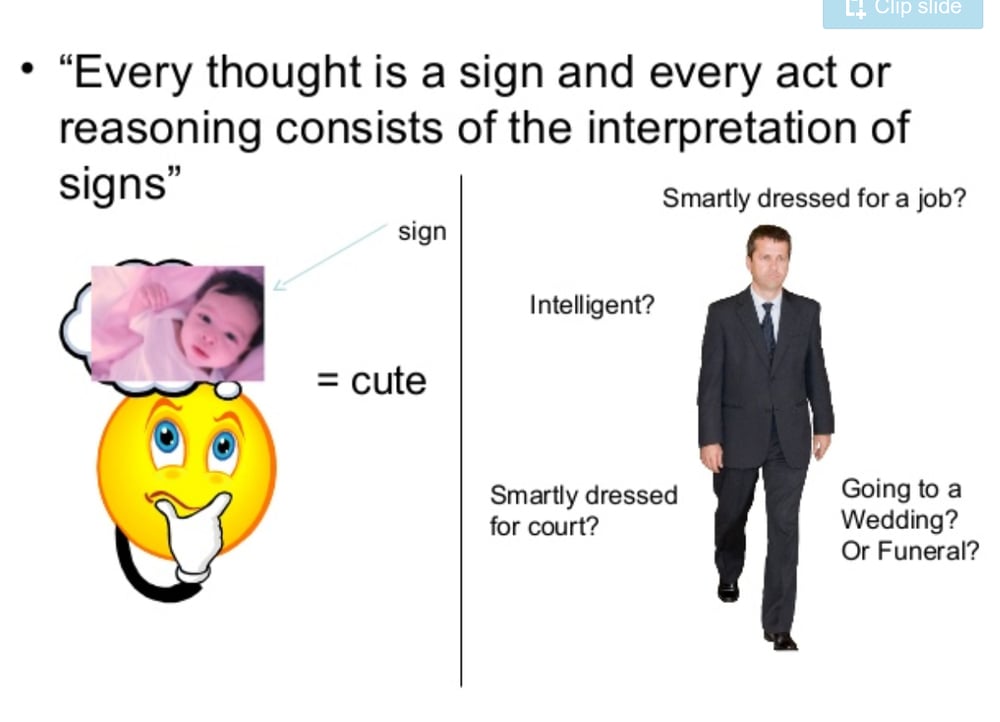
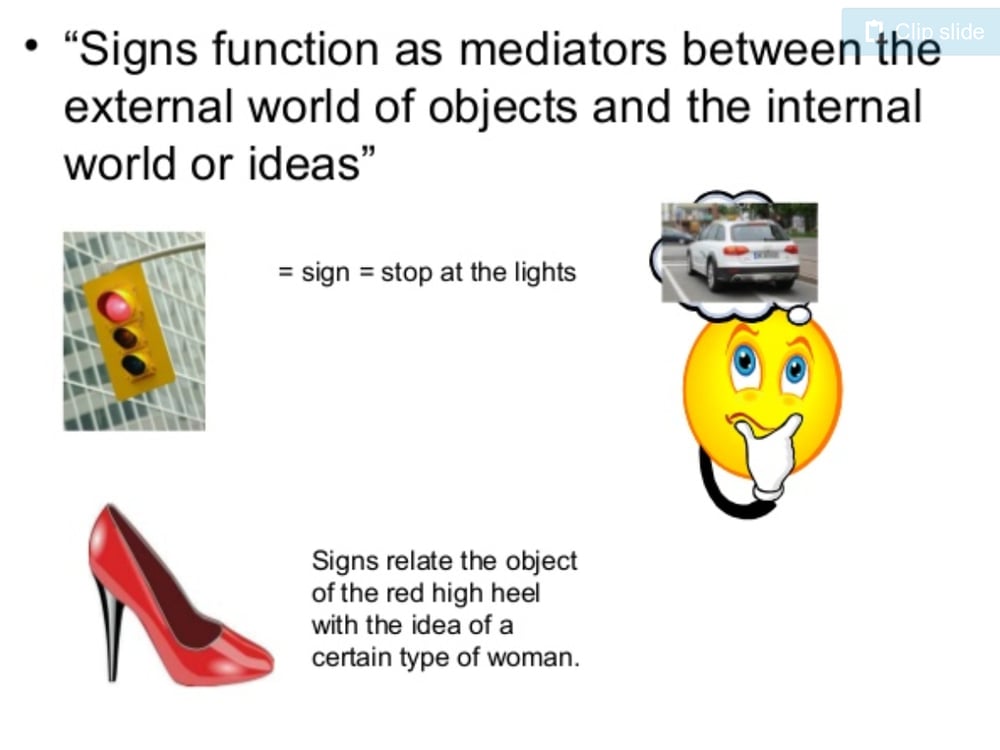
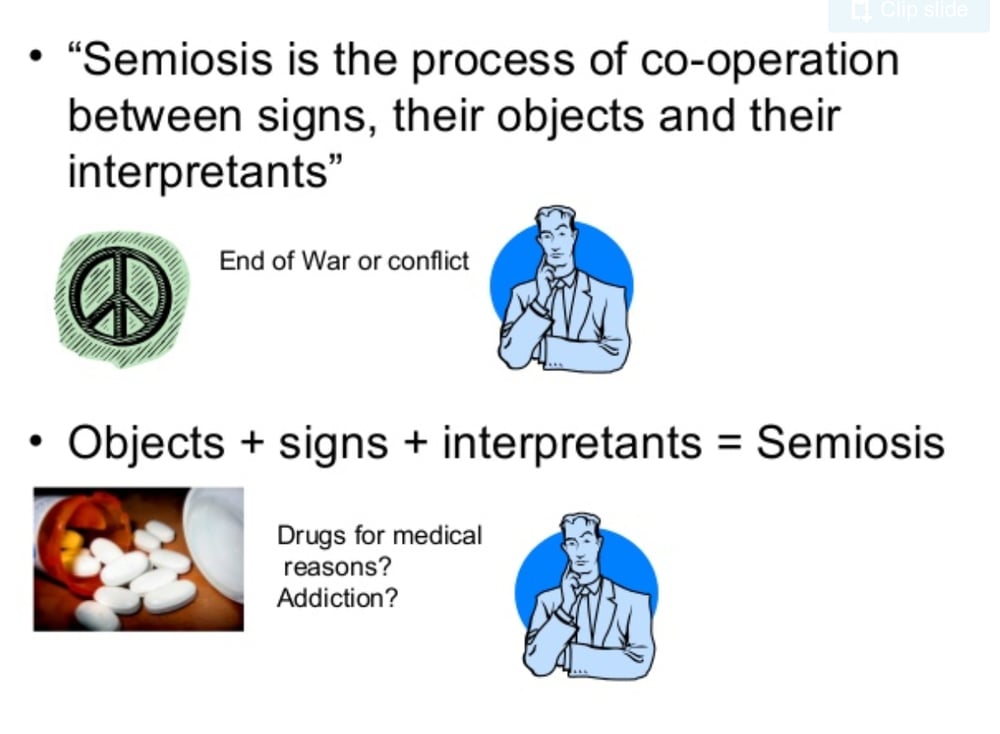
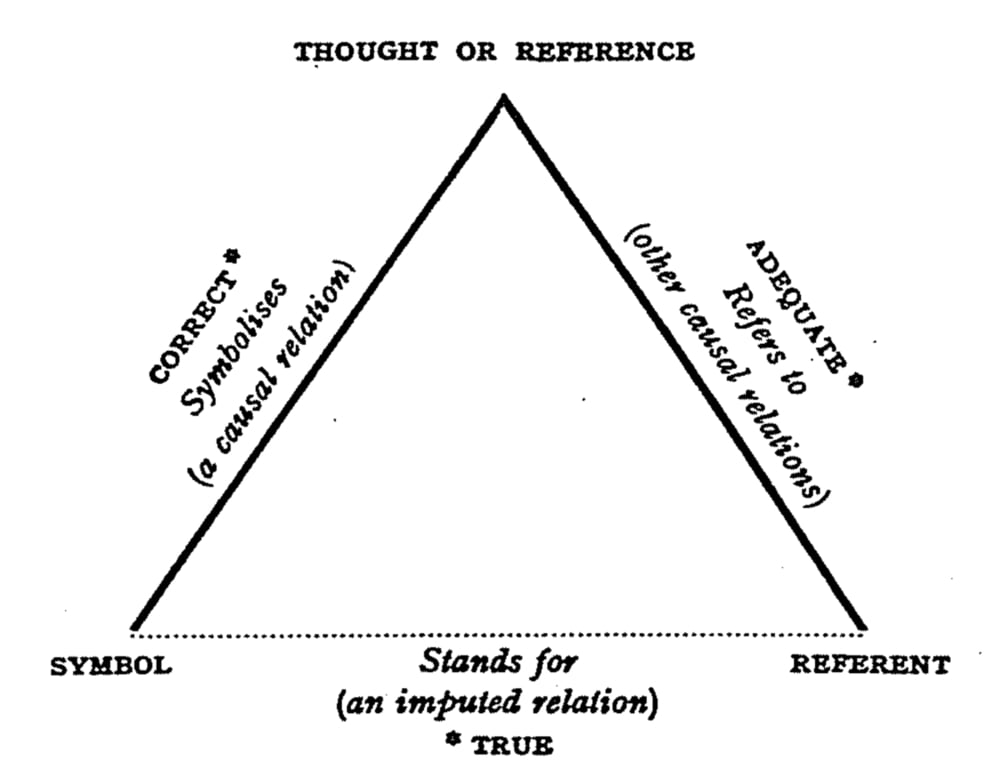
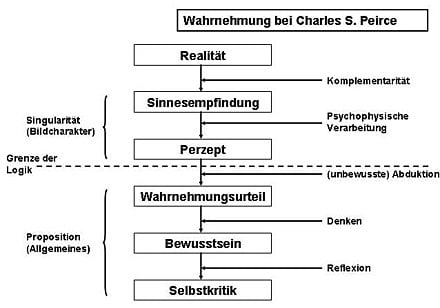
"The essence of belief is the establishment of a habit; and different beliefs are distinguished by the different modes of action to which they give rise."
- Charles Sanders PeirceNot a Poem: Not Logic, Not Prose and Not Really Poetry - by Rolf (2013)
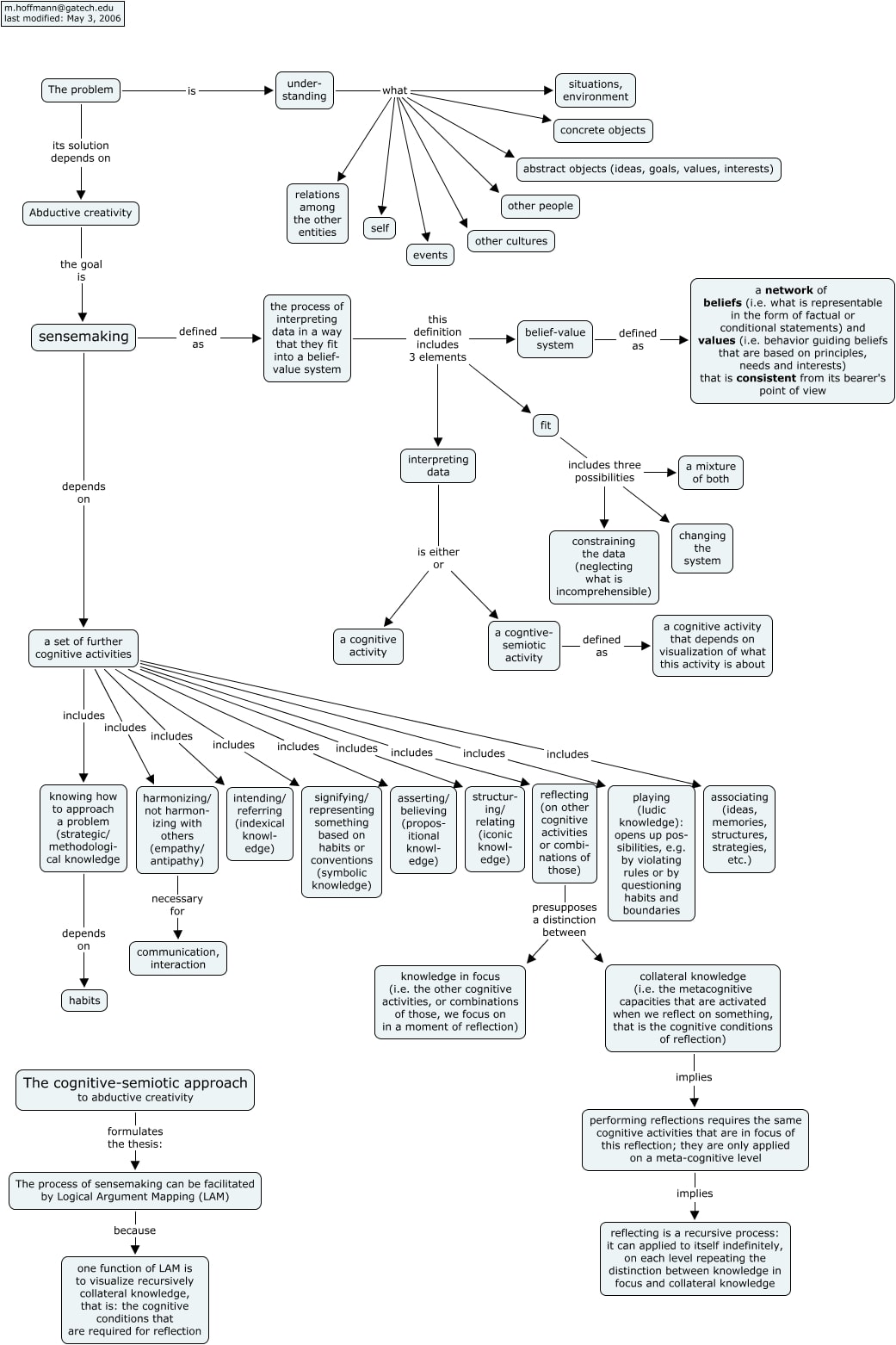
Aductive creativity map (2006)- by Michael Hoffmann BASED ON TRUE EVENTS: "I have been teaching Geometry this year,and trying my best to explain logic,deduction vs induction, and the ever present, always faulty, always useful, abductive “reasoning.”Without abductive reasoning, life itself would not be possible for humans. Induction and deduction? Entirely optional. Our car, (which only had 3 out 4 cyliders working) started to turn itself off, at apparently random intervals. There you’d be, changing lanes, in what you thought was a car,and poof no car, just a large metal box that looked like a car,with a seat belt, a driver’s seat, and a silent engine,rolling to a final velocity of zero. I drove the box / car to five dealerships in town,while searching for the best replacement for the box.I can now say, what others have noted before;
“Pure logic, when considering a car, (or any thing else other than numbers) does not exist.”
#KM #Philosophy #Science #ML #Creativity #Design #Complexity #Evolution #Magic
-
Robotic Self-Replication - by Matthew S. Moses & Gregory S. Chirikjian (unpaywalled)
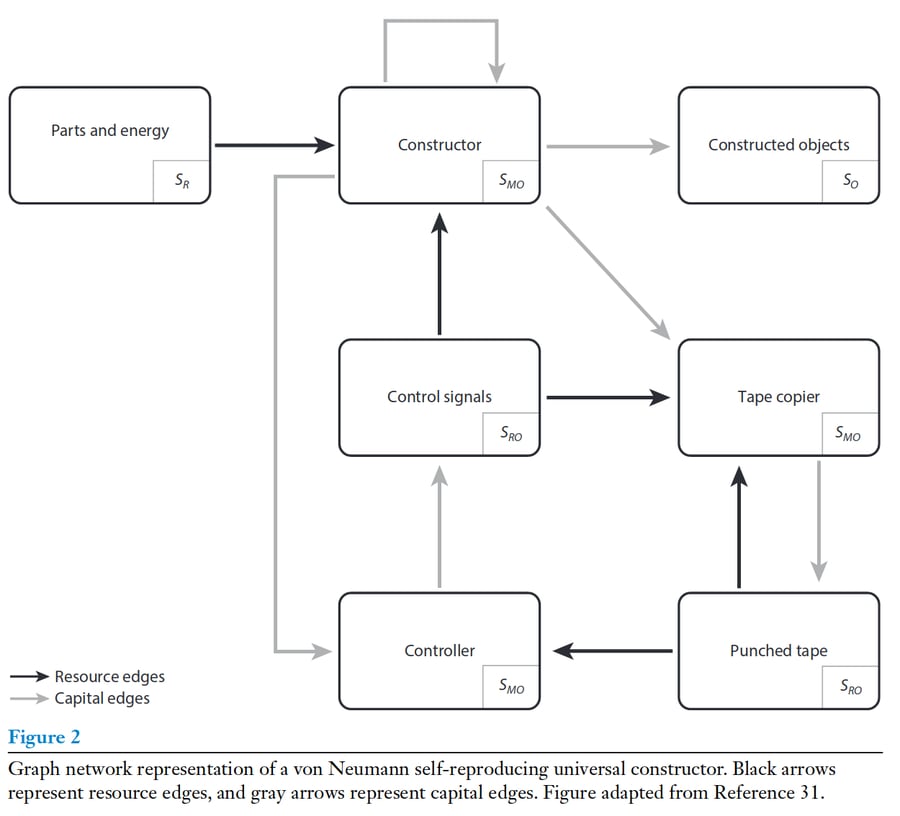
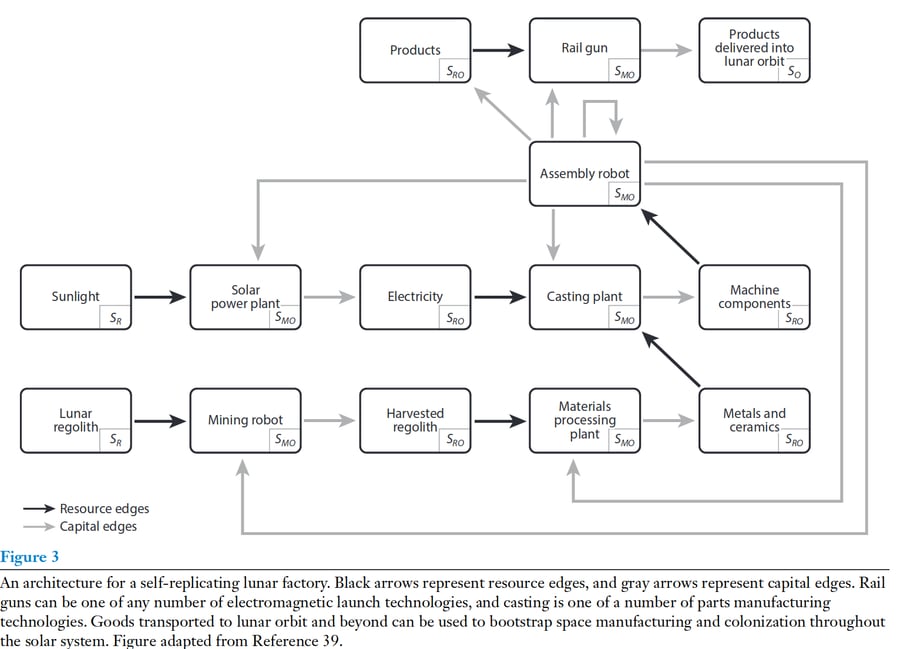
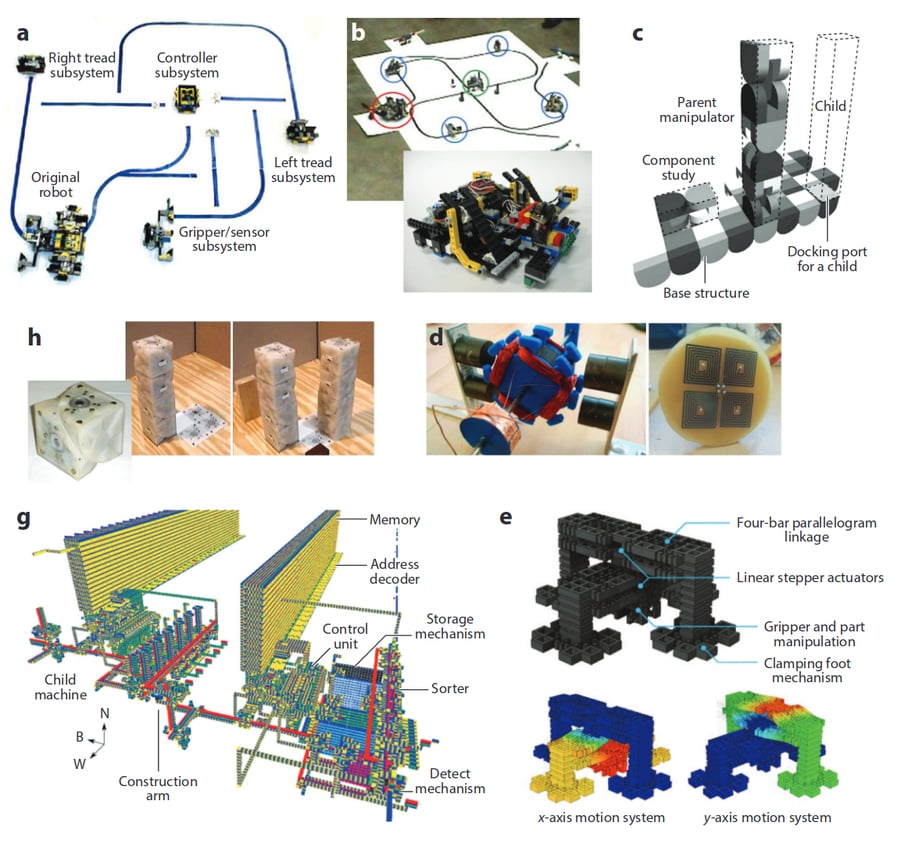
Abstract: The concept of an artificial corporeal machine that can reproduce has attracted the attention of researchers from various fields over the past century.Some have approached the topic with a desire to understand biological life and develop artificial versions; others have examined it as a potentially practical way to use material resources from the moon and Mars to bootstrap the exploration and colonization of the solar system. This review considers both bodies of literature, with an emphasis on the underlying principles required to make self-replicating robotic systems from raw materials a reality.We then illustrate these principles with machines from our laboratory and others and discuss how advances in new manufacturing processes such as3-D printing can have a synergistic effect in advancing the development of such systems.
-
All it takes to fool facial recognition at airports & banks is a printed mask
#Comment: I closely predicted this outcome in my experiment "Adversarial Machines - Fooling A.Is" back in 2015. Current #ML is still very brittle indeed. There is a fortune waiting to be made on the adversarial computation markets (fool face-recognition etc.)

-
Crows Could Be the Smartest Animal Other Than Primates (BBC)

"Christian Rutz at the University of St Andrews is unequivocal. Some birds, like the New Caledonian crows he studies -- can do remarkable things. In a paper published earlier this year, he and his co-authors described how New Caledonians seek out a specific type of plant stem from which to make their hooked tools."
"Experiments showed that crows found the stems they desired even when they had been disguised with leaves from a different plant species. This suggested that the birds were selecting a kind of material for their tools that they knew was just right for the job. You wouldn't use a spanner to hammer in a nail, would you? Ranking the intelligence of animals seems an increasingly pointless exercise when one considers the really important thing: how well that animal is adapted to its niche. In the wild, New Caledonians use their tools to scoop insects out of holes, for example in tree trunks. Footage of this behavior has been caught on camera."
#Comment: "Ranking the intelligence of animals seems an increasingly pointless exercise when one considers the really important thing: how well that animal is adapted to its niche" is a spot on observation! Rigid, hierarchical "we humans are the top of creation" thinking is totally absurd and backwards. While "human smartest, the rest stupid" ideas are deeply rooted in ancient (christian) tradition, their full madness and destructive potential has been unleashed since the dawn of Darwin's evolution theory and dominance of science.
-
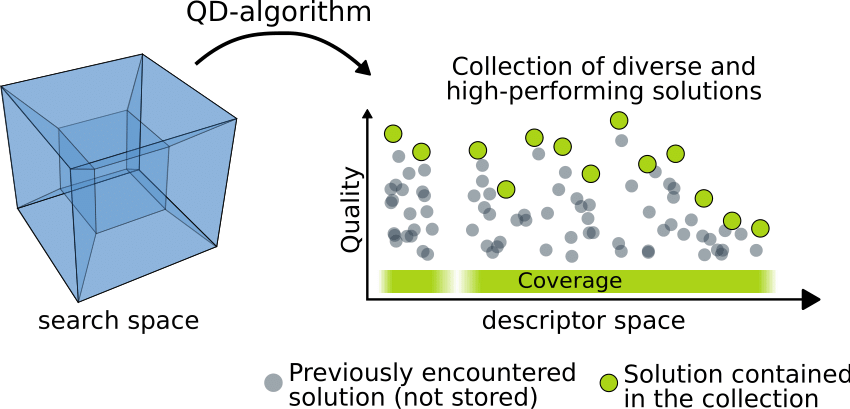
Quality-Diversity optimisation algorithms - "Site lists papers related to QD algorithms, links to tutorials and workshops, and pointers to existing implementations of QD algorithms."
qdpy - Quality-Diversity framework for Python (MAP-Elites, CVT-MAP-Elites, NSLC, SAIL, etc.)
-
#Book: The Sciences of the Artificial - by Herbert A. Simon (1969) (full e-book)
“Human beings, viewed as behaving systems, are quite simple. The apparent complexity of our behavior over time is largely a reflection of the complexity of the environment in which we find ourselves.” ― Herbert A. Simon, The Sciences of the Artificial
“It is true that humanity is faced with many problems. It always has been but perhaps not always with such keen awareness of them as we have today. We might be more optimistic if we recognized that we do not have to solve all of these problems. Our essential task—a big enough one to be sure—is simply to keep open the options for the future or perhaps even to broaden them a bit by creating new variety and new niches. Our grandchildren cannot ask more of us than that we offer to them the same chance for adventure, for the pursuit of new and interesting designs, that we have had.” ― Herbert A. Simon, The Sciences of the Artificial
“An artifact can be thought of as a meeting point—an “interface” in today’s terms—between an “inner” environment, the substance and organization of the artifact itself, and an “outer” environment, the surroundings in which it operates. If the inner environment is appropriate to the outer environment, or vice versa, the artifact will serve its intended purpose.” ― Herbert A. Simon, The Sciences of the Artificial