tag > Technology
-
Google Is Publishing Location Data From 131 Countries To Show How Coronavirus Lockdowns Are Working (Buzzfeed) - COVID-19 Community Mobility Reports (Google)
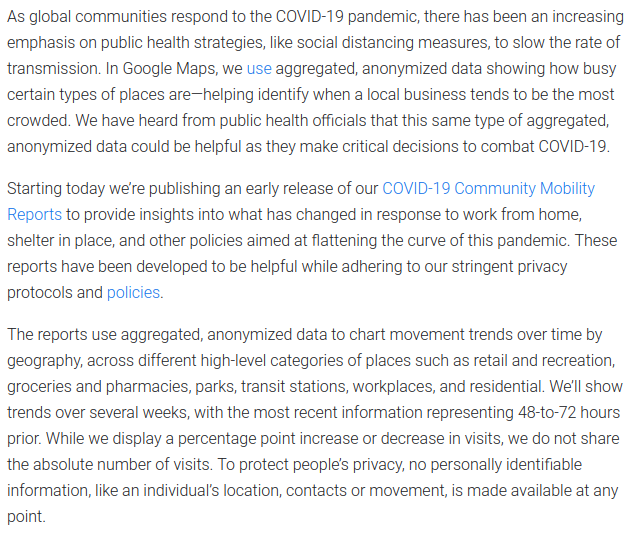
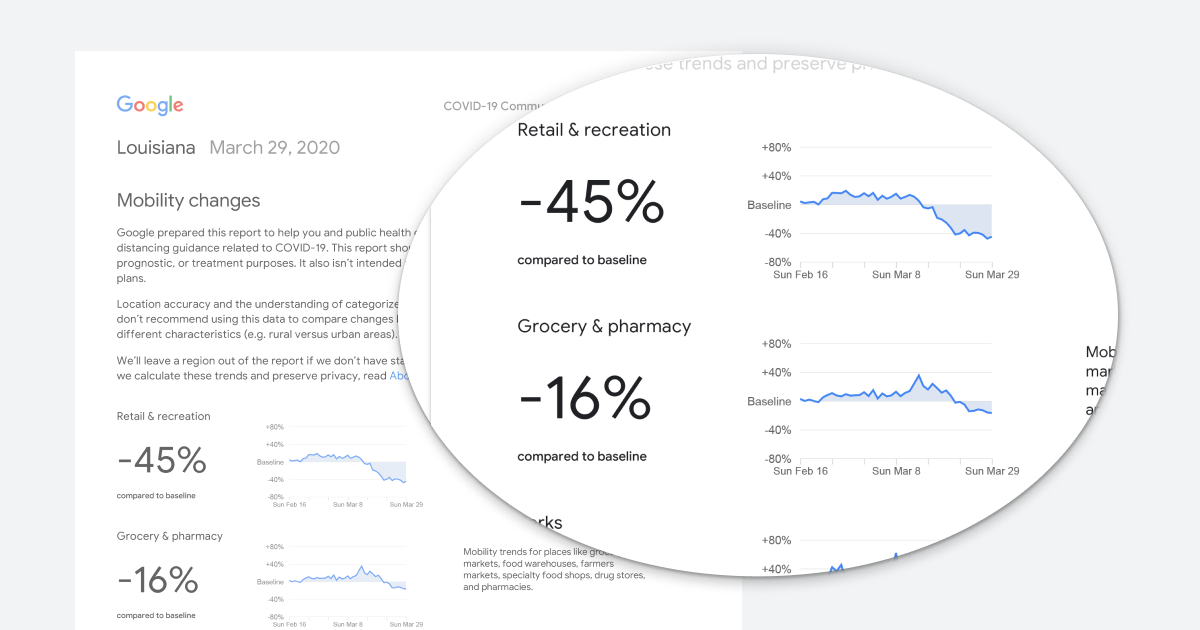
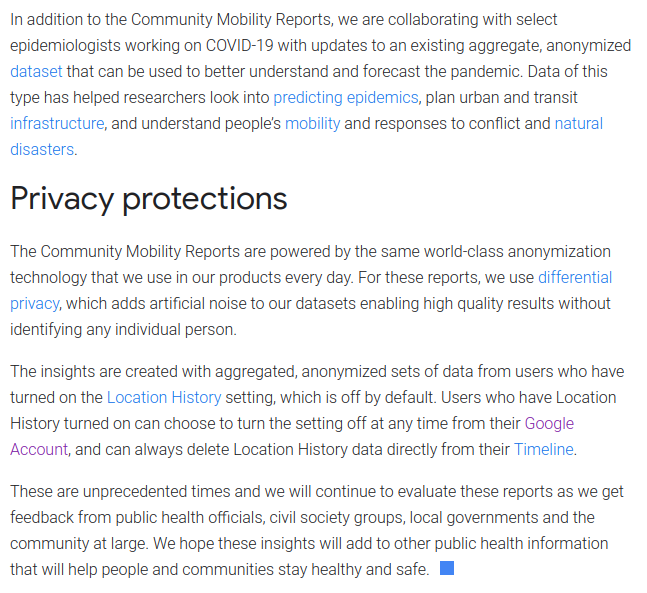
These Community Mobility Reports aim to provide insights into what has changed in response to policies aimed at combating COVID-19. The reports chart movement trends over time by geography, across different categories of places such as retail and recreation, groceries and pharmacies, parks, transit stations, workplaces, and residential. The Reports were developed to be helpful while adhering to our stringent privacy protocols and protecting people’s privacy.
Related: Moscow To Launch Mandatory Surveillance App To Track Residents In Corona Lockdown
Related: S Korea unleashes all-out policy assault on virus - ‘Big Brother’ on steroids.#Health #Technology #InfoSec #SE #Augmentation #ML #Cryptocracy
-
China proposes a new internet protocol that gives government ultimate control (reclaimthenet)
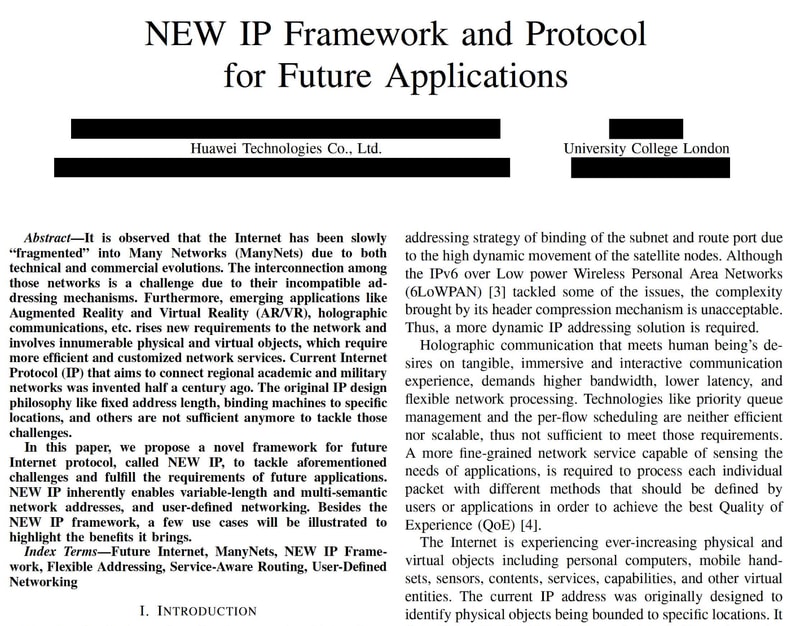
After years of meddling with the internet and censoring everything left and right, China now wants to introduce a new authoritarian-friendly internet protocol. The Financial Times has recently gained access to several documents about the protocol. Huawei, China’s Ministry of Industry and Information Technology (MITT), and state-run Unicom and China Telecom were the ones to craft the proposal and presented it to the UN’s International Telecommunication Union (ITU).
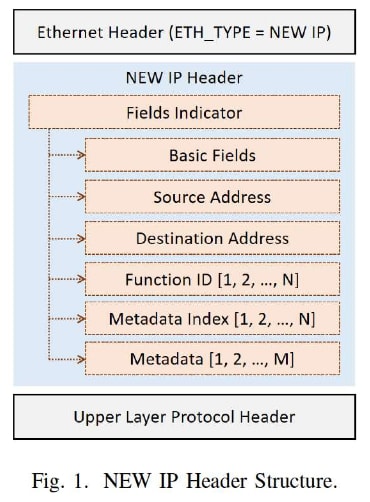
It was found that Russia and maybe Saudi Arabia were in favor of the proposal, whereas nations such as the US and UK expressed concerns. Based on what the developers of the protocol say, it may be standardized at a conference in India later this year with the testing of the protocol beginning in early 2021. On the whole, China’s new proposal states that the internet must catch up with the future and that the “current designs are obviously insufficient”. Considering the fact that the underlying technical architecture of the internet hasn’t really changed in a long time, China’s thoughts to modernize the whole infrastructure does sound like a necessary step to take. The proposal calls for an advanced internet that has improved security and efficiency while supporting holograms as well as latency stability.
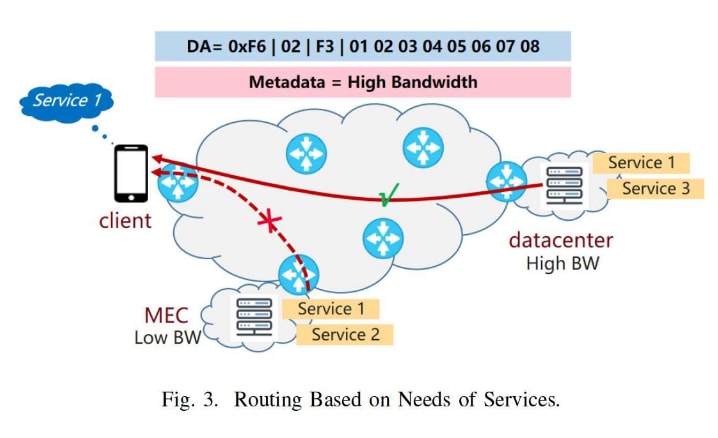
Finally, the new protocol aims to integrate the interactions between ManyNets (networks from IoT and satellites) and the internet seamlessly. But there is a strong concern with the new proposal that was even pointed out by countries such as the US and UK. The new proposal, if accepted globally, will give governments the ultimate power over the internet accessibility in their nations.
Such a “top-down” internet architecture will lead to potential internet censorship. With many countries already practicing blatant internet censorship, especially China, the idea of placing more power over internet accessibility into the hands of a country’s government may not be the wisest course of action. It is also worth noting that authoritarian governments such as Russia are already moving in the direction of gaining “cyber sovereignty“. For instance, Russia already tested its own heavily controlled internet.
At such a juncture, the new proposal by China, while promising the hopes of a better future, might make it easy for countries to practice internet censorship.
#Technology #Infrastructure #Internet #Politics #Economics #Military
-
Moscow To Launch Mandatory Surveillance App To Track Residents In Coronavirus Lockdown (npr.org)

City authorities in Moscow are rolling out new digital "social monitoring" tools targeting the public, after what officials say were constant violations of the city's quarantine imposed this week to fight the spread of the new coronavirus. Under restrictions in place since Monday, most of the city's 12 million residents must remain indoors, barring a few exceptions. But starting Thursday, Muscovites will have their movements tracked through a mandatory app required on their smartphones. Don't have one? The city says it will lend out devices.
"One thing is clear," wrote Leonid Volkov, a chief strategist of opposition leader Alexei Navalny, on his Telegram channel. "The coronavirus will eventually leave but this digital concentration camp will remain."
-
The Global Grid
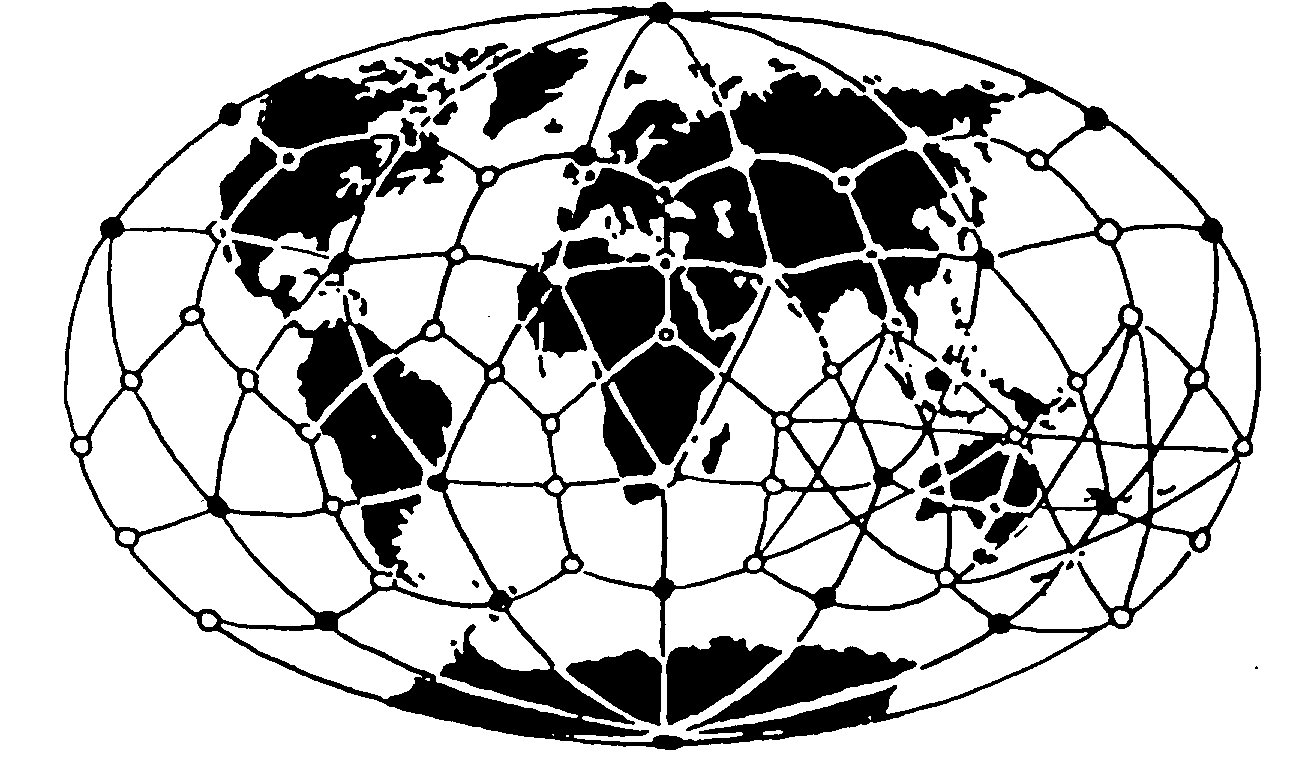
Global Grid The Global Grid is a digital representation of 85% human beings of planet earth - their vital signs, communications, infrastructure and energy flows over time. The Girds foundation is Identity, a universally unique identifier for all things and life-forms. Identity bifurcates into a myriad of applications: centralized digital currency & taxation, computational economics & social credit systems - surveillance, policing & access control - public health, life-sciences, social engineering, etc.
"The Girds foundation is Identity", keep that in mind when you follow the news. All Biometrics are good (sensor-fusion), but DNA is best. Hence when you see the roll-out of medical testing across a few billion people, consider the possibility that the tests could include a covert DNA sampling itself, building up a very large database. What the Chinese call "the internet of life".
"The Quantization of Reality is a Totalitarian Fallacy. Let Go or Be Dragged."
- Samim
universally unique identifier "The Tao that can be told is not the eternal Tao. The name that can be named is not the eternal name. The nameless is the beginning of heaven and earth. The named is the mother of ten thousand things. Ever desireless, one can see the mystery. Ever desiring, one can see the manifestations. These two spring from the same source but differ in name; this appears as darkness. Darkness within darkness. The gate to all mystery."
- Tao Te Ching - Lao Tzu - chapter 1
-
Company aims to monetise China’s social credit system (SCMP)
China is developing a controversial social credit system of rewards and punishments meant to encourage people and businesses to abide by rules and to promote integrity and trustworthiness in society at large. The government aims to have it in place by 2020, and so far its most visible applications include a ban on people from booking express trains or flights if they appear on various “blacklists”. While there are still many questions about how the system will be implemented, at least one company is setting its sights on making money out of social credit.
#China #Economics #Business #Technology #InfoSec #Cryptocracy
-
For China’s coronavirus-hit companies, the internet can be much more than just a lifeline (SCMP)

Beyond selling through the internet or developing internet-based products, visionaries are using it as a testing ground for novel ideas and improvements, including ‘employee sharing’ to direct resources to where they are most needed.
-
The Breakaway Civilization - Interview with Jason Reza Jorjani on New Thinking Allowed
-
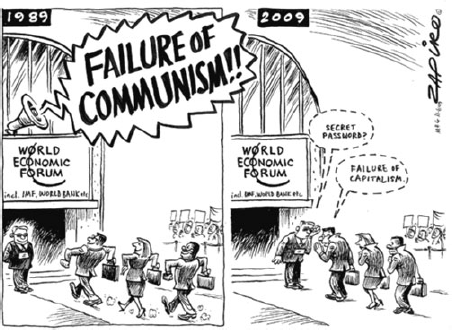
Twitter removes tweets by Brazil, Venezuela presidents for violating COVID-19 content rules
#Comment: Earlier today, Twitter deleted Bolsonaro tweets.
Yesterday, Facebook deleted the Brazilian president’s video because it contained disinformation.
This is a defining moment: companies willing to shut down "disinfo" from world leaders if they have the World Health Organization to back them up on what counts as harmful. A highly comedic development, given the WHO is a deeply corrupt organisation under the control of few cryptocrats.
Ultimately, this is just yet another distraction from the main show: The collapse of the pax americana global petrodollar empire of mass consumer capitalism - which is desperately trying to save itself with ever more violent full spectrum dominance tactics against everybody (from psyops and economic warfare to assassination and nuclear escalation). The corona plandemic won't change the course of this collapse, likely even accelerate it.
-
Fun fact 27/120: There are nuclear submarines out there carrying 40 nuclear warheads controlled by a computer running Windows XP. (via)
-
Jeff Bezos sold $3.4bn of Amazon stock just before Covid-19 collapse (Guardian)

Millions of people across the world have lost their jobs, and trillions of dollars have been wiped off the value of stock markets. But not everyone has lost out. Jeff Bezos, the world’s wealthiest person, is $5.5bn (£4.3bn) richer today than he was at the start of the year. His paper fortune, held mostly in Amazon shares, rose by $3.9bn on Thursday alone to $120bn – enough to buy 188,000 standard gold bars. Bezos, 56, benefited this week from the best three-day stock market rally since 1933 helping Amazon’s share price to recover almost all of its losses this month to trade at about $1,920, though that was slightly down on their peak of $2,170 in February. Bezos owns about 12% of Amazon’s shares.
-
Facebook is losing another board member, and is appointing a former Treasury official as its lead independent director (Business Insider)
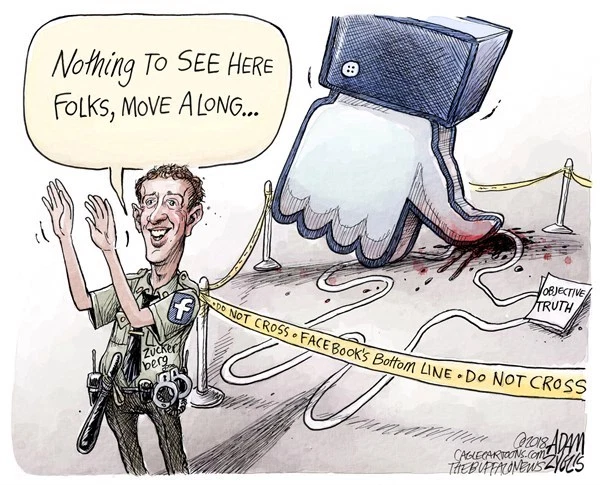
Facebook named Robert Kimmitt, a former deputy Treasury secretary and US ambassador to Germany, as its lead independent board director on Thursday. "We've been looking for a leader who can bring significant oversight and governance experience," Mark Zuckerberg said of Kimmitt's appointment. Another board member, Jeffrey Zients, will be stepping down at the company's next shareholder meeting. The moves are the latest in a series of significant shakeups on Facebook's board in recent months.

Robert M. Kimmitt (born December 19, 1947) was United States Deputy Secretary of the Treasury under President George W. Bush. He served from 1991 to 1993 as United States Ambassador to Germany and was awarded the U.S. Defense Department Distinguished Public Service Award as well as Germany's Order of Merit. r. Kimmitt was a managing director of Lehman Brothers from 1993 to 1997.
Kimmitt was on the CIA National Security Advisory Panel (1997).
Jeffrey Zients (born November 12, 1966) is an American chief executive officer, management consultant, and entrepreneur. Zients is currently the President of The Cranemere Group. From February 2014 to January 2017, he served as Director of the United States National Economic Council and President Obama's Economic Advisor. While working at Bain, Zients reported to South African Mary Menell; they later were married in South Africa with Menell's parents' family friend Nelson Mandela in attendance.

Facebook Is ‘Just Trying to Keep the Lights On’ as Traffic Soars in Pandemic (NYTimes)
The social network is straining to deal with skyrocketing usage as its 45,000 employees work from home for the first time.
Mark Zuckerberg, Priscilla Chan and Bill Gates to fund $25M coronavirus research group (cbs)
That’s 0.04% of their net worth. In other words, it is the cost of a PR campaign.
-
Inside China’s controversial mission to reinvent the internet (FT) (unpaywalled)

Huawei is developing the technology for a new network: "The New IP proposal could embed a system of centralised rule enforcement into the technical fabric of the internet. Saudi Arabia, Iran and Russia have previously shown support for Chinese proposals for alternative network technologies".
US officials reportedly agree to cut off Huawei from global chip suppliers (CNet)
Proposed rules may require foreign companies that use American chipmaking equipment to secure a license before supplying some chips to Huawei.
-
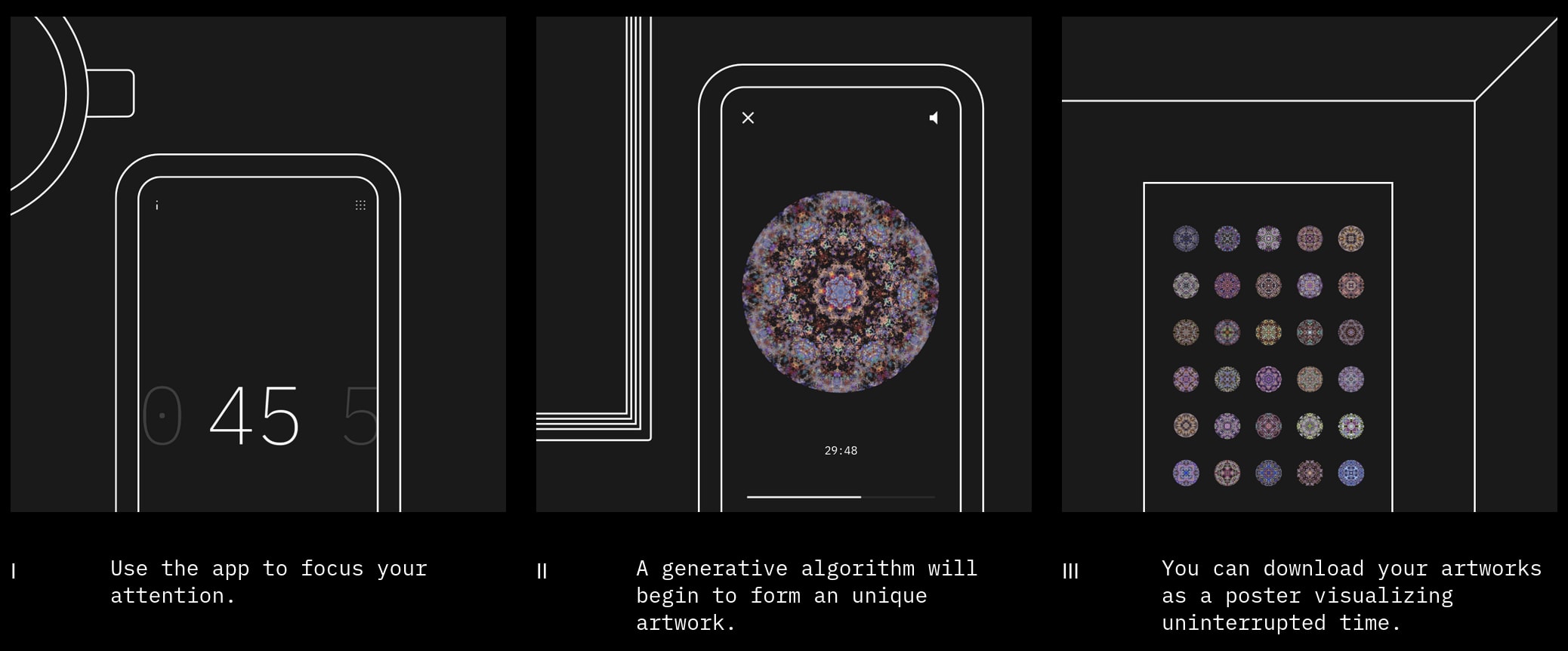
Introvert app is an audiovisual experience that encourages you to do, to focus, or to relax while a generative algorithm creates an unique artwork. Attention, the ability to pay it and where it is directed, is the most valuable tool, the most accurate compass in navigating through reality. Ultimately it will dictate whether one feels in charge of ones´ reality or helplessly drowned in a ceaseless stream of noise. Are you still paying attention?
-
Mobile phone industry explores worldwide tracking of users (Guardian)

The mobile phone industry has explored the creation of a global data-sharing system that could track individuals around the world, as part of an effort to curb the spread of Covid-19. The Guardian has learned that a senior official at GSMA, held discussions with at least one company that is capable of tracking individuals globally through their mobile devices, and discussed the possible creation of a global data-sharing system.
-
COVID-19 Pushes Up Internet Use 70 Percent, Streaming More Than 12 Percent (forbes)

The first internet streaming and usage figures are coming in as the coronavirus pandemic places a quarter of the world's population under lockdown. As millions of people go online for entertainment and more, total internet hits have surged by between 50% and 70%, according to preliminary statistics. Streaming has also jumped by at least 12%, estimates show. [Maria Rua Aguete of Omdia, the tech research arm of Informa Tech] said the annual figures are revealing: "Ecommerce will be the other sector that will see a revenue boost as a result of the pandemic, adding $175 billion in revenue in 2020, which represents a 5% increase."
-
Coronavirus: S'pore Government to make its contact-tracing app freely available to developers worldwide (straitstimes)
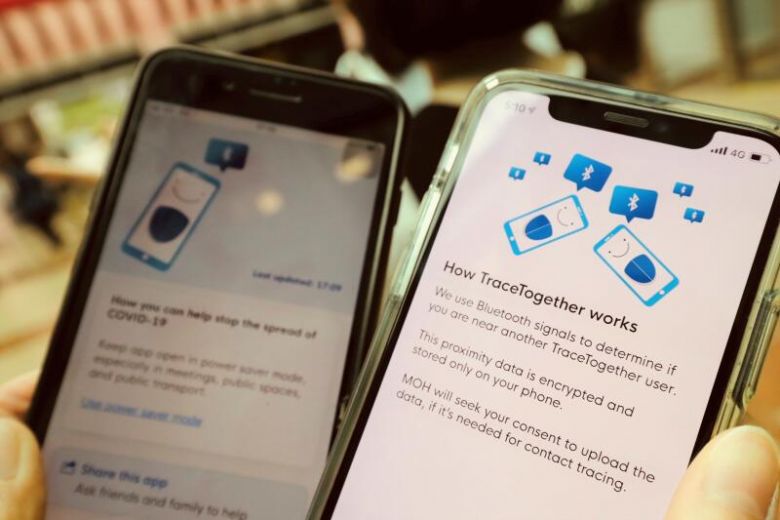
The Singapore Government will be making the software for its contact-tracing application TraceTogether, which has already been installed by more than 620,000 people, freely available to developers around the world. In a Facebook post on Monday (March 23), Minister-in-charge of the Smart Nation Initiative Vivian Balakrishnan said that the app, developed by the Government Technology Agency (GovTech) and the Ministry of Health, will be open-sourced.
#Comment: Once the biological virus is gone, rest assured that all these highly intrusive surveillance and social engineering tools will stay around and rapidly expand. Cybernetic totalitarianism might be the dominate game globally for years to come. The opportunity for systemic abuse and catastrophic failure is mindbogglingly giant.
-
UK coronavirus mass home testing to be made available ‘within days’ (Guardian)

Thousands of 15-minute home tests for coronavirus will be delivered by Amazon to people self-isolating with symptoms or will go on sale on the high street within days, according to Public Health England (PHE), in a move that could restore many people’s lives to a semblance of pre-lockdown normality.
Amazon, Owned by World's Richest Man, Soliciting Public Donations To Pay Workers' Sick Leave (popular.info)
In response to the pandemic, Amazon said it would provide two weeks of sick leave to "all Amazon employees diagnosed with COVID-19 or placed into quarantine." Amazon's large contract workforce, which delivers packages and performs other critical tasks, is in even worse shape. Amazon is not providing any sick leave at all for these workers, even if they test positive for COVID-19. Instead, these workers must apply to the "Amazon Relief Fund" and apply for a grant to cover their sick leave.
-
Central Bank Digital Currencies (CBDC) News

Could Central Bank Digital Currencies Ever Replace Fiat Money? (Beincrypto)
Cryptocurrencies are defying the age-old monopoly of central banks on issuing currency. A central-bank digital currency is backed by a reserve bank and can be used as a means of payment and unit of account. Central banks have been waking up to the idea of CBDC now more than ever.
Digital Pound Could Present ‘Challenges’ for UK, Says Mark Carney (Coindesk)
The outgoing governor of the Bank of England (BoE) has highlighted the potential risks to monetary governance if a central bank digital currency were to be launched in the U.K.
Carney sees big challenges as BoE eyes 'digital banknotes' (Reuters)
LONDON (Reuters) - The Bank of England must tread carefully to avoid financial stability dangers if it creates a digital equivalent to its existing banknotes, Governor Mark Carney said on Thursday.
Mark Carney concerned about financial stability risks of introducing digital currency (thelogic)
The outgoing Bank of England governor said a government-backed digital coin would to be "very carefully designed" if it is introduced.
What China’s Cyber-Cash Advantage Means for the Global Economy (insead)
The rise of cryptocurrency could threaten the dominance of the US dollar and cost the United States trillions in increased debt financing charges.
China's central bank is one step closer to issuing its digital currency - report (The Block)
The People’s Bank of China is said to have moved one step closer to issuing digital yuan. A Global Times report on Tuesday, citing “industry insiders,” said the central bank appears to have completed the development of digital currency’s basic function. The PBoC is now reportedly drafting relevant laws to circulate its digital currency
Central Bank Digital Currency ‘Incredibly Rich Area’ Says IMF (bitcoinist)
Tao Zhang, Deputy Managing Director of the International Monetary Fund (IMF) has made a strong argument for the development of Central Bank Digital Currency (CBDCs). He asserts that as a new asset class they hold tremendous promise, notably for the developing world.
IMF Weighs the Pros and Cons of a Central Bank Digital Currency (cointelegraph)
In a recent keynote speech to the London School of Economics, International Monetary Fund (IMF) Deputy Managing Director, Tao Zhang, briefed the positives and negatives of a central bank digital currency (CBDC). Zhang pointed toward greater efficiency and lower costs associated with a CBDC. “In some countries, the cost of managing cash can be very high on account of geography, and access to the payments system may not be available to the unbanked, rural, or poorer population,” he said in the Feb. 28 speech, which hit the web on March 19.
Deputy Managing Director Tao Zhang’s Keynote Address on Central Bank Digital Currency (IMF)
This afternoon, we’re going to take up a topic that everybody seems to be talking about these days – namely, central bank digital currency (or “CBDC” for short). This is a “widely accessible, digital form of fiat money that can be legal tender,” and a recent BIS survey of central banks shows that 80 percent were exploring CBDC.
G7 Working Group on Stablecoins - Investigating the impact of global stablecoins (BIS)
Stablecoins have many of the features of cryptoassets but seek to stabilise the price of the “coin” by linking its value to that of a pool of assets. Therefore, stablecoins might be more capable of serving as a means of payment and store of value, and they could potentially contribute to the development of global payment arrangements that are faster, cheaper and more inclusive than present arrangements. That said, stablecoins are just one of many initiatives that seek to address existing challenges in the payment system and, being a nascent technology, they are largely untested.
4 Reasons Central Banks Should Launch Retail Digital Currencies (Coindesk)
Financial stability is about preventing the financial system from becoming unstable and thus causing financial distress for consumers. Unlike cash and reserves, a retail CBDC will allow a central bank to become the lender of last resort for households and small businesses rather than for billionaires and banks. In a financial crisis, this will allow the central bank to bail out consumers instead of corporations, which in turn will reduce the incentives for mega corporations to borrow too much. That, in turn, will reduce aggregate national debt and improve financial stability.
A central bank will issue a consumer-ready digital currency within five years (omfif)
73% of central bank survey respondents would require retail CBDCs to be available under all circumstances and for all types of payments where cash is currently used.
Coronavirus: SF businesses decline cash, fearing it could spread the virus (sfchronicle)
More and more businesses are turning away from cash, fearing that the virus could be sitting on banknotes and coins, as it changes hands from person to person in everyday transactions. “Looking at the situation with COVID-19 getting worse, we decided to switch,” said Eileen Rinaldo, owner of Ritual Coffee. “Cash is notoriously covered with germs, and it’s a matter of eliminating that point of contact.”
-
Softbank Looking to Cut Alibaba, Sprint Share Stakes (Variety)

Softbank, the giant Japanese investment group that has made huge bets on the sharing economy, is looking to cut its stake in Alibaba, according to reports. And possibly in Sprint too. On Monday, Masayoshi Son, founder and CEO of the heavily indebted Softbank, said that he would raise or monetize $41 billion of assets, in order to put the group on a sounder financial footing.
On Tuesday, Bloomberg reported that more than a third of the total would be raised by selling a $14 billion tranche of shares in Chinese e-commerce giant Alibaba. That would represent about 3% of Alibaba’s total equity capital, which is traded in New York in ADR form and, in a secondary listing, as shares in Hong Kong. Softbank has long been an ally of Alibaba and has made vast paper profits on its 25% Alibaba holding. But the dire performance of Softbank’s other investments has depressed Softbank’s share price so much that at one point recently its holding in Alibaba was more valued more highly than the entire Tokyo-traded Softbank group.
SoftBank’s Son Still Betting on Himself After Go-Private Talks (Bloomberg)
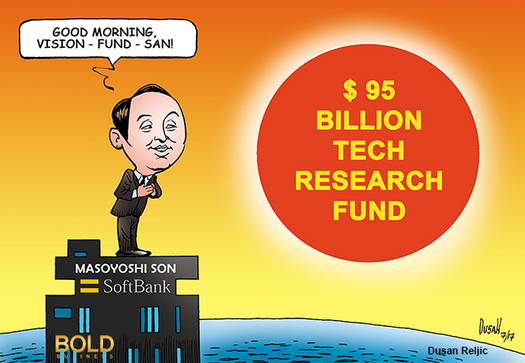
SoftBank Group Corp.’s Masayoshi Son is continuing to bet on himself, even after he reportedly considered and then abandoned the idea of taking his conglomerate private. Son discussed the idea with investors including Elliott Management and the Abu Dhabi sovereign-wealth fund Mubadala in the past week, the Financial Times reported, before moving ahead with a plan to sell assets instead.